Share information:
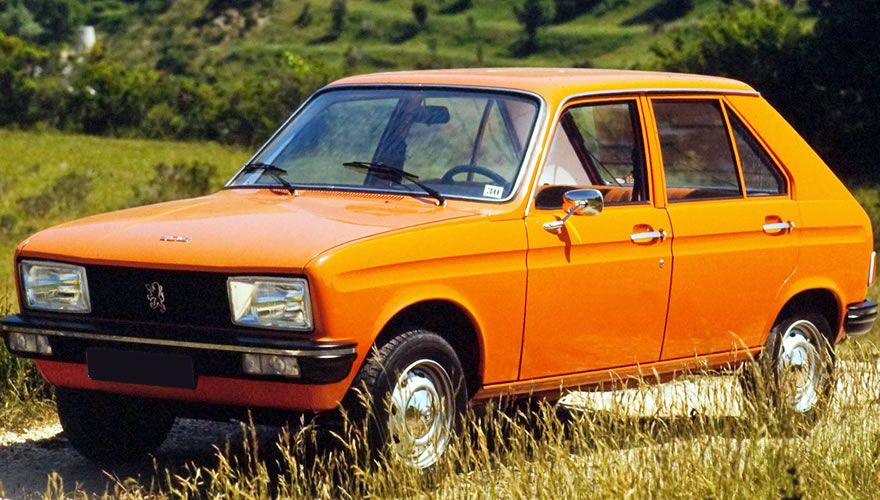
Peugeot 104 (1972-1988)
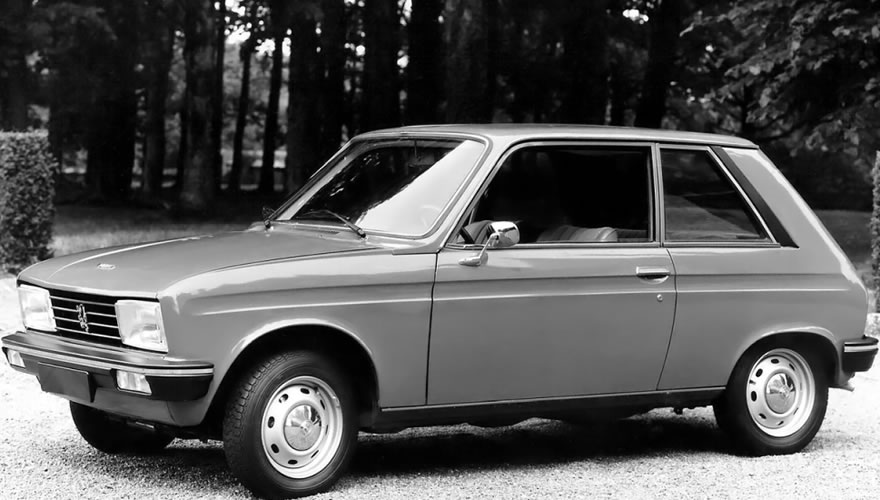
Peugeot 104 — a miniature passenger car (A-segment), one of the first European "superminis", produced by the French automaker "Peugeot" from 1972 to 1988. Since 1983, it was produced in parallel with the subcompact "Peugeot 205". The design was developed by the French Italian designer Paolo Martin. First there was a four-door sedan, since 1974 a three-door hatchback, and since 1976 a five-door hatchback. The length of the four- and five-door body was 3600 mm, the width 1520 mm and the height 1391 mm. The three-door body was 3283 mm long, 1520 mm wide and 1340 mm high. About 1.6 million cars were produced in total.
The engines were only petrol four-cylinder, located transversely in the front with front-wheel drive. There were four modifications with a volume of 1.0 liter (954 cm³, XV, 45 hp), 1.1 liters (1124 cm³, XW, 50/57 hp), 1.2 liters (1219 cm³, XZ, 66 hp) and 1.4 liters (1360 cm³, XY, 72 hp). The gearbox was a four-speed manual and was located in the engine crankcase in the oil pan and used engine oil.
In July 1976, the model was restyled, the sedan was discontinued, and a five-door hatchback appeared instead. The taillights were changed, and the engines were modified. In 1978, a second restyle was carried out - the headlights and grille were enlarged, and a cheaper three-door hatchback with only two front seats for commercial use was also produced. In 1980, there was a third update, which was minor. In 1982, the headlights were reduced, the grille and taillights were changed, into which the reversing lights were built, the amount of chrome was reduced. In 1983, production was greatly reduced, as the "Peugeot 205", the car was no longer exported and remained only for the French market.
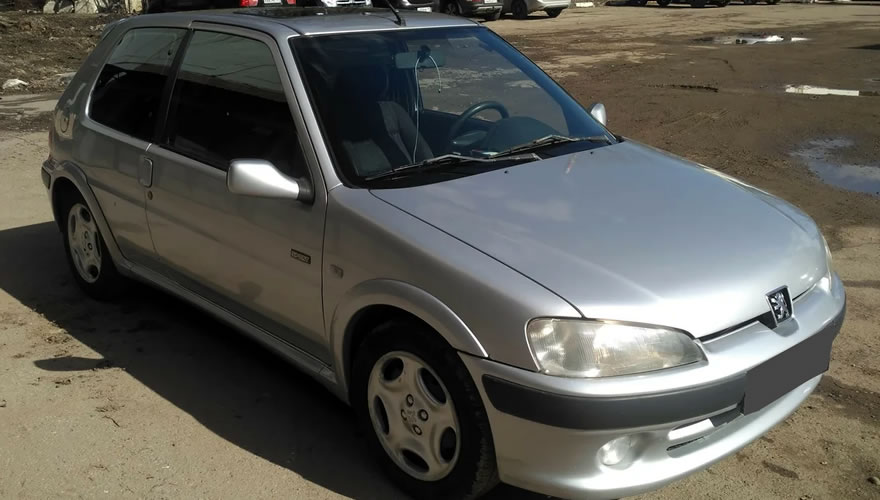
Peugeot 106 (1991-2003)
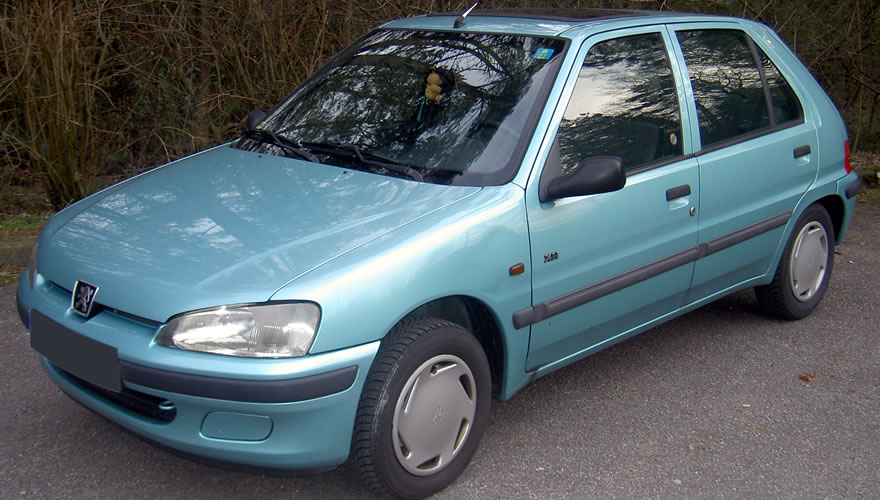
Peugeot 106 — a city miniature car (A-segment), produced from 1991 to 2003 by the French automobile company "Peugeot". It was presented in Europe in September 1991. The body was only a three- or five-door hatchback with a length of 3564 mm, a width of 1590 mm and a height of 1369 mm. After the update in 1996, the dimensions of the body increased - the length became 3678 mm, the width 1594 mm and the height 1380 mm. The curb weight was 790-950 kg. Over 12 years of production, about 2.8 million cars were built.
The engine is located transversely at the front with the drive only on the front wheels. At the end of 1992, all carburetor models were replaced by injection ones. Petrol engines were four-cylinder with a volume of 1.0 liter (954 cm³, TU9K/TU9ML, 45-50 hp), 1.1 liters (1124 cm³, TU1K/TU1M/TU1ML/TU1JP, 50-60 hp), 1.3 liters (1294 cm³, TU2J2L, 98 hp), 1.4 liters (1360 cm³, TU3K/TU3M/TU3FJ2/TU3JP, 75-95 hp) and 1.6 liters (1587 cm³, TU5J2/TU5JP/TU5J4, 88-118 hp)There were two models of 1.4-liter diesel engines (1360 cm³, TUD3Y, 51 hp) and 1.5 liters (1527 cm³, TUD5Y, 58 hp). The transmission is a five-speed manual or a three-speed automatic.
In 1995, an electric version was released called "106 Electrique". Nickel-cadmium batteries were used with a 15 hp engine. The maximum speed was 90 km/h, the cruising range was 100 km.
In July 1996, the car was seriously updated. The dimensions of the body were increased (see above), driver and passenger airbags were installed, and the exterior design was also redesigned. In January 1996, "Peugeot 106" formed the basis of a practically identical in appearance and size "Citroën Saxo".
There was also a high-performance model called "106 Rallye" with an engine with a maximum power of 118 hp.
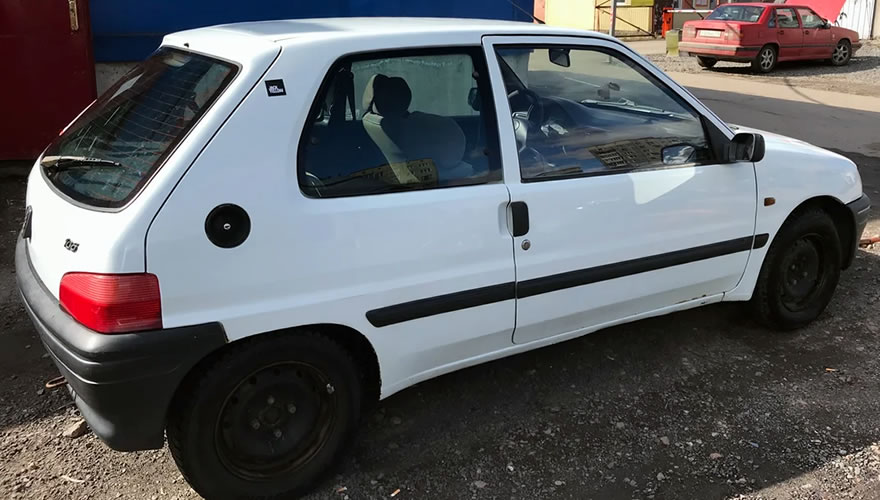
Peugeot 107 (2005-2014)
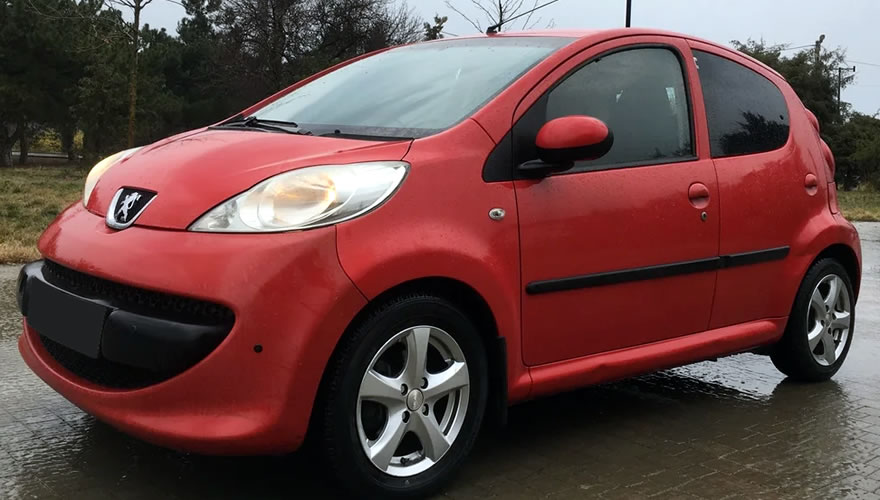
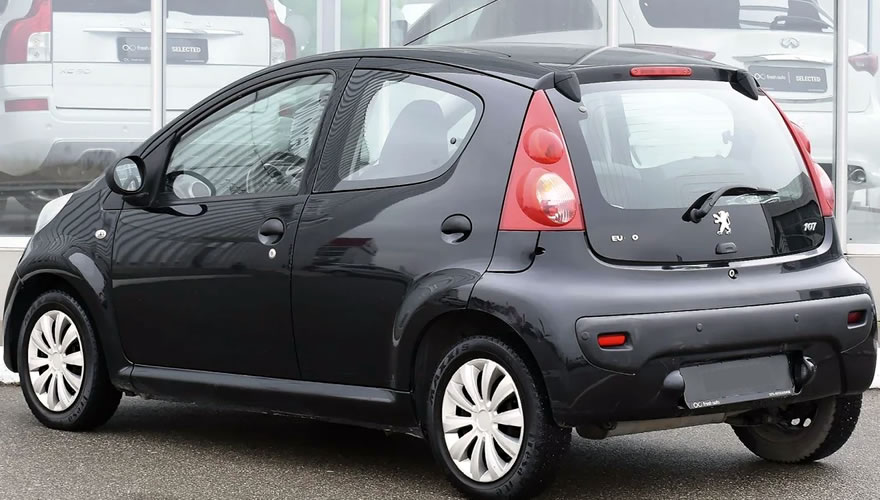
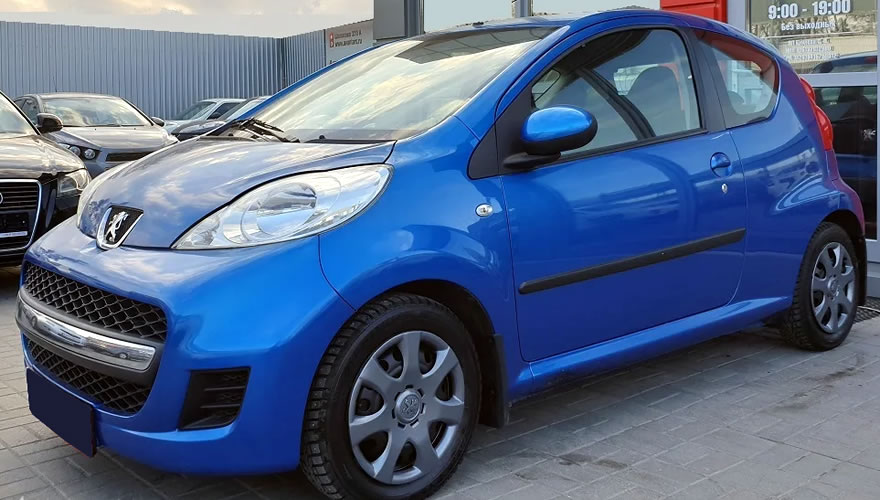
Peugeot 107 — the third generation of a miniature city car (A-segment), which was produced from June 2005 to July 2014. Developed jointly by the companies "PSA Peugeot Citroën" and "Toyota". These companies call the car "Citroën C1" and "Toyota Aygo" respectively, and have the same chassis, interior, front doors, windshield, and similar design. All three cars were produced at a joint venture "Toyota Peugeot Citroën Automobile Czech" (TPCA), located in Kolin, Czech Republic. It was produced only in a hatchback body with three or five doors, 3430 mm long, 1630 mm wide and 1470 mm high. The curb weight was 800-880 kg. A total of about 740 thousand cars were produced, which is almost 4 times less than its predecessor, the Peugeot 106.
The engine is located transversely in front, front-wheel drive. The gasoline engine is a three-cylinder in-line 1.0-liter engine (998 cm³, 1KR-FE) 70 hp, with 4 valves per cylinder and multi-point fuel injection. There was also one four-cylinder 1.4-liter diesel (1398 cm³, DLD-414 HDi, SOHC) 54 hp, two valves per cylinder and turbocharging "BorgWarner KP35". The gearbox is five-speed manual or semi-automatic.
In February 2009, the car was updated. The front bumper, wheel trims, interior design were changed, and the engines were also improved - fuel consumption was reduced from 4.6 to 4.5 liters per 100 kilometers. In 2012, the second update was carried out. The hood, front bumper and radiator grille were changed, as well as minor changes in the interior.
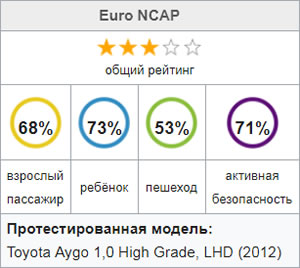
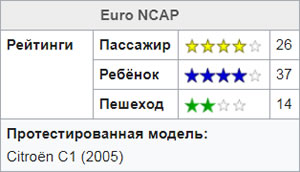
The European Committee "Euro NCAP" conducted crash tests to determine the safety of the car twice - in 2005 and 2012, the results of which are shown in the tables below.
![]() | ![]() |
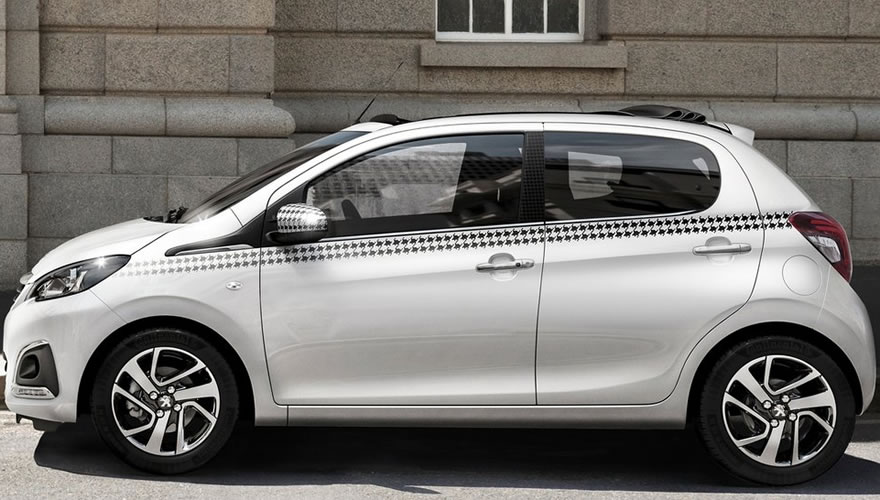
Peugeot 108 (2014-present)
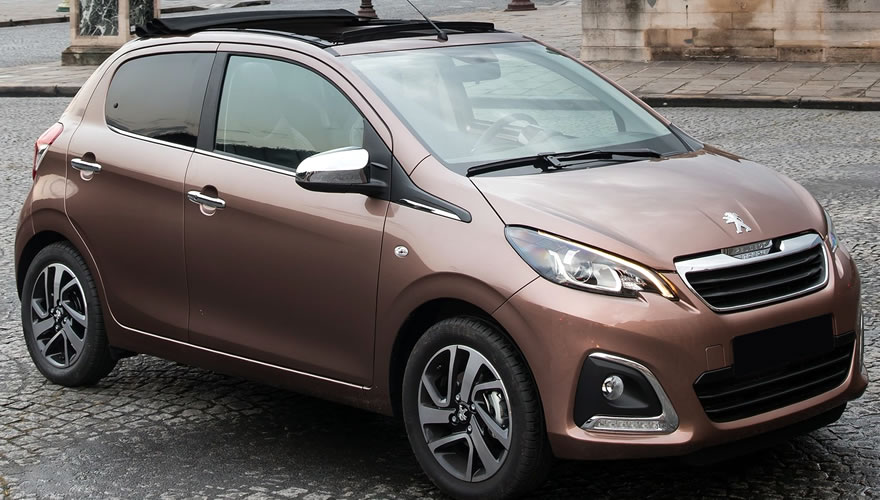
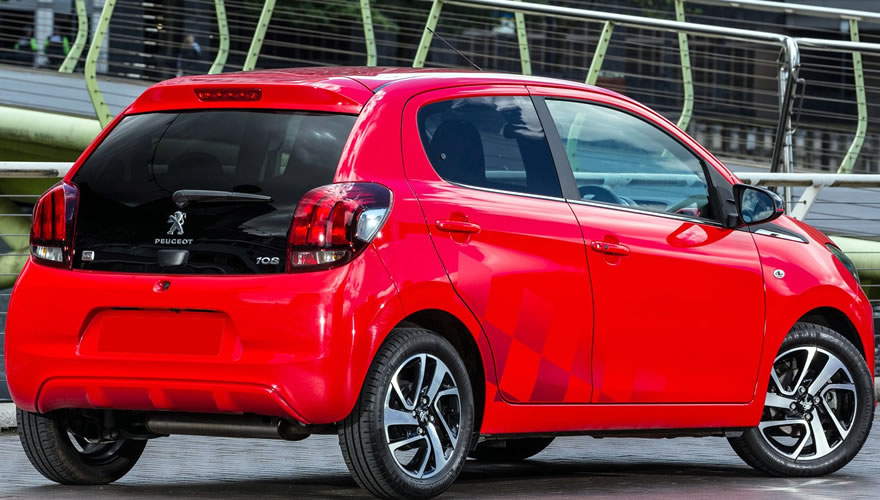
Peugeot 108 — continuation of the line of miniature city cars (A-segment), which has been in production since July 2014 to the present. It was first shown to the public at the Geneva Motor Show in March 2014. It still uses the same platform as "Citroën C1" and "Toyota Aygo", which are produced at the same plant in the Czech Republic. The body is a three- or five-door hatchback, 3475 mm long, 1615 mm wide and 1460 mm high. The curb weight was 915 kg.
The engine is traditionally located transversely in the front with front-wheel drive. The engines were only petrol three-cylinder in-line engines with a capacity of 1.0 liters (998 cm³, 1KR-FE) with a capacity of 70 hp and 1.2 liters (1199 cm³, EB2DT, turbocharged) 82 hp. Five-speed manual or five-speed robotic gearbox.
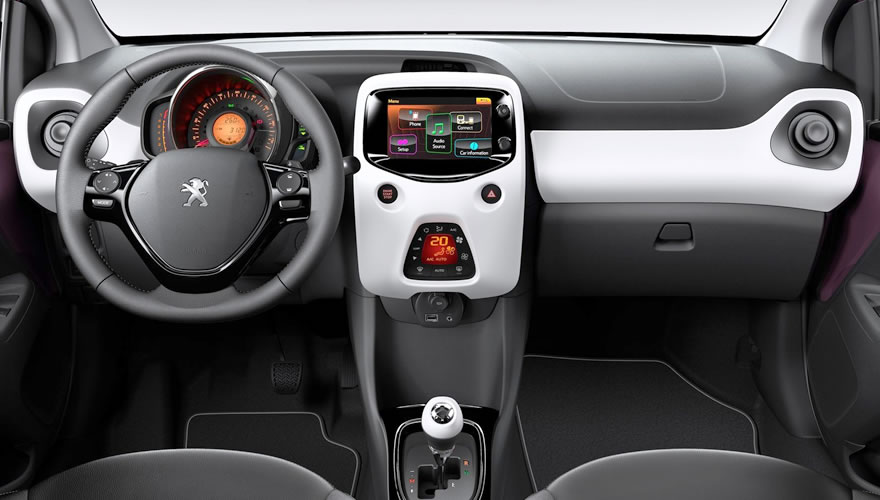
In 2018, the car was updated, which affected only the interior, without any external changes.
Currently, the main classmates and competitors of the Peugeot 108, in addition to the Citroën C1 and Toyota Aygo, are cars VAZ -1111, Chevrolet Spark, Chery Kimo, Daewoo Matiz, Fiat Panda, Hyundai Eon, Ford Ka, Kia Picanto, Lifan 320, Mitsubishi i, Opel Adam, Opel Karl, Renault Twingo, Suzuki Splash, Tata Nano and Volkswagen up!.