Share information:
Peugeot Partner / Citroen Berlingo
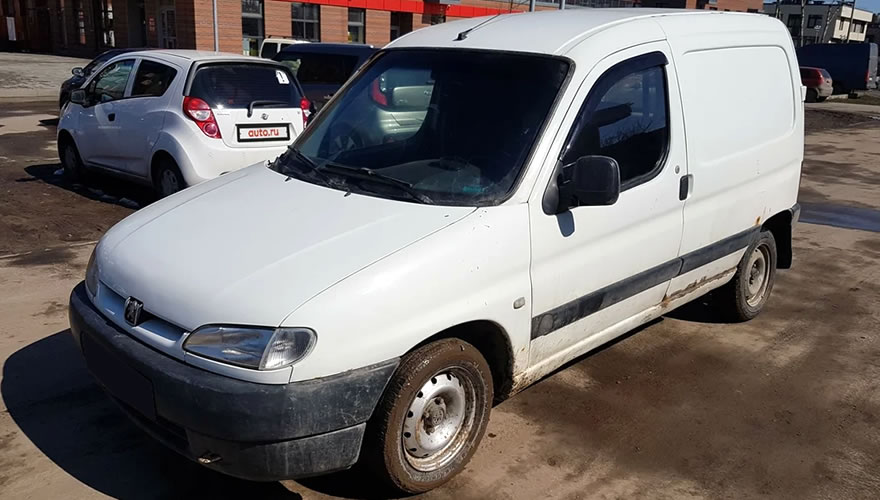
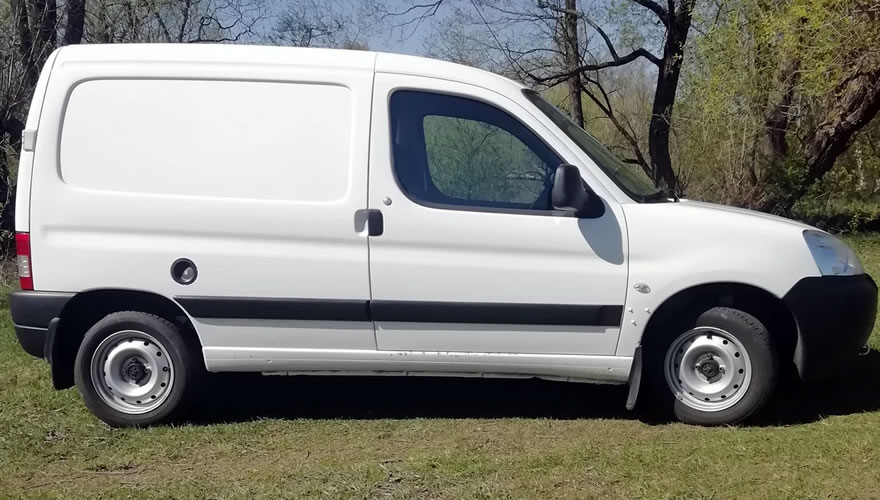
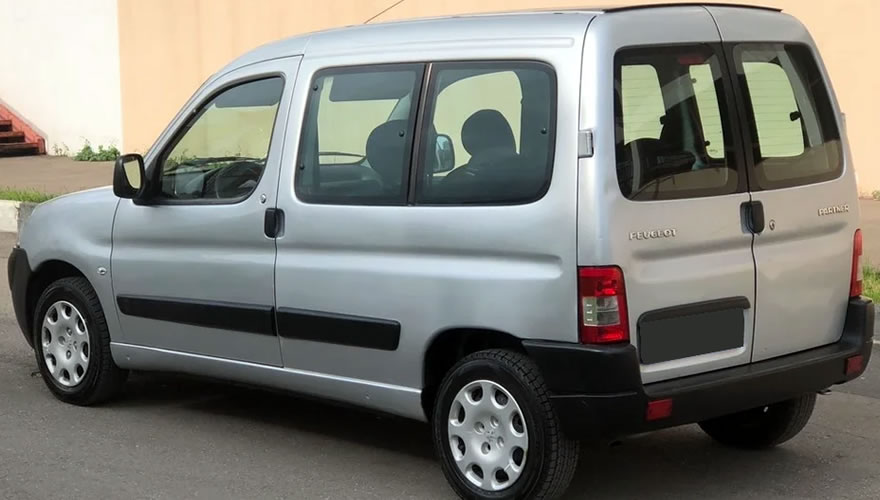
Peugeot Partner — a light-duty van for transporting goods and people (M-segment), which is produced by the French automobile manufacturer "PSA Peugeot Citroën" from July 1996 to the present. It has another name - Citroen Berlingo. Passenger versions are called Berlingo Multispace and Partner Combi and come in five or seven-seater versions. Replaced the outdated vans "Citroën C15" and "Citroën Visa".
The main competitors of Peugeot Partner are the following cars from other automakers: Kia Venga, Mercedes-Benz Citan, Opel Combo, Renault Kangoo, Skoda Roomster, Chevrolet Orlando, Honda Stream, Lada Largus, Toyota Sienta, Fiat Doblo and Volkswagen Caddy.
First generation (1996-2008)
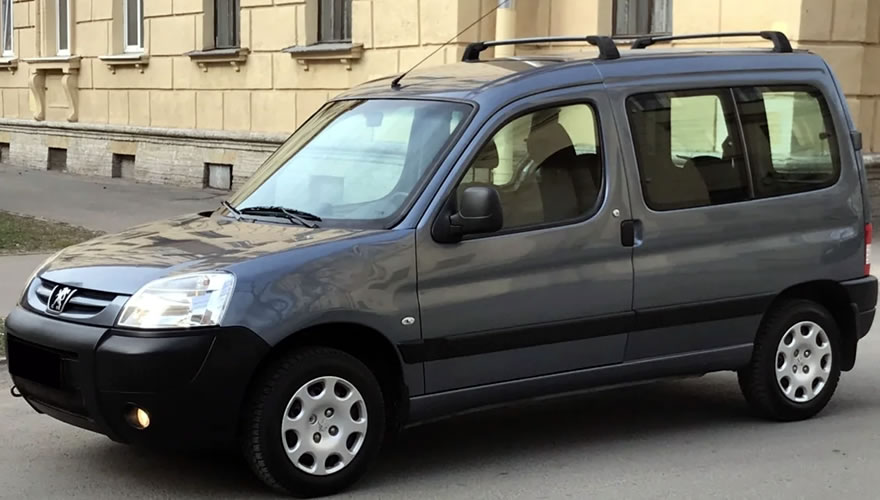
The first generation was first shown at the Paris Motor Show in October 1996 and was produced until 2008. As early as 1997, the French company Renault released a competitor to the Kangoo with a more modern design and a sliding rear side door, which the Partner initially lacked and which proved very convenient. In 1999, Berlingo received a similar door on the right side for access from the sidewalk. After that "Renault Kangoo" they equip a second identical door, but on the left. Later, the Berlingo gets a similar door. The body was a four- or five-door van or a five-door minivan, 4135 mm long, 1820 mm wide, 1725 mm high, and had a curb weight of 1258 kg. A total of approximately 1.2 million vehicles were produced over 12 years "Berlingo-Partner" first generation. In some countries, the first generation continues to be produced under the name "Berlingo First".
In December 2002, a modernization was carried out, significantly changing the front part of the car (the back part remained the same), the headlights have become significantly larger, and the instrument panel has also been significantly updated. Technical changes included strengthening of the front shock absorbers and the possibility of transforming the interior "Multispace", the advent of anti-lock braking systems (ABS) and airbags. In the crash test conducted by the European committee "EuroNCAP", the updated car received four stars out of five. In 2004, another minor update was carried out.
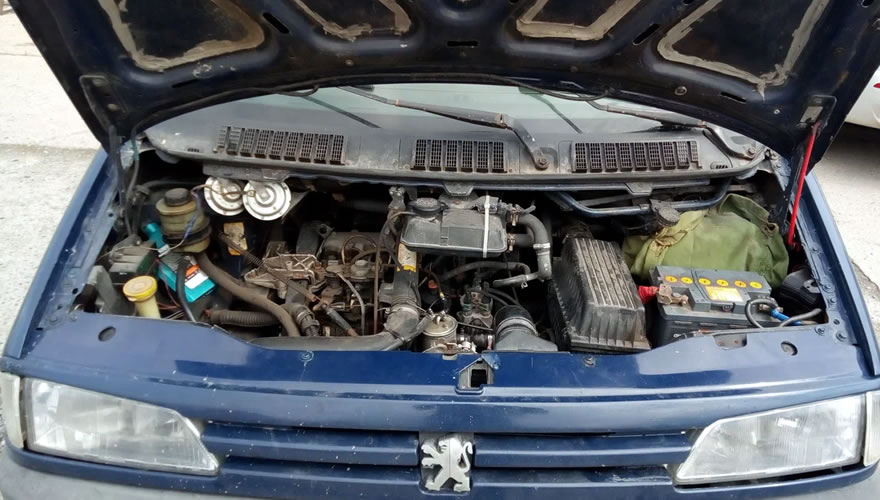
The engine was located in the front with front-wheel drive. The petrol engine lineup consisted of 1.4-litre in-line four-cylinder engines (1360 cm³, TU3, 74 hp), 1.6 liters (1587 cm³, TU5, 107 hp) and 1.8 liters (1761 cm³, PSA XU, 89 hp). Diesel engines also had four-cylinder 1.6-liter engines (1560 cm³, DV6 HDi, 74-91 hp), 1.9 liters (1905 cm³, XUD, 70 hp), 1.9 liters (1868 cm³, DW8, 70 hp) and 2.0 liters (1997 cm³, DW10 HDi, 89 hp). Only a five-speed manual gearbox was installed. There was also a pure electric version of the car with a 38 hp electric motor, produced from 1998 to 2005.
Second generation (2008-2018)
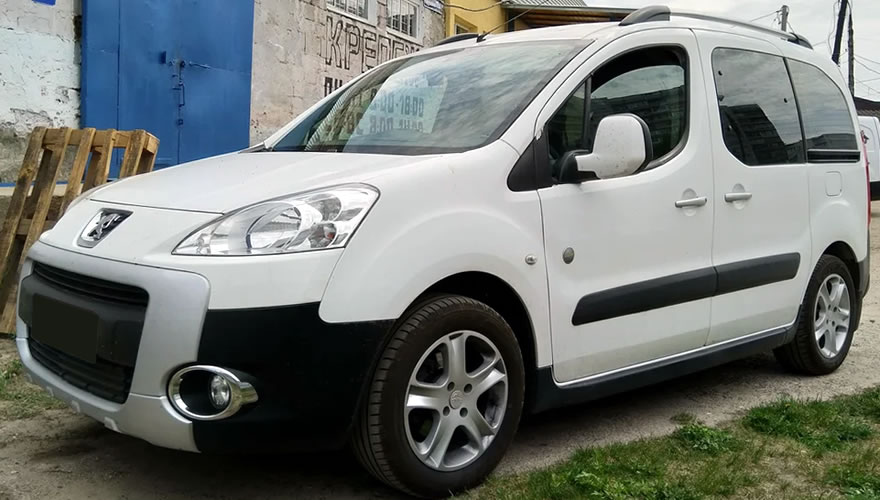
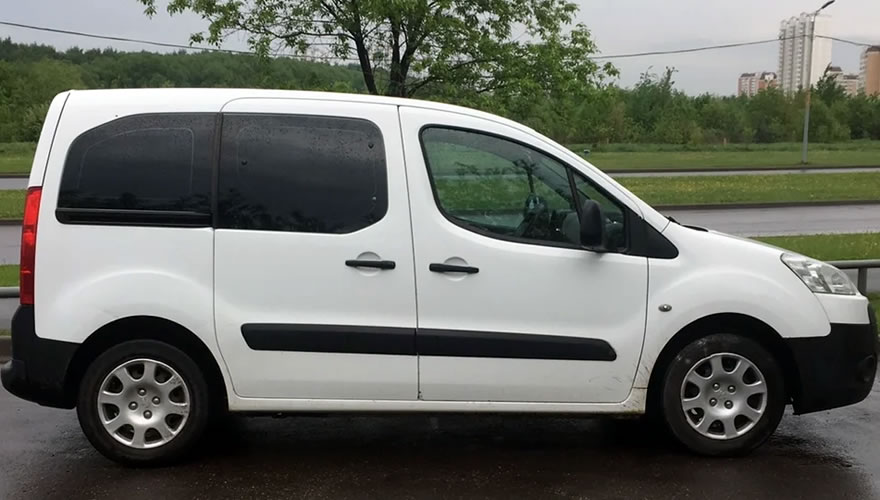
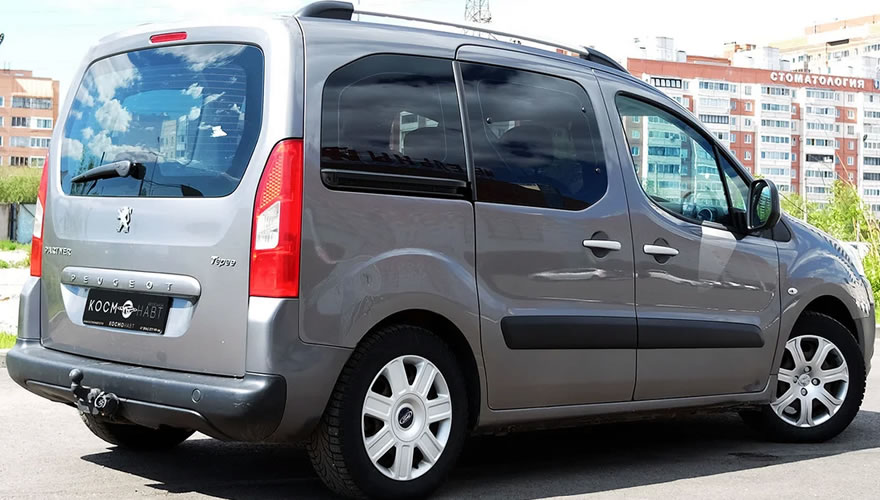
The second generation of "Partner" and "Berlingo" appeared in May 2008 and was produced until 2018. Based on the "PSA PF2" platform, which is also used for "Citroën C4" and "Peugeot 308" first generation. The body is designed as a four- or five-door van, a two-door pickup truck or a five-door minivan. The car's length was 4379-4628 mm, width 1810-2112 mm, height 1805-1840 mm, and curb weight 1397-1429 kg. Assembly took place in Spain and Portugal.
The car is equipped with modern systems, such as hill start assist, braking assist, height and depth adjustable steering wheel, opening tailgate, sliding side door, three independent and removable seats in the second row, manually folding mirrors, carpet in the interior and PVC mat in the trunk, tinted windows, etc. Metallic paint, two sliding side doors on both sides, two glass swing doors, an advanced audio system, etc. are available as additional options. The second-generation "Berlingo" received four stars out of a maximum of five in crash tests by the European committee "EuroNCAP".
There were three models of 1.2-liter petrol engines (1199 cm³, THP, 110 hp), 1.6 liters (1598 cm³, VTi, 98/120 hp) and 1.6 liters (1587 cm³, 90/110 hp). There were two modifications of diesel engines with a volume of 1.6 liters (1560 cm³, HDi, 75/90/110 hp), which was replaced by 1.6 liters in 2015 (1560 cm³, BlueHDi, 75/90/102/120 hp). The gearbox is only a five-speed manual. A purely electric cargo truck with a 67 hp (49 kW) electric motor was once again produced. A family electric passenger truck was released in 2017 "E-Berlingo Multispace".
In 2012, the model was updated with modifications to some engines. In 2015, a second modernization was carried out, which, in addition to changing the appearance, brought all engines up to the Euro 6 standard.
Third generation (2018-present)
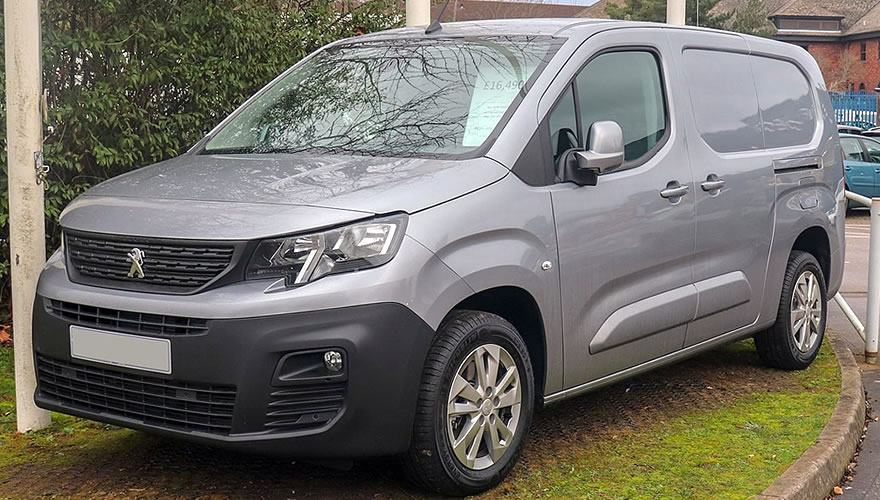
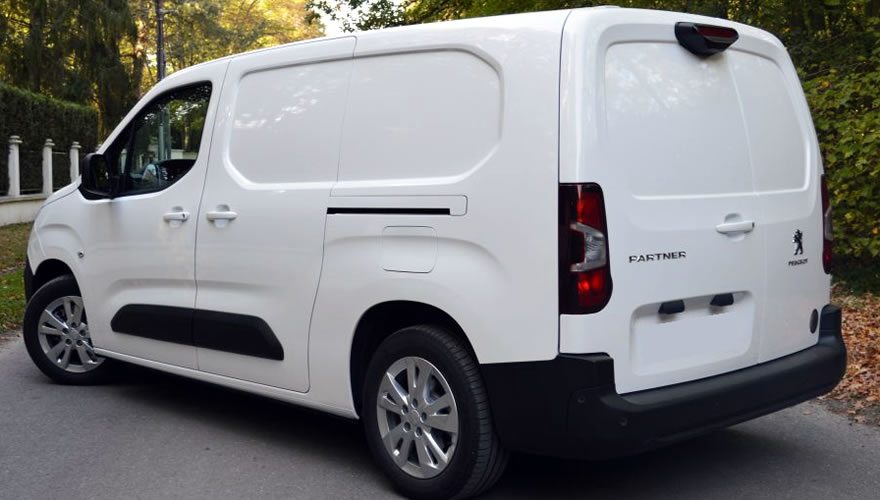
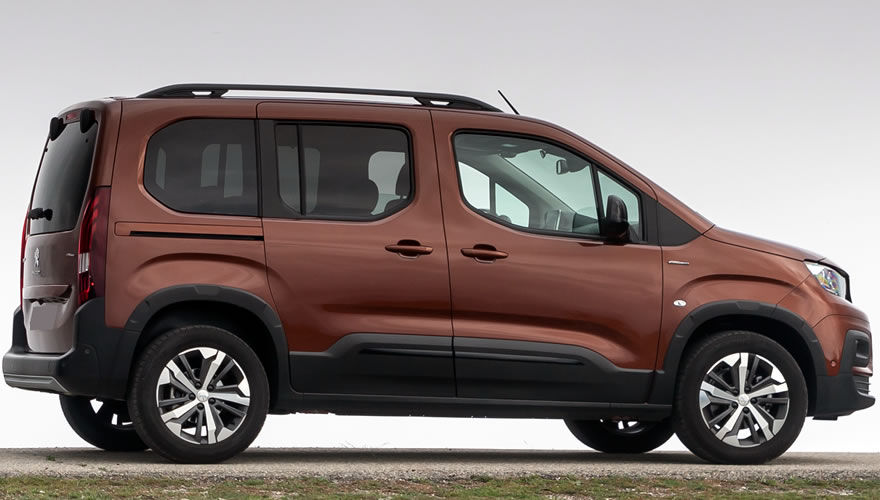
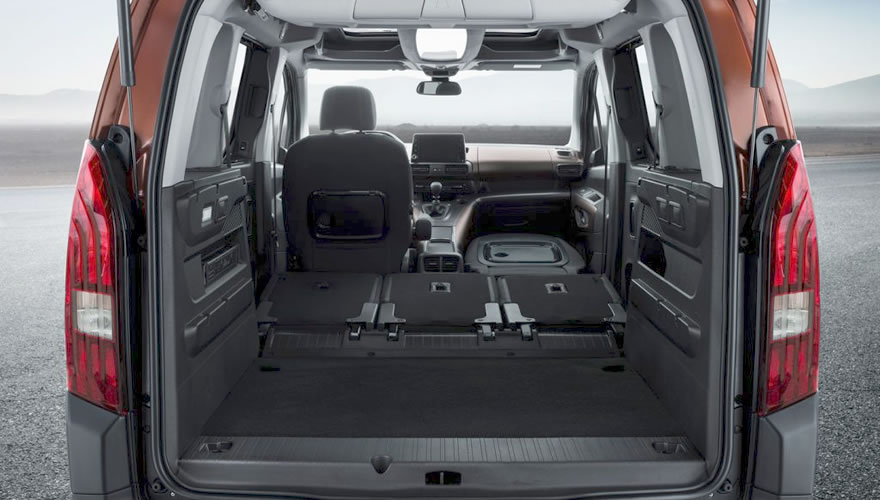
The third generation was unveiled in March 2018 at the Geneva Motor Show and in April 2019 at the Commercial Vehicle Show in England. Sales began in June 2018. The vehicle's names were as follows: "Peugeot Rifter", "Peugeot Partner III", "Citroën Berlingo III", "Opel Combo D" and "Toyota ProAce City". Based on the PSA EMP2 platform, the car was available in two wheelbases—2,780 mm and 2,970 mm. Overall lengths were 4,403 mm and 4,753 mm, width 1,921 mm, height 1,844 mm, and curb weight 1,431–1,505 kg. Seating was 5 or 7, depending on wheelbase. Production was located in Spain and Portugal.
There were two models of engines, one a three-cylinder petrol engine with a capacity of 1.2 liters (1199 cm³, BlueHdi) 110 hp and a 1.5-liter four-cylinder diesel engine (1499 cm³, THP) with a capacity of 75, 102 and 130 hp. The transmission is a six-speed manual or an eight-speed automatic.
In 2022, the production of passenger vans with internal combustion engines in the European Union ceased, and purely electric versions began to be produced instead. In 2023, they also began producing passenger vans with a hybrid power plant.
Peugeot Eurovan
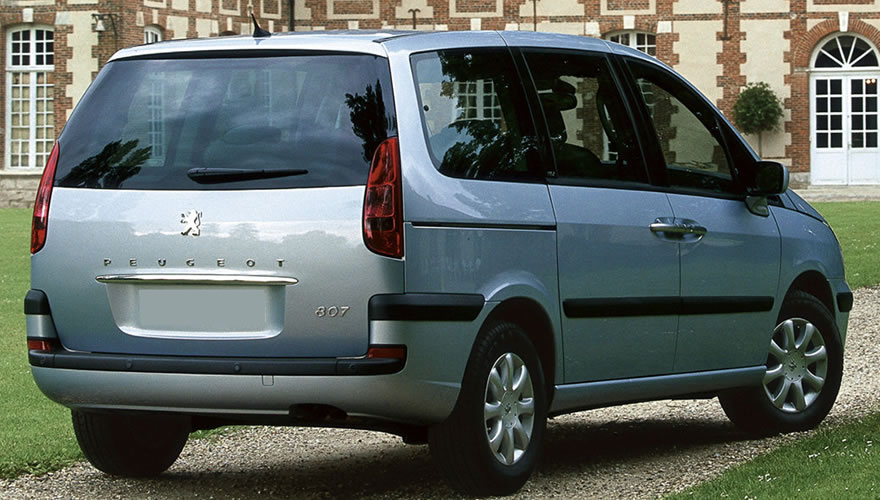
Peugeot Eurovans — a family of large minivans produced by the automakers Citroën, Peugeot, Lancia, and Fiat from March 1994 to June 2014. It was a joint project between Fiat and PSA. There were two generations with names "Peugeot 806" and "Peugeot 807", cars of other brands were sold under the names "Citroën Evasion", "Citroën C8", "Lancia Zeta", "Lancia Phedra" and "Fiat Ulysse". This car's competitors are Chrysler Voyager, Chery Crosseastar, Hyundai Starex, Volkswagen Sharan, SEAT Alhambra, Ford Galaxy, Mazda 5, Mercedes-Benz Vito, Opel Zafira, Renault Espace and Toyota Previa.
First generation (Peugeot 806, 1994-2002)
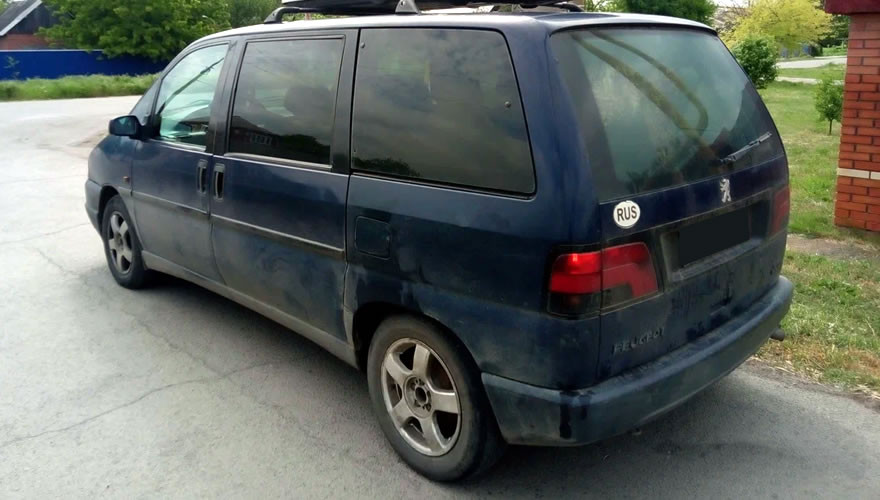
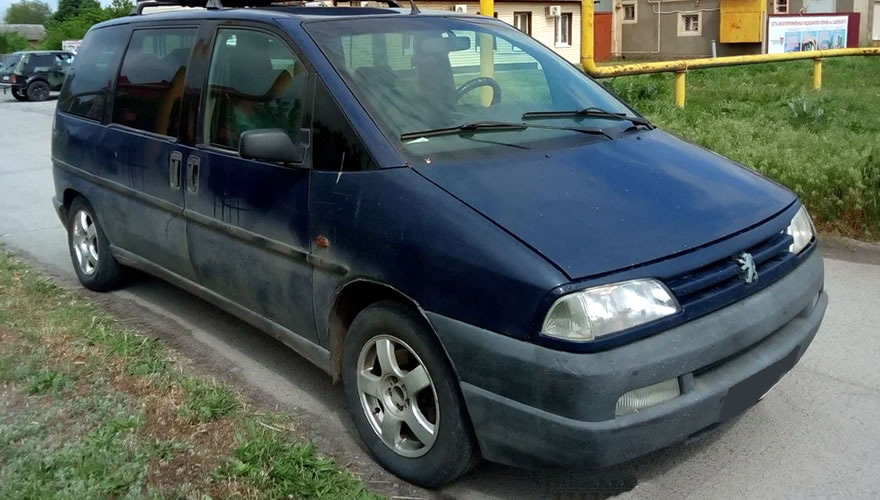
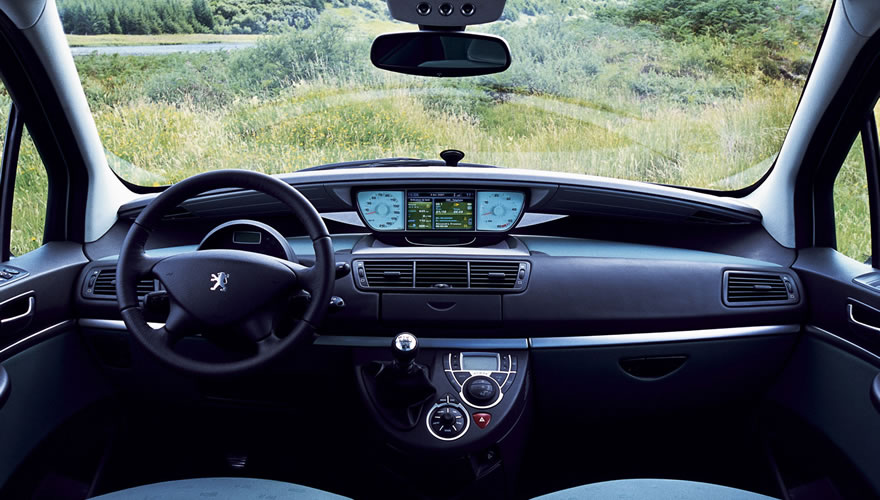
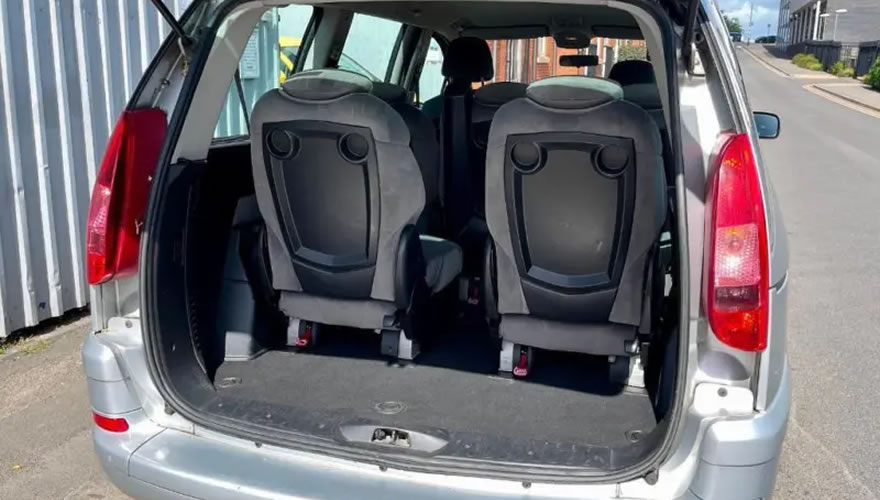
The first generation was introduced in June 1994. The minivan was slightly smaller than the Chrysler Voyager, which was popular in Europe at the time, and had convenient sliding doors. The body length was 4,460 mm, width 1,820 mm, height 1,710 mm, wheelbase 2,820 mm, and curb weight 1,550-1,750 kg. The seating configuration included two individual seats in the front and three individual removable seats in the middle, as well as a choice of two individual removable seats or one bench seat in the rear. The gear shift lever was mounted on the dashboard rather than on the floor. The handbrake was located to the left of the driver, which allowed for a passage between the front seats.
The first generation used PSA XU/XUD engines. The petrol engines had the following displacements and specifications: 1.8 liters (1761 cm³, XU7, 99 hp), 2.0 liters (1998 cm³, XU10, 121/132/147 hp) and 2.0 liters (1997 cm³, EW10, 136 hp). Diesel engines were turbocharged with a volume of 1.9 liters (1905 cm³, XUD9, 90 hp), 2.0 liters (1997 cm³, DW10, 109 hp) and 2.1 liters (2088 cm³, XUD11, 109 hp). Almost all models had a five-speed manual transmission, while the EW petrol engine offered a four-speed automatic transmission.
In October 1998, a cosmetic facelift was performed.
Second generation (Peugeot 807, 2002-2014)
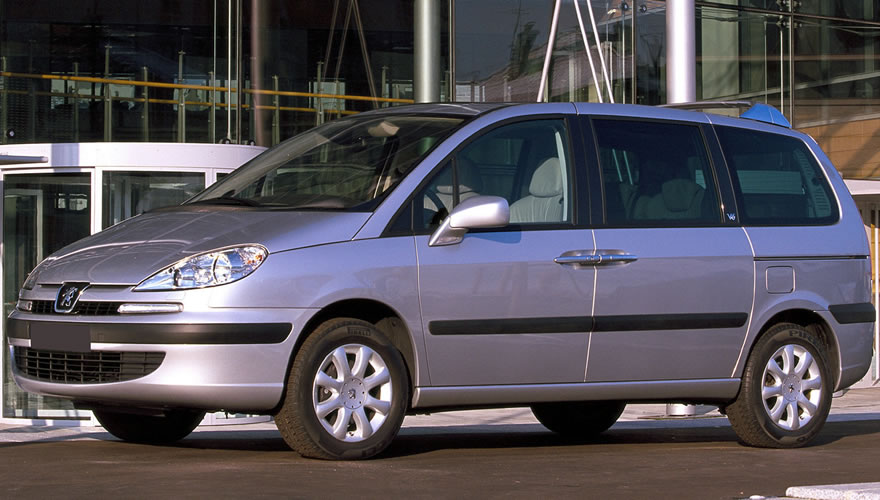
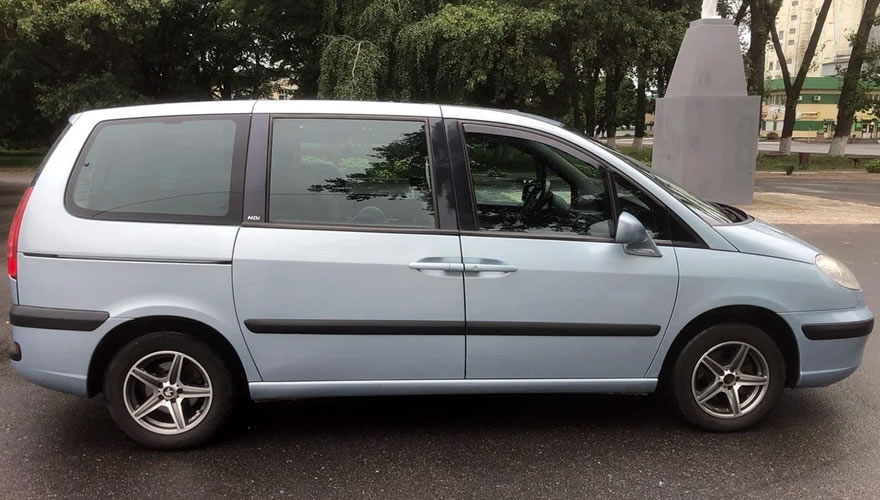
The Peugeot 807 entered production in June 2002. The car's length and other dimensions increased while maintaining the same wheelbase, reaching 4,750 mm, width 1,854 mm, height 1,752 mm, wheelbase 2,823 mm, and curb weight 1,645-1,837 kg. The increased length significantly increased interior space. The minivan received the maximum 5-star rating in the Euro NCAP crash test. It was unveiled at the 2003 Geneva Motor Show "Peugeot 807 Grand Tourisme" with a V6 engine. In total, more than 140,000 second-generation Peugeot 807s were produced.
The petrol four-cylinder engines had a capacity of 2.0 litres (1997 cm³, EW10, 136/140 hp) and 2.2 liters (2230 cm³, EW12, 158 hp), 3.0-liter V6 (2946 cm³, ES9, 207 hp). All diesel engines are four-cylinder, turbocharged, with a capacity of 2.0 liters (1997 cm³, DW10, 109/120/136 hp) and 2.2 liters (2179 cm³, DW12, 128/170 hp). The gearboxes are the same: a four-speed automatic or a five-speed manual.
In 2006, the car became compliant with the Euro 4 emissions standard. In February 2008, the model underwent an external restyling and a 2.2-liter twin-turbocharged diesel engine was added. In 2012, another facelift was carried out.
Peugeot J5
Peugeot J5 — A French version of the Fiat Ducato light commercial vehicle, produced from 1981 to 1983. It replaced the aging Peugeot J7, which had been produced since 1965. It is one of a line of light commercial vehicles created as a result of a cooperation agreement between Fiat and PSA in 1978. Other models included the Fiat Ducato I and Alfa Romeo AR.6 (Italy), Citroën C25 and Peugeot J5 (France), and Talbot Express (England). All these models were produced in Italy at the Stellantis-SEVEL Sud joint plant.
This truck's competitors at the time included the Fiat Ducato, Ford Transit and Renault Trafic. After production ended, they were replaced by the Peugeot Boxer and Citroën Jumper.
The first models were simple trucks, and in 1982 a minibus and a glass van appeared. The body length was 4759 mm, width 1965 mm, height 2108 mm and the curb weight was 1380/1524 kg.
The engine was located in the front, the drive was to the front wheels, and since 1989, 4x4 all-wheel drive with a viscous clutch has appeared. Equipped with only a 4- or 5-speed transmission. The engines were PSA four-cylinder with side-mounted camshafts. 1.8 liter petrol (1796 cm³, XM7T, 67 hp), 2.0 liters (1971 cm³, XN1T/XN1TA, 78/86 hp), the same engine with a catalytic converter had power. 84 hp Diesel engines had a volume of 1.9 liters (1905 cm³, XUD9A, 65 hp) and 2.5 liters (2446 cm³, CRD93L, naturally aspirated 73 hp, turbocharged 95 hp).
In 1991, a minor update was carried out, which mainly affected the car's appearance. There's also an electric J5 with 58.5 hp.