
English Русский
Български
Беларускі
Український
Српски
Hrvatski
Română
Polski
Slovenský
Magyar
Bookmark Articles Sitemap Contacts
Company Hyundai Company Opel Company Skoda Company Kia Company Mitsubishi Company LADA Company Audi
PeugeotBook.ru


Series 100   Series 200   Series 300   400-500   Series 600   Crossovers   Others
 
Partner I (1996-2008) Peugeot 807 (2002-2014) Peugeot 806 (1994-2002) Peugeot J5 (1981-1993)

Liftgate Lock Components — removal and installation (Peugeot Partner I)

  • Main
  • Пежо
  • Partner I (1996-2008)
  • Body and interior
  • Doors, locks and windows
  • Liftgate Lock Components — removal and installation
0
Table of contents: Luggage compartment lift door lock 🠇 The tailgate lock counter part 🠇

Luggage compartment lift door lock


Note: A new tailgate waterproofing sheet may be required during installation.


Removal


1. Remove the tailgate trim panel as described in paragraph 28.

2. Using a sharp knife, carefully separate the plastic waterproofing sheet from the adhesive layer on the door and remove the sheet. If you are careful, you can remove the waterproofing sheet in one piece and reuse it during installation.

3. Disconnect the rod from the lock cylinder and the trunk lid lock lever (figure 17.3).
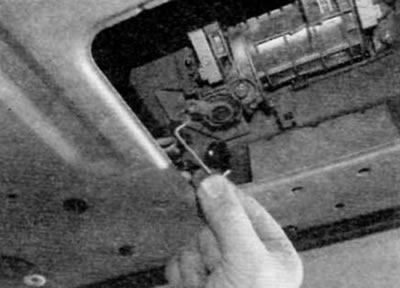
Figure 17.3. Disconnect the rod from the tailgate lock cylinder and the tailgate lock lever

Figure 17.3. Disconnect the rod from the tailgate lock cylinder and the tailgate lock lever


Material copied from the resource (peugeotbook)

4. Loosen the nut securing the lock cylinder to the outer handle and remove the lock cylinder through the opening in the trunk lid (figure 17.4).
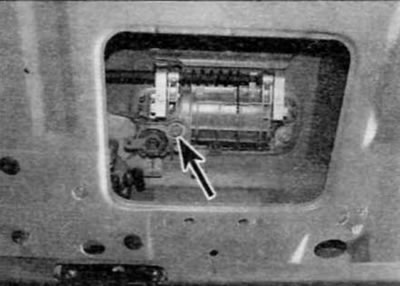
Figure 17.4, a. Unscrew the nut (marked with an arrow) fastening the lock cylinder to the outer…

Figure 17.4, a. Unscrew the nut (marked with an arrow) fastening the lock cylinder to the outer handle...
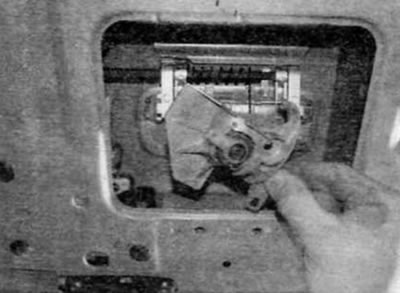


Figure 17.4, b....and remove the lock cylinder through the opening in the trunk door

Figure 17.4, b....and remove the lock cylinder through the opening in the trunk door


5. Unscrew the remaining nuts securing the outer handle to the trunk lid. Disconnect the drive rod from the door lock and remove the outside handle from the door (figure 17.5, a, b).
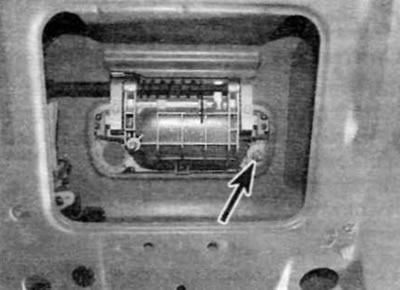
Figure 17.5, a. Unscrew the remaining nut (marked with an arrow)...
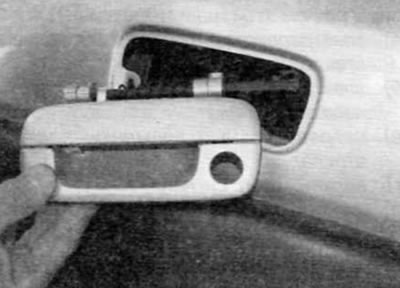
Figure 17.5, a. Unscrew the remaining nut (marked with an arrow)...


Figure 17.5, b....and then unhook the rod and remove the outer handle from the tailgate

Figure 17.5, b....and then unhook the rod and remove the outer handle from the tailgate


6. Remove the two screws and the latch assembly from the tailgate. When removing the latch, disconnect the rod from the latch lever (figure 17.6, a, b).
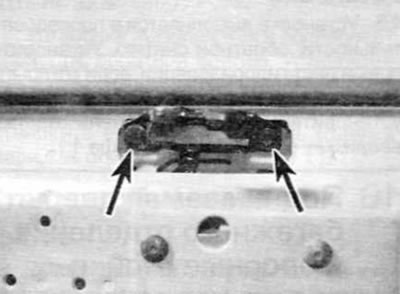
Figure 17.6, a. Remove two screws (marked with arrows)...
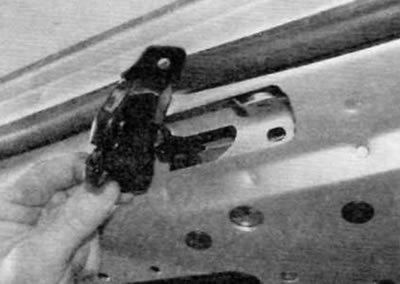
Figure 17.6, a. Remove two screws (marked with arrows)...


Figure 17.6, b....and remove the latch assembly from the tailgate

Figure 17.6, b....and remove the latch assembly from the tailgate


7. Remove the three screws securing the trunk lid lock. Remove the lock through the opening in the tailgate and disconnect the electrical connector (figure 17.7).
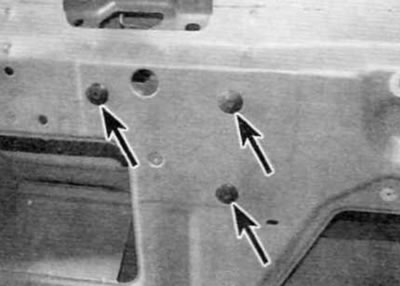
Figure 17.7, a. Remove the three screws securing the trunk lid lock (marked with arrows)...
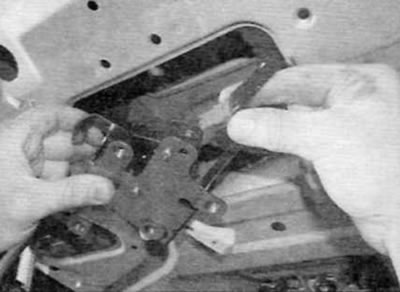
Figure 17.7, a. Remove the three screws securing the trunk lid lock (marked with arrows)...


Figure 17.7, b....then remove the lock through the opening in the tailgate and disconnect the…

Figure 17.7, b....then remove the lock through the opening in the tailgate and disconnect the electrical connector


Installation


8. Installation is carried out in the reverse order of removal. Install a new waterproofing sheet on the tailgate if the "old" one was damaged during removal. If necessary, adjust the position of the door lock strike plate to ensure satisfactory operation of the lock. Finally, install the tailgate trim panel as described in paragraph 28.

The tailgate lock counter part


Removal


9. To gain access to the cover of the striker part of the lock, bend back the floor covering.

10. Remove the three screws and remove the cover of the lock counter part from the floor (figure 17.10).
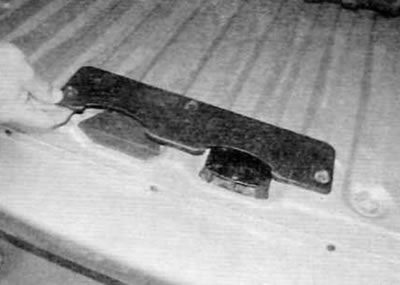
Figure 17.10. Remove the three screws and lift the lock's mating cover off the floor

Figure 17.10. Remove the three screws and lift the lock's mating cover off the floor


11. Mark the position of the lock mating part on the body to ensure correct installation. Unscrew the two bolts and remove the mating part of the lock from the body (figure 17.11).
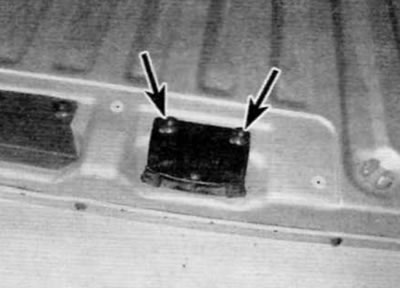
Figure 17.11. Remove two bolts (marked with arrows) and remove the mating part of the lock from the…

Figure 17.11. Remove two bolts (marked with arrows) and remove the mating part of the lock from the body


Installation

12. Installation is performed in the reverse order of removal. Before tightening the bolts, the position of the lock's mating part should be adjusted (using elongated bolt holes) so as to achieve satisfactory operation of the lock. Use the marks made before removal (if applicable).
This article is available at russian, bulgarian, belarusian, ukrainian, serbian, croatian, romanian, polish, slovak, hungarian
Article reviewed by editor: Nikonova Veronica
Share information:
Previous
Partner I: Doors, locks and windows
Next

Liftgate and support pillars — removal and installation
Front door window glass and window regulator — removal and…
Double-leaf rear door handle and lock components — removal and…
Sliding Door Handle and Lock Components — removal and…
Front Door Handle and Lock Components — removal and installation
Elements of the central locking system — removal and installation
Windscreen, glass for the liftgate and glass for the rear double…
Openable window glass — removal and installation
Sunroof — general information
See similar information for other Peugeot models

➨ Doorhandle and lock components — removal and refitting Peugeot 106 (1991-2003)
➨ Central lock Peugeot 207 (2006-2014)
➨ Engine compartment — maintenance components Peugeot 305 (1977-1989)
➨ Door lock Peugeot 405 (1987-1997)
➨ Exhaust system — replacement of components Peugeot 605 (1989-2000)
Link to this article in different formats
Comments and feedback from visitors
No comments yet


Add two numbers 13 + 49


Partner I (1996-2008) 
  • General information
  • Introduction to the guide
  • Faults en route
  • Weekly checks
  • User manual
  • Maintenance (petrol)
  • Maintenance (diesel)
  • Power unit
  • Petrol engines
  • Diesel engines «XUD»
  • Diesel engines «DW»
  • Overhaul of petrol engines
  • Overhaul of diesel engines
  • Cooling and heating
  • Power and exhaust (petrol)
  • Power and exhaust (XUD diesels)
  • Power and exhaust (DW diesels)
  • Emission reduction
  • Starting and charging system
  • Transmission
  • Clutch
  • Mechanical gearbox
  • Drive shafts
  • Chassis, running gear
  • Brake system
  • Car suspension
  • Steering
  • Body and interior
  • Exterior (external elements)
  • Interior (internal elements)
  • Doors, locks and windows
  • Electrical equipment
  • Equipment and devices
  • Electrical circuits
Peugeot 807 (2002-2014) 
  • General information
  • Operating instructions
  • Maintenance
  • Troubleshooting
  • Power unit
  • Gasoline engines
  • Diesel engines
  • Cooling and heating
  • Fuel injection (petrol)
  • Fuel system (diesel)
  • Fuel system
  • Exhaust system
  • Ignition system
  • Transmission
  • Clutch
  • Manual gearbox
  • Automatic gearbox
  • Chassis, running gear
  • Brake system
  • Car suspension
  • Steering system
  • Body and interior
  • Exterior (external elements)
  • Interior (internal elements)
  • Electrical equipment
  • Power devices
  • Electrical circuits
Peugeot 806 (1994-2002) 
  • General information
  • User manual
  • Maintenance
  • Power unit
  • Petrol engines
  • Diesel engines
  • Lubrication system
  • Cooling system
  • Fuel injection (petrol)
  • Fuel system (diesel)
  • Ignition and exhaust systems
  • ECM Bosch Motronic MP 3.2
  • ECM Magneti-Marelli (MM)
  • Transmission
  • Clutch
  • Mechanical gearbox
  • Chassis, running gear
  • Brake system
  • Car suspension
  • Steering
  • Electrical equipment
  • Equipment and devices
  • Electrical circuits
Peugeot J5 (1981-1993) 
  • General information
  • Introduction to manual
  • Specifications
  • Gasoline engine
  • Engine repair
  • Lubrication system
  • Cooling system
  • Fuel system
  • Ignition system
  • Diesel engine
  • Engine repair (DB9)
  • Lubrication system (DB9)
  • Cooling system (DB9)
  • Fuel injection (DB9)
  • Engine repair (U25)
  • Lubrication system (U25)
  • Cooling system (U25)
  • Fuel injection (U25)
  • Transmission
  • Clutch
  • Gearbox
  • Drive shafts
  • Chassis, running gear
  • Steering system
  • Car suspension
  • Brake system
  • Electrical equipment
  • Power devices
  • Electrical circuits
PeugeotBook.ru © 2018–2026 | Mobile version | Sitemap: EN BG BY UA RS HR RO PL SK HU | Write message | Site search | Add to bookmarks | Peugeot owners
106 (1991-2003) | 206 (1998-2012) | 207 (2006-2014) | 305 (1977-1989) | 306 (1993-2002) | 307 (2001-2008) | 405 (1987-1997) | 406 (1995-2004) | 605 (1989-2000) | Partner-I (1996-2008) | Eurovans-807 (2002-2014) | Eurovans-806 (1994-2002) | J5 (1981-1993) |
Cookies are used to ensure the correct display of pages on the site.