
English Русский
Български
Беларускі
Український
Српски
Hrvatski
Română
Polski
Slovenský
Magyar
Bookmark Articles Sitemap Contacts
Company Hyundai Company Opel Company Skoda Company Kia Company Mitsubishi Company LADA Company Audi
PeugeotBook.ru


Series 100   Series 200   Series 300   400-500   Series 600   Crossovers   Others
 
Partner I (1996-2008) Peugeot 807 (2002-2014) Peugeot 806 (1994-2002) Peugeot J5 (1981-1993)

Introduction to the manual (Peugeot Eurovans 806)

  • Main
  • Пежо
  • Peugeot 806 (1994-2002)
  • General information
  • User manual
  • Introduction to the manual
0
This guide is designed to help car owners effectively discuss and plan car repairs with a professional mechanic or perform them themselves. The guide will help you determine what work needs to be done (even if you decide that you can have it done in a workshop), carry out diagnostics and provide information on the technical condition, determine the sequence of actions and diagnostics during maintenance or repair. However, we hope that you will use this Guide specifically for completing the work yourself. Carrying out simple work will take much less time than servicing a car at a workshop, where you need to visit twice to drop off and pick up the car. And, of course, most importantly, you can save some money that would go towards paying for the work. To perform maintenance and repairs, it is essential to have a good set of metric wrenches, screwdrivers and feeler gauges, as these simple hand tools are used in most jobs. Sometimes repairs require special tools or special training. This is stated in the warnings provided in this manual.

The manual includes drawings and descriptions showing the function of the various parts and their locations. The works are described and photographed in a step-by-step sequence, making them easy to complete even for a beginner.

The manual consists of 12 sections. The sections are divided into parts and chapters.

There are many illustrations, especially in those sections that give a detailed sequence of operations to be performed. The text is accompanied by explanatory illustrations. They are numbered with decimal numbers in accordance with the Chapter number and the number of the paragraph in it, for example: 6.4 - the illustration refers to paragraph 4 of Chapter 6. At the beginning of the Guide there is a detailed Table of Contents, which can be used to easily find the question that interests you,


the "left" or "right" of a car is considered relative to the person sitting in the driver's seat facing forward.

Unless otherwise stated, nuts and bolts are loosened by turning them counterclockwise and tightened by turning them clockwise.

Manufacturers are constantly modifying vehicles, making changes to specifications, technical conditions and recommendations, and we incorporate these into our Guide as quickly as possible when notified.
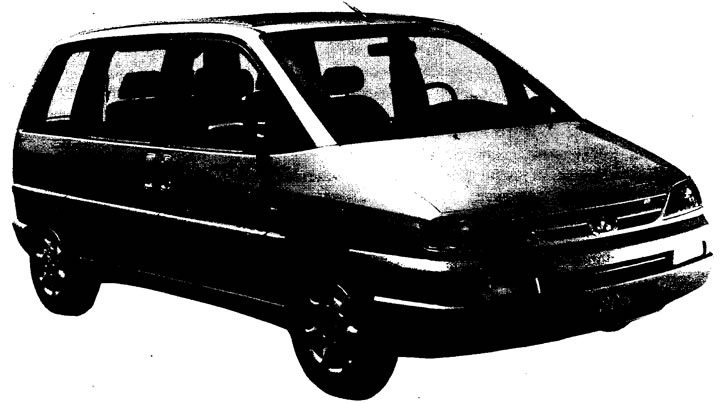
This guide is designed to help car owners effectively discuss and plan car repairs with a professional mechanic or perform them themselves. The guide will help you determine what work needs to be done (even if you decide that you can have it done in a workshop), carry out diagnostics and provide information on the technical condition, determine the sequence of actions and diagnostics during maintenance or repair. However, we hope that you will use this Guide specifically for completing the work yourself. Carrying out simple work will take much less time than servicing a car at a workshop, where you need to visit twice to drop off and pick up the car. And, of course, most importantly, you can save some money that would go towards paying for the work. To perform maintenance and repairs, it is essential to have a good set of metric wrenches, screwdrivers and feeler gauges, as these simple hand tools are used in most jobs. Sometimes repairs require special tools or special training. This is stated in the warnings provided in this manual.

The manual includes drawings and descriptions showing the function of the various parts and their locations. The works are described and photographed in a step-by-step sequence, making them easy to complete even for a beginner.


The manual consists of 12 sections. The sections are divided into parts and chapters.

There are many illustrations, especially in those sections that give a detailed sequence of operations to be performed. The text is accompanied by explanatory illustrations. They are numbered with decimal numbers in accordance with the chapter number and the number of the paragraph within it, for example: 6.4 - the illustration refers to paragraph 4 of Chapter 6. At the beginning of the Guide there is a detailed Table of Contents, which can be used to easily find the question you are interested in,

the "left" or "right" of a car is considered relative to the person sitting in the driver's seat facing forward.

Unless otherwise stated, nuts and bolts are loosened by turning them counterclockwise and tightened by turning them clockwise.

Manufacturers are constantly modifying vehicles, making changes to specifications, technical conditions and recommendations, and we incorporate these into our Guide as quickly as possible when notified.

Manufacturers are constantly modifying vehicles, making changes to specifications, technical…
This article is available at russian, bulgarian, belarusian, ukrainian, serbian, croatian, romanian, polish, slovak, hungarian
Article reviewed by editor: Shirokov Arseny
Share information:
Previous
Peugeot 806: User manual
Next

 
Dimensions and weight
Control Panel
Car keys
Remote control unit
Front doors
See similar information for other Peugeot models

➨ Introduction to manual Peugeot 106 (1991-2003)
➨ Manual air conditioner Peugeot 207 (2006-2014)
➨ Introduction to the Peugeot 307 Operation and Repair Manual Peugeot 307 (2001-2008)
➨ Removal the engine with a manual transmission Peugeot 405 (1987-1997)
➨ Manual transmission Peugeot 605 (1989-2000)
Link to this article in different formats
Comments and feedback from visitors
No comments yet


Add two numbers 39 + 20


Partner I (1996-2008) 
  • General information
  • Introduction to the guide
  • Faults en route
  • Weekly checks
  • User manual
  • Maintenance (petrol)
  • Maintenance (diesel)
  • Power unit
  • Petrol engines
  • Diesel engines «XUD»
  • Diesel engines «DW»
  • Overhaul of petrol engines
  • Overhaul of diesel engines
  • Cooling and heating
  • Power and exhaust (petrol)
  • Power and exhaust (XUD diesels)
  • Power and exhaust (DW diesels)
  • Emission reduction
  • Starting and charging system
  • Transmission
  • Clutch
  • Mechanical gearbox
  • Drive shafts
  • Chassis, running gear
  • Brake system
  • Car suspension
  • Steering
  • Body and interior
  • Exterior (external elements)
  • Interior (internal elements)
  • Doors, locks and windows
  • Electrical equipment
  • Equipment and devices
  • Electrical circuits
Peugeot 807 (2002-2014) 
  • General information
  • Operating instructions
  • Maintenance
  • Troubleshooting
  • Power unit
  • Gasoline engines
  • Diesel engines
  • Cooling and heating
  • Fuel injection (petrol)
  • Fuel system (diesel)
  • Fuel system
  • Exhaust system
  • Ignition system
  • Transmission
  • Clutch
  • Manual gearbox
  • Automatic gearbox
  • Chassis, running gear
  • Brake system
  • Car suspension
  • Steering system
  • Body and interior
  • Exterior (external elements)
  • Interior (internal elements)
  • Electrical equipment
  • Power devices
  • Electrical circuits
Peugeot 806 (1994-2002) 
  • General information
  • User manual
  • Maintenance
  • Power unit
  • Petrol engines
  • Diesel engines
  • Lubrication system
  • Cooling system
  • Fuel injection (petrol)
  • Fuel system (diesel)
  • Ignition and exhaust systems
  • ECM Bosch Motronic MP 3.2
  • ECM Magneti-Marelli (MM)
  • Transmission
  • Clutch
  • Mechanical gearbox
  • Chassis, running gear
  • Brake system
  • Car suspension
  • Steering
  • Electrical equipment
  • Equipment and devices
  • Electrical circuits
Peugeot J5 (1981-1993) 
  • General information
  • Introduction to manual
  • Specifications
  • Gasoline engine
  • Engine repair
  • Lubrication system
  • Cooling system
  • Fuel system
  • Ignition system
  • Diesel engine
  • Engine repair (DB9)
  • Lubrication system (DB9)
  • Cooling system (DB9)
  • Fuel injection (DB9)
  • Engine repair (U25)
  • Lubrication system (U25)
  • Cooling system (U25)
  • Fuel injection (U25)
  • Transmission
  • Clutch
  • Gearbox
  • Drive shafts
  • Chassis, running gear
  • Steering system
  • Car suspension
  • Brake system
  • Electrical equipment
  • Power devices
  • Electrical circuits
PeugeotBook.ru © 2018–2026 | Mobile version | Sitemap: EN BG BY UA RS HR RO PL SK HU | Write message | Site search | Add to bookmarks | Peugeot owners
106 (1991-2003) | 206 (1998-2012) | 207 (2006-2014) | 305 (1977-1989) | 306 (1993-2002) | 307 (2001-2008) | 405 (1987-1997) | 406 (1995-2004) | 605 (1989-2000) | Partner-I (1996-2008) | Eurovans-807 (2002-2014) | Eurovans-806 (1994-2002) | J5 (1981-1993) |
Cookies are used to ensure the correct display of pages on the site.