



Note: While some modern friction materials may not contain asbestos, it is safe to assume that asbestos is present and take appropriate precautions.
Caution! Dust resulting from clutch wear and deposited on clutch components may contain asbestos, which is hazardous to health. DO NOT blow it out with compressed air, as this may result in it being inhaled. DO NOT use gasoline or petroleum-based solvents to remove dust. To wash away the dust into a suitable container, use brake cleaner or denatured alcohol. After wiping the clutch components with a clean cloth, place the dirty cloth and cleaning solution in a sealed container labeled accordingly.
Removal
1. If you are not going to remove the entire engine and gearbox assembly from the vehicle and separate it for major repairs (see the relevant section chapter 2), then the clutch can be accessed after removing the gearbox, as described in Chapter 7.
2. Before disassembling the clutch, take chalk or a marker and mark the position of the clutch housing relative to the flywheel.
3. Working in a crisscross pattern, loosen the clutch housing bolts a half turn at a time until the spring force is weakened enough that the bolts can be removed by hand.
4. Remove the clutch cover assembly with the pressure plate from the mounting pins and remove the driven disk behind it, noting how it is installed (figure 4.4).
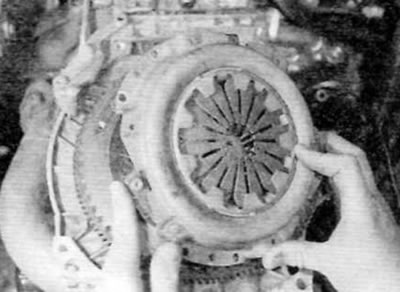
Figure 4.4, a. Remove the clutch cover from the mounting pins...
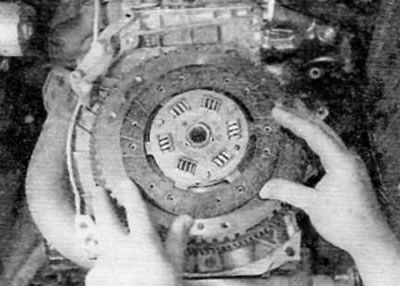
Figure 4.4, b....then remove the driven disk, noting how it is installed
Inspection
Note: Since removing and installing clutch components takes a significant amount of time, it is common practice to replace the driven disc, pressure plate assembly, and clutch release bearing as a single set, even if only one of them is actually worn out and requires replacement. It is recommended to replace the clutch components as a preventative measure that can be performed when the engine and/or gearbox is removed for any other reason.
5. Remove the clutch assembly.
6. When cleaning clutch components, first read the warning given at the beginning of this paragraph. Remove dust using a clean, dry cloth. Work in a well-ventilated area.
7. Inspect the driven disc surfaces for signs of wear, damage or oil contamination. If the friction linings have cracks, burn marks, scratches or other damage, or the driven disc is contaminated with oil or grease (visible by the shiny black spots), the disk should be replaced.
8. If the friction material is still serviceable, check that the disc hub splines are not worn, the torsion springs are in good condition and securely fastened, and all rivets are tight. If there is wear or damage, the driven disk should be replaced.
9. If the friction material is contaminated with oil, this may be due to an oil leak through the left crankshaft oil seal, through the joint between the engine sump and the cylinder block, or from the transmission input shaft. Before installing a new driven disc, replace the seal or restore the tightness of the corresponding joint as described in the relevant section chapter 2 or in chapter 7.
10. Inspect the clutch cover assembly with the pressure plate for obvious signs of wear or damage; shake it to check for loose rivets, worn or damaged diaphragm spring support rings. Make sure that the pressure plate connection plates to the casing do not show signs of overheating (such as a change in color to dark yellow or blue). If the diaphragm spring pins show signs of wear or damage, or if the spring force is questionable, the pressure plate assembly should be replaced
11. Inspect the machined working surfaces of the pressure plate and flywheel; they must be clean, absolutely flat, and free of scratches or burrs. If they have become discoloured due to overheating or are cracked, the disc should be replaced - although minor damage of this nature can sometimes be repaired by polishing with sandpaper.
12. Check whether the contact side of the clutch release bearing rotates smoothly and easily, without noise or sticking. Also make sure that the surface itself is smooth and free from wear, cracks, pitting, or scuffs. If there is any doubt about the condition, the bearing should be replaced.
Installation
13. When assembling, make sure that the friction surfaces of the flywheel and pressure plate are absolutely clean, smooth and free of oil. Use solvent to remove protective grease from new parts.
14. Install the driven disk so that its hub with springs faces away from the flywheel. There may be markings on the disc indicating. how it should be installed (figure 4.14).
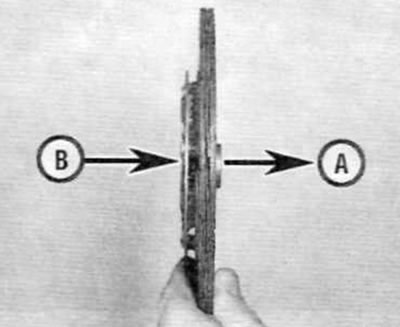
Figure 4.14. Install the driven disk so that its spring-loaded hub (B) faces away from the flywheel (A)
15. Install the clutch housing assembly with the pressure plate, using the three mounting pins as a guide and aligning the marks made during disassembly (if the original unit is reused). Install the pressure plate assembly mounting bolts, but tighten them only by hand so that the driven plate can be moved.
16. Now you should center the driven disk so that when installing the gearbox, its input shaft enters the splined hole in the center of the disk.
17. To center the driven disk, you can use a screwdriver or other long rod. Insert the tool through the hole in the driven disk into the hole in the crankshaft centering bearing and move the driven disk until it is aligned with the hole in the end of the crankshaft. Alternatively, you can use a clutch centering tool, which is available at many auto parts stores (figure 4.17)
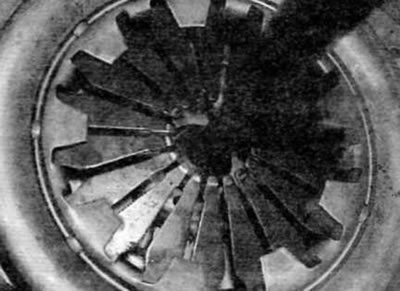
Figure 4.17. Center the driven disk using the centering tool
Tip: You can make your own clutch alignment tool from a piece of metal rod or a wooden dowel that fits snugly into the hole on the end of the crankshaft. To ensure that the diameter matches the splined hole of the driven disk, wrap the required amount of insulating tape around the rod.
18. When the driven disc is centered, tighten the clutch housing/pressure plate assembly bolts evenly and in a crisscross pattern to the specified torque.
19. Apply a thin layer of molybdenum disulfide grease (peugeot/Citroen recommends using Molykote BR2 Plus lubricant, which is available from your dealer) onto the splines of the driven disk and the primary shaft of the gearbox, as well as into the hole of the clutch release bearing and onto the shaft of the clutch release fork.
20. Install the gearbox as described in chapter 7.