



10. Check the brake disc 6 (see illustrations 4.10 and 4.10a) for the absence of ribs by running your hand over it. Brake discs with a ribbed surface are subject to replacement.
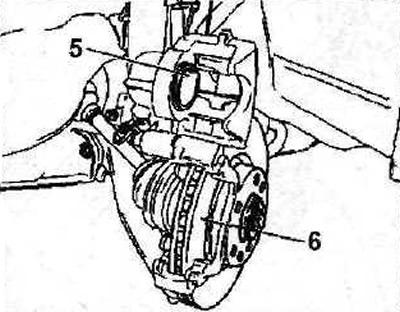
4.10 Check the brake disc 6 for ribbing. Front brake disc
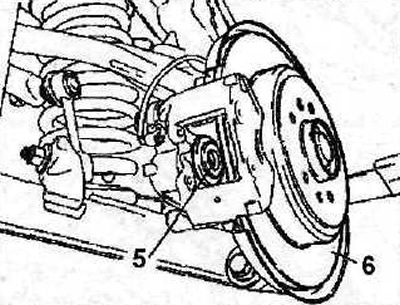
4.10a Check brake disc 6 for ribbing. Rear brake disc
11. Check the condition of the dust cap 5 of the wheel cylinder piston (see illustrations 4.10 and 4.10a). Replace a damaged cap immediately, because penetrating dirt quickly leads to depressurization of the brake caliper.
12. Press in the wheel cylinder piston using a suitable press or a wooden drift.
Attention! When the piston is pressed, the brake fluid is forced out of the wheel cylinder into the reservoir. Monitor the fluid level in the reservoir, and remove fluid if necessary.
13. Next, install the brake pads in the reverse order of removal.
14. After completing the work, check the tightness of the brake system, for which, with the engine running, press the brake pedal several times. The pressure in the system and, accordingly, on the brake pedal, should not drop. Check all connections for tightness.
15. Check the brake fluid level and top it up to the maximum mark if necessary.