



Table of contents: Draining the coolant 🠇 Filling the coolant and bleeding the…🠇
At the manufacturer's plant, an aqueous solution of antifreeze is poured into the cooling system.
Antifreeze is a concentrated ethylene glycol with anti-corrosion additives that prevents freezing and corrosion of the cooling system, and also increases the boiling point of the coolant. Therefore, the engine cooling system must be filled with the mentioned aqueous solution of antifreeze all year round.
Since the anti-corrosion additives in the coolant decrease over time, it must be changed as part of the vehicle's maintenance. The coolant should also be changed when installing new aluminum parts, such as the cylinder head or water pump.
The system should be filled with antifreeze recommended by the manufacturer, for example, REVKOGEL 2000 or GLYSANTIN G33. The ratio of water and antifreeze should be maintained at a ratio of 1:1. In this case, protection against freezing is provided at temperatures down to -35°C.
Attention! Antifreeze should be mixed with clean water of drinking or distilled quality.
If the cylinder head, cylinder head gasket, radiator, heater or engine were replaced during repairs, the coolant must be replaced in any case. This is necessary so that particles of anti-corrosion protection settle on new parts made of light metals during the running-in period and thus form a strong anti-corrosion film. The content of the anti-corrosion substance in the old coolant is no longer sufficient to form a protective layer on new parts.
A routine coolant change is performed as part of vehicle maintenance.
Warning! Coolant is poisonous. It must not be poured out in random places. To do this, you need to find out where the nearest collection point for special means is or hand over the coolant to the disposal point.
Draining the coolant
Cars with petrol engine ES9J4
1. Unscrew the filler cap of the coolant expansion tank.
2. Connect a transparent hose to the drain pipe to ensure a more accurate drainage of liquid directly into a container.
3. Unscrew the drain plug 1 on the radiator (see illustration).
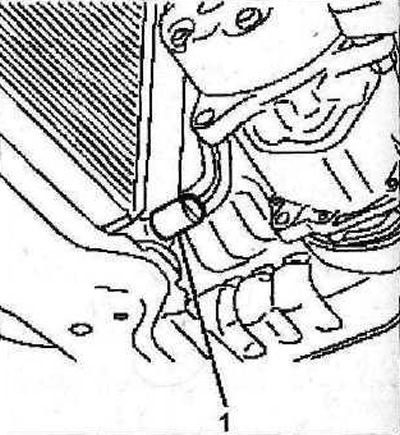
10.3 Unscrew the drain plug 1 on the radiator. Cars with petrol engine ES9J4
4. Unscrew the plugs 2 and 3 of the ventilation holes (see illustration).
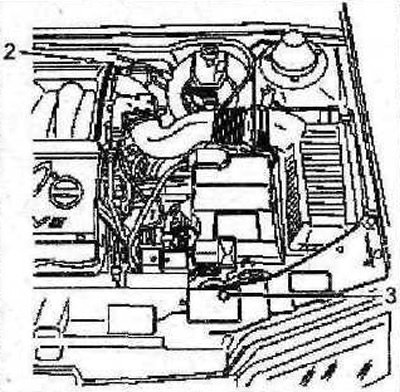
10.4 Unscrew plugs 2 and 3 of the ventilation holes. Cars with petrol engine ES9J4
5. Unscrew the vent plug 3 (see illustration).
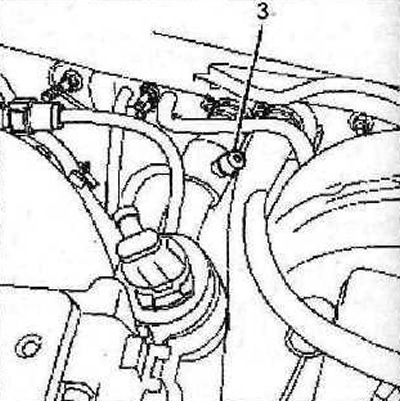
10.5 Unscrew the plug of the ventilation hole 3. Cars with a petrol engine ES9J4
6. Unscrew the plugs of the 4 ventilation holes (see illustration).
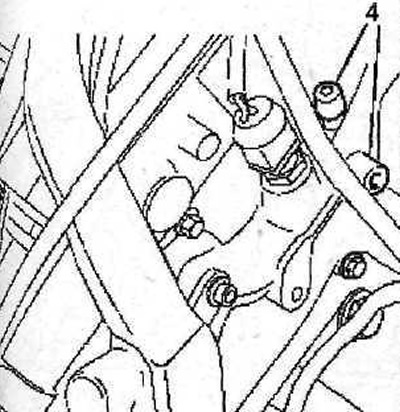
10. 6 Unscrew the plugs of the 4 ventilation holes. Cars with petrol engine ES9J4
7. Remove the intake manifold 5 (see illustration).
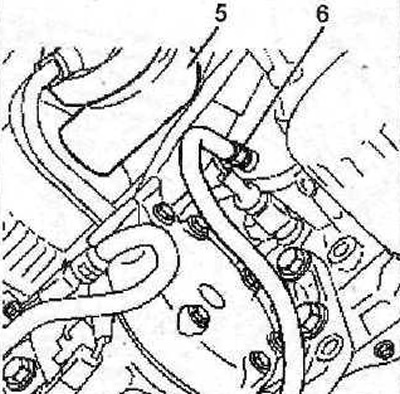
10.7 Remove the intake manifold 5. Cars with petrol engine ES9J4
8. Connect the hose to the thermostat drain pipe and drain the fluid from the engine cooling jacket.
9. Unscrew the plug of hole 6 on the cylinder block (see illustration 10.7), connect a transparent hose to it and drain the coolant into a suitable container.
10. Unscrew the plug of hole 6 on the cylinder block (see illustration), connect a transparent hose to it and drain the coolant into a suitable container.
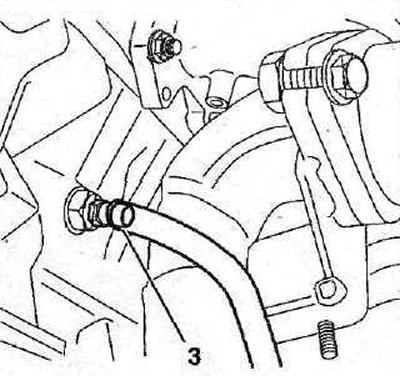
10.10 Unscrew the plug of hole 6 on the cylinder block, connect a transparent hose to it and drain the coolant into a suitable container. Cars with a petrol engine ES9J4
11. Screw in plugs 1, 6 and 7. Tighten plugs 6 and 7 to 5 Nm.
Cars with petrol engines of the ZPJ series
12. Unscrew the cap from the coolant expansion tank (see illustration).
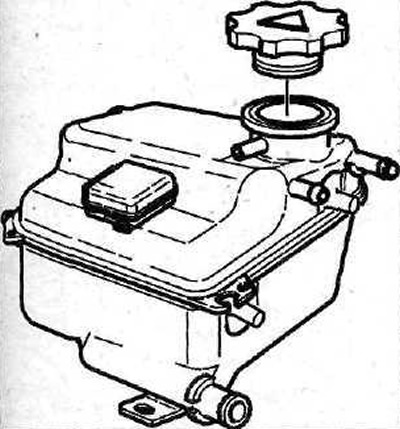
10.12 Unscrew the cap from the coolant expansion tank. Cars with ZPJ series petrol engines
13. Unscrew the drain plug on the radiator (see arrow in illustration) and drain the coolant from the radiator into a suitable container.
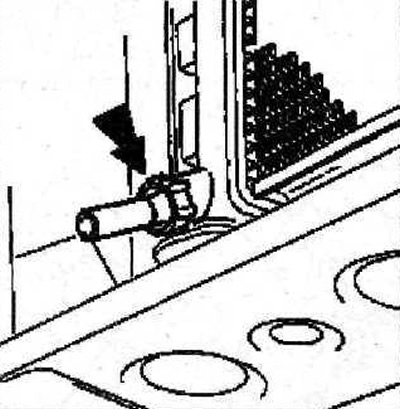
10.13 Unscrew the drain plug on the radiator (see arrow). Cars with petrol engines of the ZPJ series
14. Unscrew the drain plug on the cylinder block (see arrow in illustration)and drain the coolant.
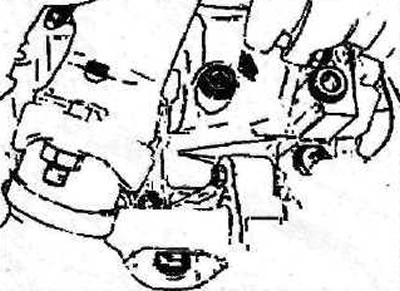
10.14 Unscrew the drain plug on the cylinder block (see arrow) and drain the coolant. Cars with gasoline engines of the ZPJ series
XU series petrol engine vehicles
15. Unscrew cap 1 from the coolant expansion tank (see illustration).
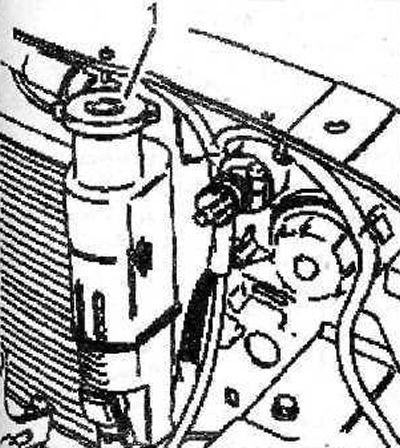
10.15 Unscrew cap 1 from the coolant expansion tank. Vehicles with XU series petrol engines
16. Unscrew the plug 2 of the ventilation hole (see illustration).
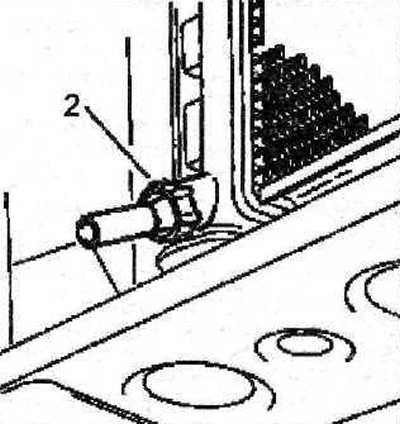
10.16 Unscrew the plug 2 of the ventilation hole. Cars with gasoline engines of the XU series
17. Unscrew plugs 4 and 5, as well as plug 3 (if provided) ventilation holes (see illustration).
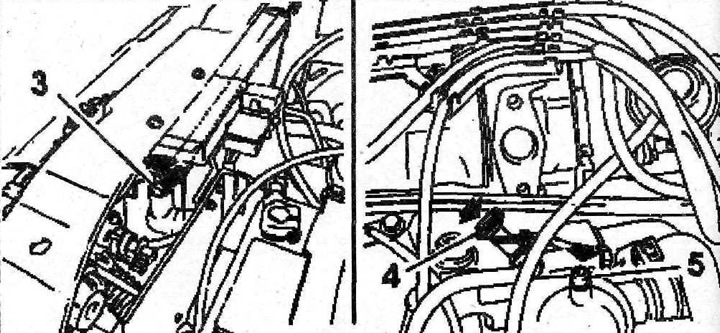
10.17 Unscrew plugs 4 and 5, as well as plug 3 (if provided) ventilation holes. Cars with gasoline engines of the XU series
18. Remove plug 6 (see illustration) on the radiator hose and drain the coolant from the radiator
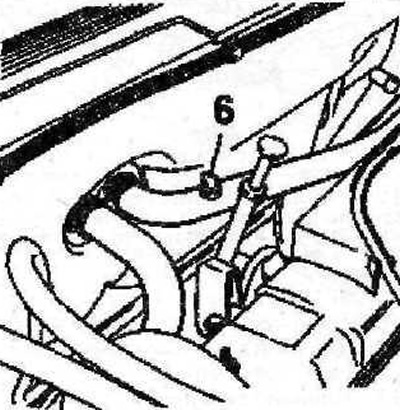
10.18 Remove plug 6 on the radiator hose and drain the coolant from the radiator. Cars with XU series gasoline engines
19. Unscrew the plug 7 (see illustration) and drain the fluid from the cylinder block.
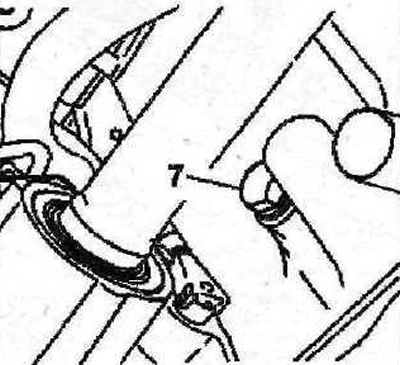
10.19 Unscrew plug 7 and drain the liquid from the cylinder block. Cars with gasoline engines of the XU series
Filling the coolant and bleeding the system
Cars with petrol engine ES9J4
Attention! On cars with a petrol engine ES9J4, filling the coolant is not a regular pouring of liquid into the expansion tank. Some hoses through which the coolant circulates are located above the expansion tank. For this reason, filling the coolant is carried out using a special container to avoid the formation of air locks in the system.
20. Connect the filling container "a" to the filler neck of the expansion tank (see illustration).
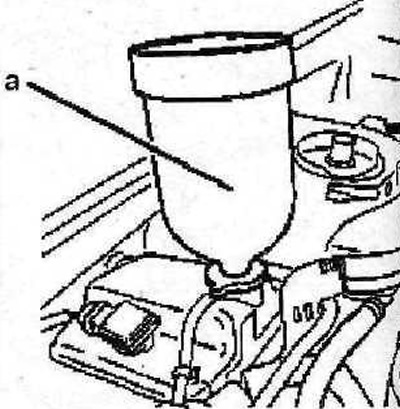
10.20 Connect the filling container "a" to the filler neck of the expansion tank. Cars with petrol engine ES9J4
21. Unscrew the plugs of all ventilation holes.
22. Carefully pour in coolant until it starts to flow out of the vents.
23. Screw in the vent plugs, starting with the one from which liquid starts to flow.
Attention! To completely remove air from the heater, there must be at least 1 liter of coolant in the filling tank.
24. Start the engine.
25. Increase the engine speed and, keeping it within 1500-2000 rpm, wait for the radiator fan to turn on and off. Then turn off the engine.
26. Remove the coolant filling container.
Caution! The coolant remaining in the container may be hot. Some coolant will leak out, but the system will be full.
27. Screw the cap onto the expansion tank neck. Make sure the cap is tightened to the second notch.
Cars with petrol engines of the ZPJ series
Attention! On cars with gasoline engines of the ZPJ and XU series, a special filling tank is not required to fill the coolant.
28. Fill the expansion tank with coolant until it reaches the bottom edge of the filler neck.
29. Screw the cap onto the neck of the coolant expansion tank.
30. Start the engine and let it idle for about 15 minutes.
31. Turn off the engine and let it cool.
32. Refill the coolant, screw the cap onto the expansion tank neck. Make sure the cap is tightened to the second notch
XU series petrol engine vehicles
33. Fill the coolant into the expansion tank to the level of the lower edge of the filler neck.
34. Screw in plugs 2, 3, 4 and 5 as soon as coolant starts to flow out of the corresponding ventilation holes.
35. Screw the cap onto the neck of the coolant expansion tank.
36. Start the engine, increase its speed to 2000 rpm and let it run for about 2 minutes.
37. Top up the coolant in the expansion tank: the liquid level should reach the lower edge of the filler neck.
38. Screw the cap onto the expansion tank neck. Make sure the cap is tightened to the second notch.
39. Start the engine and let it run until the radiator fan turns on and off.
40. Turn off the engine. Wait about 15 minutes.
41. Check the coolant level. Top up the coolant if necessary.