



Table of contents: Removal 🠇 Installation 🠇
Removal
Caution! Remove brake fluid from the expansion tank to prevent it from splashing out when the wheel cylinder piston is depressed.
1. Jack up the rear of the car and place it on jack stands, having first loosened the rear wheel bolts.
2. Remove the rear wheels.
3. Disconnect end 1 of the parking brake cable from the drive lever on the rear wheel caliper (see illustration).
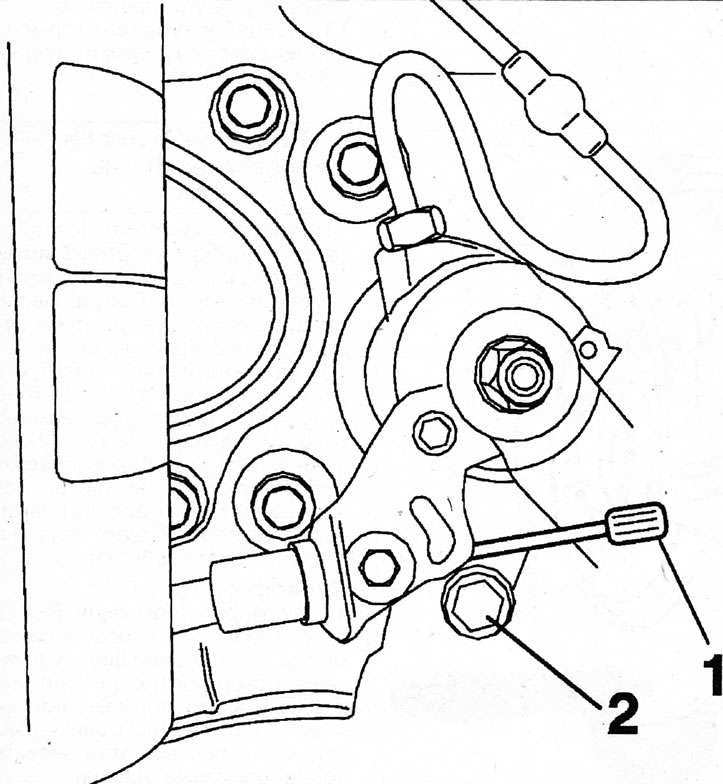
5.3. Disconnect end 1 of the parking brake cable from the drive lever on the rear wheel caliper
4. Unscrew the lower bolt 2 of the caliper mount and move the caliper upwards without loosening the tightening of its upper bolt and without disconnecting the brake hose from the caliper (see illustration 5.3).
Caution! If the upper caliper mounting bolt is loose, you will need to remove it and replace it with a new one when installing the caliper, as the bolt is self-locking.
5. Remove the brake pads 4 (see illustration).
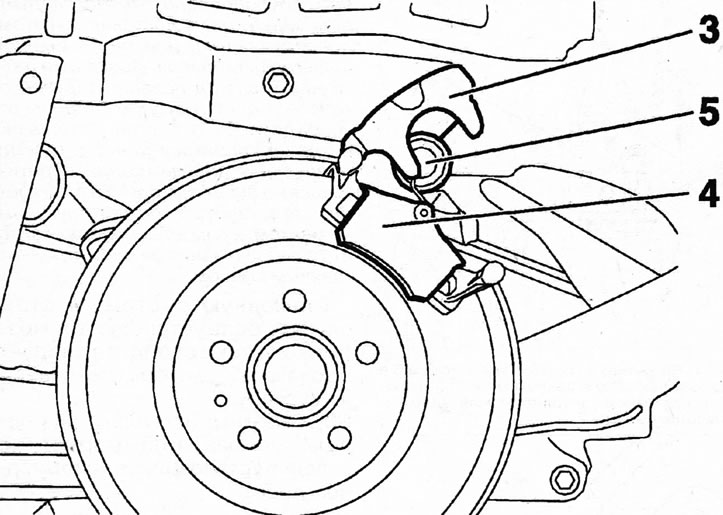
5.5. Remove the brake pads 4 3 - support; 5 - brake cylinder piston
Installation
6. Press piston 5 into the brake cylinder using special pliers (see illustrations 5.5 and 4.22).
Note: If you don't have special pliers, you can press the piston into the cylinder with a wooden block. When doing this, you must act carefully so as not to damage the piston, the cylinder sealing cuff, or its inner surface.
7. Inspect the cylinder cuff, as well as the protective caps on the guide pins. Replace damaged parts using the repair kit. It is recommended to entrust this work to a workshop.
8. Clean the caliper and brake disc with alcohol or a suitable cleaning agent, such as Henkel, and measure the remaining thickness of the brake disc
9. Install new brake pads and lower the caliper.
(Source of the article is posted at: www.peugeotbook.ru)
Caution: Before installing new brake pads, clean the seating and guide surfaces of the brake pads with a suitable soft metal brush or wipe with a cloth soaked in alcohol. Do not use solvents containing mineral oils or tools with sharp edges. When installing old brake pads, they should also be cleaned.
10. Screw in the new lower caliper mounting bolt, lubricating its threads with protective grease, and tighten it to 35 Nm.
11. Connect the parking brake cable end to the drive lever, install the wheels and check the effectiveness of the parking brake. Adjust the cable tension if necessary.
12. Press the brake pedal several times to allow the new brake pads to seat themselves.
13 Top up the brake fluid level in the expansion tank.