



Table of contents: Lucas support 🠇 Bosch support 🠇
Caution! Brake pads must be replaced on BOTH front wheels at the same time. NEVER replace the pads on just one wheel as this may result in uneven braking. Please be aware that dust generated by brake pad wear may contain asbestos, which is hazardous to health. Never blow out this dust with compressed air or inhale it. When working with brakes, use a respirator or a cotton-gauze bandage. DO NOT use gasoline or petroleum-based solvents to clean brakes. Use only brake cleaner or denatured alcohol.
Note: New guide pin bolts must be used during installation.
Lucas support
1. Apply the parking brake. Raise the front of the vehicle and support it securely (see "Lifting and installing the car on supports"). Remove both front wheels.
2. Disconnect the electrical connector of the brake pad wear sensor on the steering knuckle. Note how the wiring is routed and release it from all associated clamps.
3. Press the piston into the cylinder by pulling the caliper outward.
4. Remove the lower caliper guide pin mounting bolt, holding the pin with a second, tightly fitting open-end wrench (figure 4.4). Discard the guide pin mounting bolt; new bolts must be used during installation.
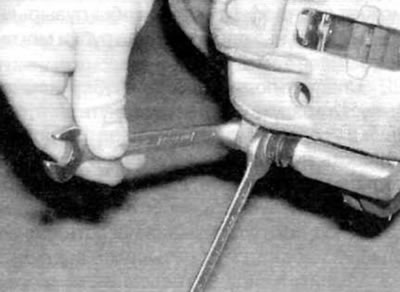
Figure 4.4. When unscrewing the guide pin mounting bolt, hold the pin with a wrench
5. Loosen the upper guide pin mounting bolt while holding the guide pin with an open-end wrench as above. Lift the caliper up away from the brake pads and tie it to the suspension strut to secure it in place (figure 4.5).
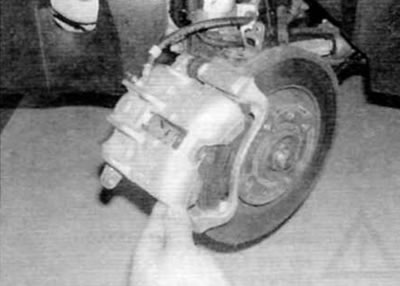
Figure 4.5. Loosen the upper guide pin mounting bolt and move the caliper up away from the brake pads
6. Remove the two brake pads from the caliper support bracket, noting their installation position in case they are to be reused (that is, the inner and outer pads) (figure 4.6).
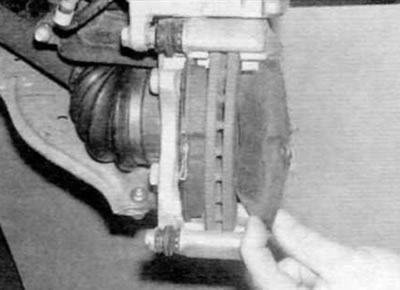
Figure 4.6. Remove both brake pads from the caliper support bracket
7. First, measure the remaining friction lining thickness on each brake pad (figure 4.7). If the pad wear in any area has reached or exceeded the wear limit, all four front pads should be replaced. The brake pads must be replaced if they become oily, as there is no effective way to degrease contaminated friction linings. If the brake pads are unevenly worn or oily, find the cause and correct it before reassembling the brake. New brake pads and repair kits are available from Peugeot/Citroen dealers.
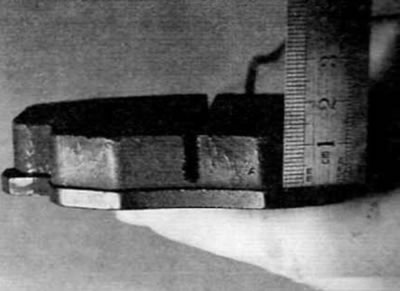
Figure 4.7. Measuring the thickness of the friction material on the brake pad
8. If the brake pads are still serviceable, carefully clean them with a clean fine wire brush or similar tool. Pay special attention to the sides and back of the metal base. Clean the grooves in the friction material and remove all large particles of dirt and other foreign particles. Thoroughly clean the pad mounting areas in the caliper support bracket.
9. Before installing the brake pads, make sure that the guide pins move freely in the bushings of the caliper body/support bracket. Make sure of that. that the rubber boots of the guide pins are not damaged. Use a brush to clean dirt from the caliper and piston. Do not inhale the resulting dust under any circumstances, as it is hazardous to your health. Inspect the dust seal on the piston for damage and the piston itself for brake fluid leaks, corrosion, or damage. If any of these elements require attention, please refer to paragraph 8.
10. If new brake pads are to be installed, the caliper piston must be pressed deep into the cylinder to provide space for their installation. To do this, you can use a special tool for retracting the piston or a clamp, or even just suitable boards as levers. Clamp the brake hose going to the caliper, then connect the brake bleeder kit to the bleeder nipple on the caliper. Open the air bleed nipple as the piston retracts. Excess brake fluid will be collected in the bleeder kit container (figure 4.10, a, b). Close the bleed nipple just before the caliper piston fully enters the caliper. This should prevent air from entering the hydraulic system.
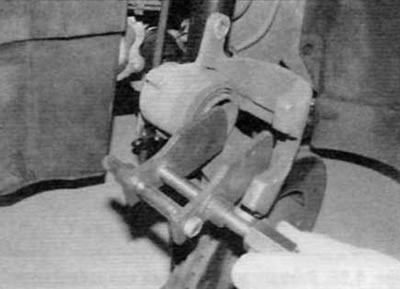
Figure 4.10, a. Using a suitable tool, push the caliper piston inward...
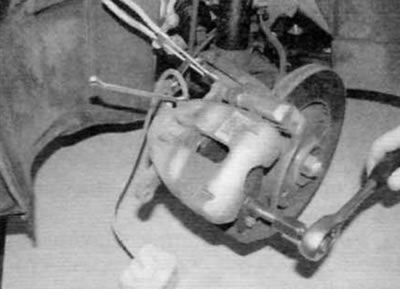
Figure 4.10, b....and, having opened the air bleed nipple, allow the brake fluid to flow into the container
Note: The ABS modulator contains hydraulic elements that are very sensitive to the presence of dirt in the brake fluid. Even the smallest particles can cause blockages in the system and cause it to fail. The pad retraction method described here prevents contaminants contained in the brake fluid exiting the caliper from penetrating back into the ABS modulator and completely eliminates the possibility of damage to the master cylinder seals.
11. Install the brake pads into the caliper support bracket so that the friction linings of each pad are facing the brake disc and, if previously removed brake pads are being installed, the brake pads are installed in their original positions. When new brake pads are worn, the pad with the white wear sensor wire should be located on the outside.
12. Lower the caliper onto the brake pads and route the pad wear sensor wiring through the hole in the caliper.
13. Apply a suitable thread locking compound to the threads of the two new guide pin mounting bolts if the bolts were not coated previously. Install the bottom bolt and tighten it to the specified torque. When tightening the guide pin bolt, hold the guide pin with an open-end wrench.
14. Remove the original upper guide pin mounting bolt, screw in a new bolt and tighten it to the specified torque.
15. Connect the brake pad wear sensor electrical connector and route the wiring accordingly, guiding it through the loop on the caliper bleeder screw cap.
16. Press the brake pedal several times until the pads come into firm contact with the brake disc and normal operation is restored (without vacuum amplification effect) pedal pressure.
17. Repeat the above procedure on the other front brake caliper.
Bosch support
18. Apply the parking brake. Raise the front of the vehicle and support it securely (see "Lifting and installing the car on supports"). Remove both front wheels.
19. Press the piston into the cylinder by pulling the caliper outward.
20. Remove the lower caliper guide pin mounting bolt (figure 4.20). Discard the guide pin mounting bolt; a new bolt must be used when installing.
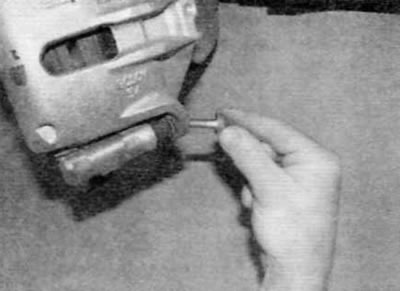
Figure 4.20. Remove the lower caliper guide pin mounting bolt...
21. Lift the caliper up away from the brake pads and tie it to the suspension strut to secure it in place (figure 4.21).
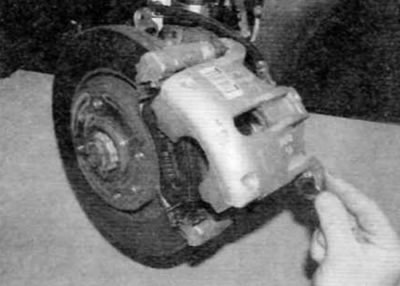
Figure 4.21. ...then move the caliper up away from the brake pads
[Source available here PeugeotBook]
22. Remove the two brake pads from the caliper support bracket, noting their installation position in case they are to be reused (that is, the inner and outer pads). Remove the adjusting shims from the top and bottom of the caliper support bracket (figure 4.22, a, b).
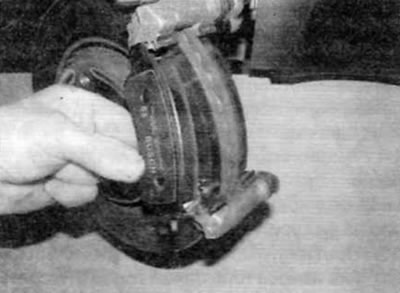
Figure 4.22, a. Remove the brake pads from the caliper support bracket...
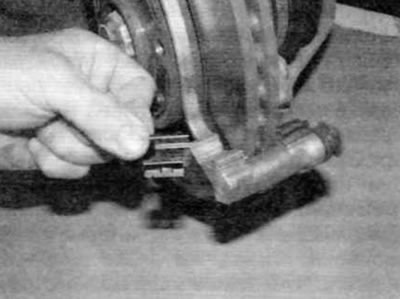
Figure 4.22, b....and then remove the upper and lower adjustment shims
23. Proceed as described in step. p. 7-10.
24. Install the adjusting shims onto the upper and lower parts of the caliper support bracket, positioning them correctly.
25. Install the brake pads into the caliper support bracket so that the friction linings of each pad are facing the brake disc and, if previously removed brake pads are being installed, the brake pads are installed in their original positions.
26. Untie the caliper and lower it onto the brake pads. Position the lower guide pin so that the flat on it is horizontal and mates correctly with the machined surface on the caliper support lug (figure 4.26).
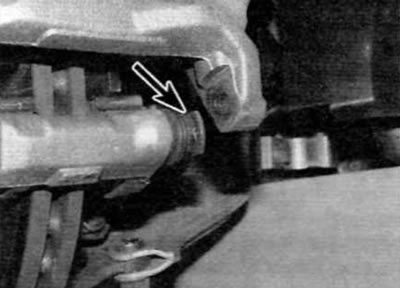
Figure 4.26. Position the lower guide pin so that the chamfer (marked with an arrow) it was positioned horizontally and correctly mated with the machined surface on the support lug
27. Apply a suitable thread locking compound to the threads of the new lower guide pin mounting bolt if the bolts were not coated with one already. Screw in the bolt and tighten it to the specified torque.28 Depress the brake pedal several times, ensuring that the pads come into firm contact with the brake disc and normal operation is restored (without vacuum amplification effect) pedal pressure.
29. Repeat the above procedure on the other front brake caliper. All calipers
30. Install the wheels, lower the vehicle and tighten the wheel bolts to the specified torque.
31. Finally, check the brake fluid level in the brake fluid reservoir as described in "Weekly checks".
32. Keep in mind that new brake pads will not provide full braking performance until they are broken in. Be prepared for this and, after replacing the pads, avoid sudden braking for the first few hundred kilometers if possible.