



Attention!
- Brake fluid is harmful to eyes and paintwork. Handle it with care.
- Do not use liquid that has been stored in an open container for a long time, as it will absorb moisture from the air. Using such fluid may result in a dangerous reduction in brake performance.
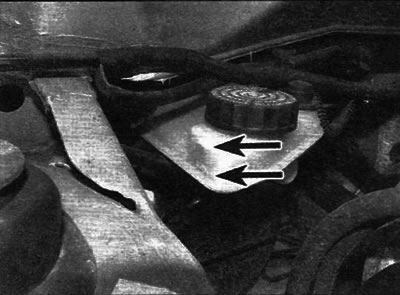
1. The brake fluid reservoir is located in the engine compartment on the front of the brake booster. There are "MAX" and "MIN" level marks on the tank wall. The brake fluid level should be maintained between these two marks
Advice.
- Place the car on a level, horizontal surface.
- The brake fluid level may drop slightly as the brake pads wear, but it should not be allowed to fall below the "MIN" mark.
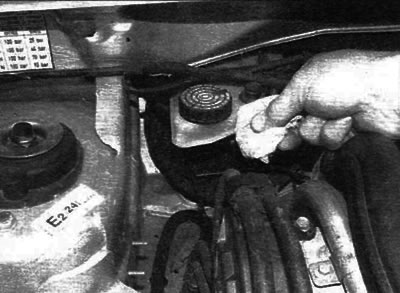
2. If refilling is required, wipe the area around the filler neck with a clean cloth before removing the cap to prevent dirt from entering the system. When adding fluid, it is recommended to inspect the tank. If the brake fluid is contaminated, it should be drained and filled with fresh fluid (see chapter 9)
Safety first!
- If the brake fluid reservoir requires frequent topping up, this means that there are leaks in the systems that must be immediately identified and repaired.
- If you suspect a brake fluid leak, do not drive your vehicle until you have thoroughly inspected the brake system. Never risk driving a car if you have the slightest doubt about the serviceability of its brakes.
(Article based on material from the website peugeotbook.ru)
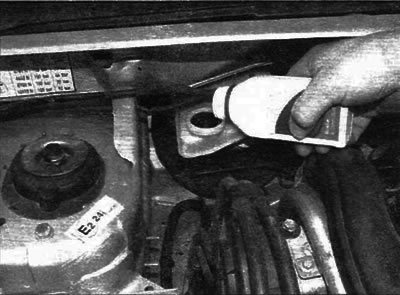
3. Carefully add liquid, being careful not to spill it on surrounding painted surfaces. Use only the fluid recommended by the manufacturer. Mixing fluids of different brands may cause damage to the brake system or loss of brake effectiveness. After filling the fluid to the correct level, screw on the cap, tighten it securely and wipe off any fluid spills