



Warning. Before working with the battery, please read the precautions in the section again "Safety first!" at the beginning of this Guide.
- Make sure the battery tray is in good condition and the battery retaining clamp is securely tightened. Traces of corrosion on the tray, clamp and the battery itself can be removed using a solution of baking soda and water. After this, thoroughly rinse the treated surfaces with water. Cover metal parts damaged by corrosion with a zinc-based primer and paint.
- Periodically (at least once every three months) check the battery charge level as described in chapter 5A.
- If the battery is discharged, the engine can be started using a booster battery (see "Starting the engine from an external battery").
Tip: Battery corrosion can be minimized by lubricating the battery terminals and clamps with petroleum jelly.
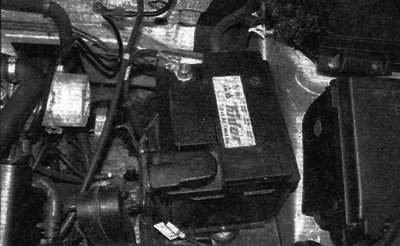
1. The battery is located on the left side of the engine compartment. The battery cover and housing should be periodically inspected for cracks
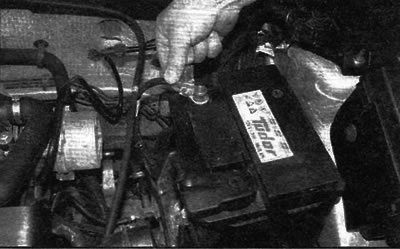
2. Check the reliability of the clamps on the terminals, which is the key to good electrical contact. A properly tightened clamp cannot be turned on the terminal. Also check the battery cable for damage
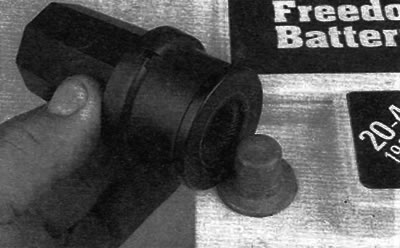
3. If traces of corrosion are found on the terminals or clamps (white loose deposits), disconnect the wires from the terminals, clean them with a small wire brush and reinstall them. You can find special tools for cleaning terminals in stores that sell related products...
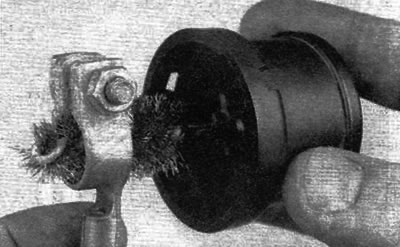
4. ... and battery cable clamps