
English Русский
Български
Беларускі
Український
Српски
Hrvatski
Română
Polski
Slovenský
Magyar
Bookmark Articles Sitemap Contacts
Company Hyundai Company Opel Company Skoda Company Kia Company Mitsubishi Company LADA Company Audi
PeugeotBook.ru


Series 100   Series 200   Series 300   400-500   Series 600   Crossovers   Others
 
Partner I (1996-2008) Peugeot 807 (2002-2014) Peugeot 806 (1994-2002) Peugeot J5 (1981-1993)

Glow Plugs — removal, inspection, and installation (Peugeot Partner I)

  • Main
  • Пежо
  • Partner I (1996-2008)
  • Power unit
  • Starting and charging system
  • Glow Plugs — removal, inspection, and installation
0
Table of contents: Removal 🠇 Inspection 🠇 Installation 🠇

Removal


Warning. If the glow plug system has just been energized or the engine has recently been running, the glow plugs may be very hot.


1. Disconnect the ground cable from the battery (see "Disconnecting the battery").

2. On models with a 1.9L D9B engine, remove the air distribution housing. If necessary, also remove the air intake duct and disconnect the vent hose from the oil filler pipe. For more information, please contact chapter 4B.

3. On 1.9L models with a top cover, release the clips on the right side and top of the engine cover, then carefully remove the cover so as not to lose the rubber mounts. On 2.0L models, release the tabs (turn them 90° to release) and remove the engine cover.

4. Loosen the nut on the terminal of the corresponding glow plug and remove the washer (figure 2.4). Note that the main power cable is connected to the glow plug of cylinder No. 1 and install a jumper wire between the four spark plugs.
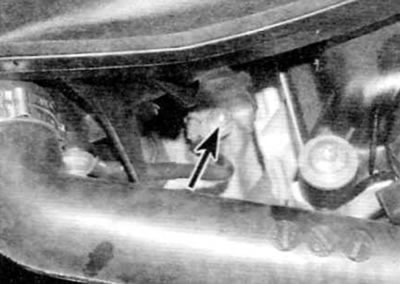
Figure 2.4. Unscrew the nut (marked with an arrow) and disconnect the electrical connector at the…

Figure 2.4. Unscrew the nut (marked with an arrow) and disconnect the electrical connector at the glow plug terminal (the later 1.9L engine is shown)


5. If applicable, carefully move the lines or wires aside to allow access to the appropriate glow plug.

6. Unscrew the glow plug and remove it from the cylinder head (figure 2.6).
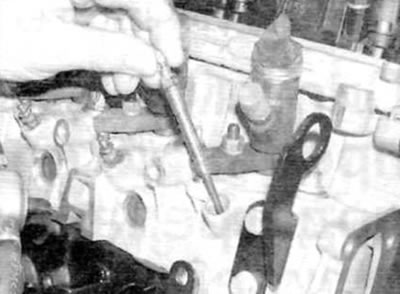
Figure 2.6. Unscrew the glow plug and remove it from the cylinder head (shown is a 2.0L engine with…

Figure 2.6. Unscrew the glow plug and remove it from the cylinder head (shown is a 2.0L engine with the fuel rail removed)


Inspection


7. Inspect each glow plug for mechanical damage. Burning or corrosion of the glow plug tip can be caused by poor nozzle spray pattern. If such damage is detected, check the injectors.

8. If the spark plugs are in good condition, perform an electrical test using a 12-volt test lamp or continuity tester as described in the previous paragraph.

9. To ensure that the glow plugs heat up evenly and in approximately the same time, apply 12V to them to activate them. Observe the following precautions:
  • a) Clamp the glow plug being tested in a vice or a self-tightening wrench. Remember that it gets red hot when working.
  • b) Make sure that the supply or test lead has a built-in fuse or circuit breaker (overload tripping), designed to prevent damage due to short circuits.
  • c) After checking, allow the candle to cool for a few minutes before handling.

10. The tip of a functioning glow plug glows red-hot after applying current to the plug for approximately 5 seconds. A glow plug that begins glowing significantly later or that begins glowing in the middle rather than at the tip is considered faulty.


Installation


11. Installation is carried out in the reverse order of removal. Apply a small amount of copper-based grease to the spark plug threads and tighten the spark plugs to the specified torque. Do not exceed the specified tightening torque as this may damage the spark plug.
This article is available at russian, bulgarian, belarusian, ukrainian, serbian, croatian, romanian, polish, slovak, hungarian
Article reviewed by editor: Nikonova Veronica
Share information:
Previous
Partner I: Starting and charging system
Next

Pre-heating system — description and testing
Heating system specifications
Knock sensor — removal and installation
Ignition timing — checking and adjustment
Ignition Coil Block — removal, inspection, and installation
Pre-heating system control unit — removal and installation
See similar information for other Peugeot models

➨ Glow plugs — removal, inspection and refitting Peugeot 106 (1991-2003)
➨ Replacing glow plugs (1.6L engine) Peugeot 207 (2006-2014)
➨ Glow plugs Peugeot 306 (1993-2002)
➨ Glow Plugs — Removal, Checking and Installation Peugeot 406 (1995-2004)
➨ Spark plugs — general information Peugeot 605 (1989-2000)
Link to this article in different formats
Comments and feedback from visitors
No comments yet


Add two numbers 47 + 44


Partner I (1996-2008) 
  • General information
  • Introduction to the guide
  • Faults en route
  • Weekly checks
  • User manual
  • Maintenance (petrol)
  • Maintenance (diesel)
  • Power unit
  • Petrol engines
  • Diesel engines «XUD»
  • Diesel engines «DW»
  • Overhaul of petrol engines
  • Overhaul of diesel engines
  • Cooling and heating
  • Power and exhaust (petrol)
  • Power and exhaust (XUD diesels)
  • Power and exhaust (DW diesels)
  • Emission reduction
  • Starting and charging system
  • Transmission
  • Clutch
  • Mechanical gearbox
  • Drive shafts
  • Chassis, running gear
  • Brake system
  • Car suspension
  • Steering
  • Body and interior
  • Exterior (external elements)
  • Interior (internal elements)
  • Doors, locks and windows
  • Electrical equipment
  • Equipment and devices
  • Electrical circuits
Peugeot 807 (2002-2014) 
  • General information
  • Operating instructions
  • Maintenance
  • Troubleshooting
  • Power unit
  • Gasoline engines
  • Diesel engines
  • Cooling and heating
  • Fuel injection (petrol)
  • Fuel system (diesel)
  • Fuel system
  • Exhaust system
  • Ignition system
  • Transmission
  • Clutch
  • Manual gearbox
  • Automatic gearbox
  • Chassis, running gear
  • Brake system
  • Car suspension
  • Steering system
  • Body and interior
  • Exterior (external elements)
  • Interior (internal elements)
  • Electrical equipment
  • Power devices
  • Electrical circuits
Peugeot 806 (1994-2002) 
  • General information
  • User manual
  • Maintenance
  • Power unit
  • Petrol engines
  • Diesel engines
  • Lubrication system
  • Cooling system
  • Fuel injection (petrol)
  • Fuel system (diesel)
  • Ignition and exhaust systems
  • ECM Bosch Motronic MP 3.2
  • ECM Magneti-Marelli (MM)
  • Transmission
  • Clutch
  • Mechanical gearbox
  • Chassis, running gear
  • Brake system
  • Car suspension
  • Steering
  • Electrical equipment
  • Equipment and devices
  • Electrical circuits
Peugeot J5 (1981-1993) 
  • General information
  • Introduction to manual
  • Specifications
  • Gasoline engine
  • Engine repair
  • Lubrication system
  • Cooling system
  • Fuel system
  • Ignition system
  • Diesel engine
  • Engine repair (DB9)
  • Lubrication system (DB9)
  • Cooling system (DB9)
  • Fuel injection (DB9)
  • Engine repair (U25)
  • Lubrication system (U25)
  • Cooling system (U25)
  • Fuel injection (U25)
  • Transmission
  • Clutch
  • Gearbox
  • Drive shafts
  • Chassis, running gear
  • Steering system
  • Car suspension
  • Brake system
  • Electrical equipment
  • Power devices
  • Electrical circuits
PeugeotBook.ru © 2018–2026 | Mobile version | Sitemap: EN BG BY UA RS HR RO PL SK HU | Write message | Site search | Add to bookmarks | Peugeot owners
106 (1991-2003) | 206 (1998-2012) | 207 (2006-2014) | 305 (1977-1989) | 306 (1993-2002) | 307 (2001-2008) | 405 (1987-1997) | 406 (1995-2004) | 605 (1989-2000) | Partner-I (1996-2008) | Eurovans-807 (2002-2014) | Eurovans-806 (1994-2002) | J5 (1981-1993) |
Cookies are used to ensure the correct display of pages on the site.