


Share information:

Cooling system for gasoline engines Peugeot 305

Cooling system specification
System type - Sealed, with water pump and cooling fan System capacity (along with heater) - 5.8 l Coolant specification - Antifreeze acc. BS 3151, 3152 Thermostat Type - With wax capsule Location - Top left side of...
System type - Sealed, with water pump and cooling fan System capacity (along with heater) - 5.8 l Coolant specification - Antifreeze acc. BS 3151, 3152 Thermostat Type - With wax capsule Location - Top left side of...
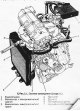
General description of the cooling system
The cooling system is of the thermosiphon type and has an auxiliary water pump. The pressure in the system is achieved by a valve in the radiator cap. The main parts of the system are the radiator, water pump,...
The cooling system is of the thermosiphon type and has an auxiliary water pump. The pressure in the system is achieved by a valve in the radiator cap. The main parts of the system are the radiator, water pump,...

Draining the coolant
1. With the engine cold, remove the radiator cap by turning it counterclockwise. With a hot engine, first loosen the plug a little to relieve pressure from the system. The cork should be taken through a rag so as not to...
1. With the engine cold, remove the radiator cap by turning it counterclockwise. With a hot engine, first loosen the plug a little to relieve pressure from the system. The cork should be taken through a rag so as not to...
Flushing the cooling system
1. Every 2 years, drain the coolant, flush the system thoroughly and fill it with fresh coolant. This must be done because deposits, rust and scale accumulate in the system, and if they are not removed, the engine will...
1. Every 2 years, drain the coolant, flush the system thoroughly and fill it with fresh coolant. This must be done because deposits, rust and scale accumulate in the system, and if they are not removed, the engine will...

Filling coolant
1. Check the condition and reliability of fastening of all hoses of the cooling system. Check that the drain cock is securely closed and that the heater control is in the HOT position (maximum heating). 2. Slowly pour...
1. Check the condition and reliability of fastening of all hoses of the cooling system. Check that the drain cock is securely closed and that the heater control is in the HOT position (maximum heating). 2. Slowly pour...
Water pump drive belt — removal and installation
1. If the water pump drive belt is worn or stretched, it should be replaced. However, most often you have to change the belt because it breaks, so it is recommended to always have a spare belt with you in the car just...
1. If the water pump drive belt is worn or stretched, it should be replaced. However, most often you have to change the belt because it breaks, so it is recommended to always have a spare belt with you in the car just...
Antifreeze mixture
1. In cold climates, when the air temperature can drop below zero, it is desirable to use a mixture of antifreeze with water in the cooling system. Antifreeze not only prevents the coolant from freezing, but also...
1. In cold climates, when the air temperature can drop below zero, it is desirable to use a mixture of antifreeze with water in the cooling system. Antifreeze not only prevents the coolant from freezing, but also...
Coolant temperature gauge and sensor
1. If the coolant temperature gauge gives incorrect readings, then the gauge itself, the temperature sensor, the connecting wiring and contact points should be checked. 2. Check first that the wires are not broken and...
1. If the coolant temperature gauge gives incorrect readings, then the gauge itself, the temperature sensor, the connecting wiring and contact points should be checked. 2. Check first that the wires are not broken and...
Low coolant level sensor (general information)
1. The low coolant level sensor found on some recent models is located on the side of the radiator reservoir. The sensor consists of a float, a magnet and a sealed magnetic contact (reed switch). 2. The sensor is beyond...
1. The low coolant level sensor found on some recent models is located on the side of the radiator reservoir. The sensor consists of a float, a magnet and a sealed magnetic contact (reed switch). 2. The sensor is beyond...
Water hose clamps (all models)
1. Clamps installed on water hoses during factory assembly are disposable. After tightening the clamps, their free ends are clamped with a loop. 2. In order to remove such a clamp, you should either unclench the loop...
1. Clamps installed on water hoses during factory assembly are disposable. After tightening the clamps, their free ends are clamped with a loop. 2. In order to remove such a clamp, you should either unclench the loop...
Diagnosis of malfunctions of the cooling system
The engine gets very hot (check if the temperature gauge is giving correct readings) Low coolant level (e.g. due to leakage) Broken or slipping drive belt on coca Low engine oil or wrong brand of oil Faulty thermostat...
The engine gets very hot (check if the temperature gauge is giving correct readings) Low coolant level (e.g. due to leakage) Broken or slipping drive belt on coca Low engine oil or wrong brand of oil Faulty thermostat...
This section is available on russian, bulgarian, belarusian, ukrainian, serbian, croatian, romanian, polish, slovak, hungarian
See similar information for other Peugeot models
➨ Power unit: Cooling system Peugeot 207 (2006-2014)
➨ Power unit: Cooling and lubrication system Peugeot 405 (1987-1997)
➨ Power unit: Cooling and heating Peugeot 605 (1989-2000)
➨ Power unit: Cooling and heating Peugeot Partner I (1996-2008)
Link to this section in different formats
TEXTHTMLBB Code
- User manual
- Keys, doors and alarm
- Controls and instruments
- Driving and operation
- Maintenance
- Power unit
- Petrol engines TU3 and TU5
- Petrol engines EW10
- Diesel engines DV10
- Diesel engines DW10
- Transmission
- Clutch and drive shafts
- Mechanical gearbox
- Automatic gearbox
- Chassis, running gear
- Front suspension
- Rear suspension
- Steering
- Brake system
- Body and interior
- Exterior (external elements)
- Interior (internal elements)
- Doors, locks and windows
- Heating and air conditioning
- Electrical equipment
- Equipment and devices
- Power devices
- Airbags
- Electrical circuits
- General information
- Maintenance
- Power unit
- Gasoline engines
- Diesel engines
- Cooling system (gasoline)
- Cooling system (diesel)
- Fuel system (gasoline)
- Fuel system (diesel)
- Ignition system
- Transmission
- Clutch
- Mechanical gearbox BB8
- Mechanical gearbox BE1
- Automatic gearbox ZF4
- Shafts, hubs and wheels
- Chassis, running gear
- Brake system
- Car suspension
- Steering
- Body and interior
- Exterior (external elements)
- Interior (internal elements)
- Electrical equipment
- Equipment and devices
- Headlights and lighting
- Power devices
- Electrical circuits
- Wiring diagrams (diesel)