


Share information:

Driving and operating a vehicle Peugeot 307
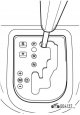
Automatic transmission «Tiptronic-system Porsche»
Thanks to the four-speed automatic transmission, the driving modes of the car are fully automated. At your own discretion, you can choose one of four modes of operation of the gearbox - «Auto», «Sports», «Driving on...
Thanks to the four-speed automatic transmission, the driving modes of the car are fully automated. At your own discretion, you can choose one of four modes of operation of the gearbox - «Auto», «Sports», «Driving on...

Parking brake
To apply the parking brake, firmly pull up the parking brake lever. If there is a large slope of the road, you should additionally engage the first gear or set the automatic transmission parking lock mode. The parking...
To apply the parking brake, firmly pull up the parking brake lever. If there is a large slope of the road, you should additionally engage the first gear or set the automatic transmission parking lock mode. The parking...
Anti-lock braking system (ABS)
The ABS system, together with the electronic brake force distribution unit, improves the stability and control of the car when braking, especially on roads with damaged or slippery surfaces. The anti-lock braking system...
The ABS system, together with the electronic brake force distribution unit, improves the stability and control of the car when braking, especially on roads with damaged or slippery surfaces. The anti-lock braking system...
Traction Control (ASR) and Dynamic Stability Program (ESP)
When one of these systems is triggered, the warning light located in the instrument cluster flashes. These systems work with and complement the anti-lock braking system. The ASR system optimizes the distribution of...
When one of these systems is triggered, the warning light located in the instrument cluster flashes. These systems work with and complement the anti-lock braking system. The ASR system optimizes the distribution of...

Cruise control system
The cruise control system maintains the set speed if the engine can provide it, and frees the driver from having to press the accelerator pedal to maintain it. The system can memorize the vehicle speed if it exceeds 40...
The cruise control system maintains the set speed if the engine can provide it, and frees the driver from having to press the accelerator pedal to maintain it. The system can memorize the vehicle speed if it exceeds 40...

Stationary parking assistance system
The system consists of four sensors mounted in the rear bumper of the car and a special speaker located in the instrument panel. Pic. 1.39. Parking Obstacle Detection Zone When approaching an obstacle (for example, to a...
The system consists of four sensors mounted in the rear bumper of the car and a special speaker located in the instrument panel. Pic. 1.39. Parking Obstacle Detection Zone When approaching an obstacle (for example, to a...

Front seats — adjustment
Proper seating is essential to ensure: access to governing bodies; travel comfort; maximize the effectiveness of seat belts and airbags. Driver's seat Attention! To ensure safety, adjust the seats only when the vehicle...
Proper seating is essential to ensure: access to governing bodies; travel comfort; maximize the effectiveness of seat belts and airbags. Driver's seat Attention! To ensure safety, adjust the seats only when the vehicle...

Folding the rear seats
Folding rear left (ratio 2/3) or rear right (ratio 1/3) seats, you should always start by raising the seat cushion, otherwise the seat may break. If necessary, move the corresponding front seat forward. Pic. 1.41....
Folding rear left (ratio 2/3) or rear right (ratio 1/3) seats, you should always start by raising the seat cushion, otherwise the seat may break. If necessary, move the corresponding front seat forward. Pic. 1.41....

Seat belts — adjustment and check
Properly adjusted seat belts secure the position of the driver and passengers while driving and are an effective means of protecting against serious injury in an accident. The car is equipped with three-point seat...
Properly adjusted seat belts secure the position of the driver and passengers while driving and are an effective means of protecting against serious injury in an accident. The car is equipped with three-point seat...
Airbags — general information
Airbags are designed to provide additional protection for the driver and passenger in the event of severe vehicle impacts. Airbags in no way replace seat belts and are one of the important elements of the passive safety...
Airbags are designed to provide additional protection for the driver and passenger in the event of severe vehicle impacts. Airbags in no way replace seat belts and are one of the important elements of the passive safety...

Front airbags
Pic. 1.48. Front airbags They are installed in the steering wheel hub for the driver and in the instrument panel for the front passenger. Both airbags deploy at the same time, except when the passenger airbag is...
Pic. 1.48. Front airbags They are installed in the steering wheel hub for the driver and in the instrument panel for the front passenger. Both airbags deploy at the same time, except when the passenger airbag is...

Deactivating the front passenger airbag
To ensure the safety of the child, it is essential to deactivate the front passenger's airbag when installing a rear-facing child seat on the front passenger's seat. Pic. 1.49. Switch (1) front passenger airbags Remove...
To ensure the safety of the child, it is essential to deactivate the front passenger's airbag when installing a rear-facing child seat on the front passenger's seat. Pic. 1.49. Switch (1) front passenger airbags Remove...
Monitoring the serviceability of the airbag
Front passenger airbag deactivation indicator in instrument cluster Airbag health monitoring is provided by a signaling device that lights up in the instrument cluster, accompanied by a buzzer signal and a corresponding...
Front passenger airbag deactivation indicator in instrument cluster Airbag health monitoring is provided by a signaling device that lights up in the instrument cluster, accompanied by a buzzer signal and a corresponding...
Side and window airbags
Side airbags are integrated into the front seat backrests on the door side. Window curtain airbags are built into the pillars and the top of the cabin ceiling. Each airbag is triggered in the event of a strong impact...
Side airbags are integrated into the front seat backrests on the door side. Window curtain airbags are built into the pillars and the top of the cabin ceiling. Each airbag is triggered in the event of a strong impact...

Sliding Roof Panel
Pic. 1.54. Location of the sliding/tilting roof panel control knob To raise the sunroof, turn the handle (pic. 1.54) right (set to one of three positions). To open the sliding roof panel, turn the handle to the left...
Pic. 1.54. Location of the sliding/tilting roof panel control knob To raise the sunroof, turn the handle (pic. 1.54) right (set to one of three positions). To open the sliding roof panel, turn the handle to the left...

Fuel tank cap
Note. If the roof panel does not close due to icing, press and hold the handle until the roof panel is fully opened, and then close it again. If, after connecting the battery, the roof panel does not close, release the...
Note. If the roof panel does not close due to icing, press and hold the handle until the roof panel is fully opened, and then close it again. If, after connecting the battery, the roof panel does not close, release the...

Bonnet — opening and closing
Pic. 1.56. Hood release handle To unlock the hood, press the lever located on the left under the instrument panel - the hood will be released from the locking device and, under the action of a spring, will rise up (pic....
Pic. 1.56. Hood release handle To unlock the hood, press the lever located on the left under the instrument panel - the hood will be released from the locking device and, under the action of a spring, will rise up (pic....
Engine compartment — inspection and safety measures
Attention! Be especially careful when working in the engine compartment. Turn off the engine, remove the ignition key from the lock. Apply the parking brake. Set the gear lever to neutral position, the automatic...
Attention! Be especially careful when working in the engine compartment. Turn off the engine, remove the ignition key from the lock. Apply the parking brake. Set the gear lever to neutral position, the automatic...

Towing a car
All wheel towing Use a tow bar to tow the vehicle with all-wheel support. A detachable towing eye is stored inside the spare wheel. On station wagons, the removable towing eyelet is stored in a recess in the upholstery...
All wheel towing Use a tow bar to tow the vehicle with all-wheel support. A detachable towing eye is stored inside the spare wheel. On station wagons, the removable towing eyelet is stored in a recess in the upholstery...

Towing a truck, caravan or boat
Use only Peugeot towing devices that have been tested and approved for installation on the vehicle. Have the towing device installed at a Peugeot Dealership. Your vehicle is designed to carry passengers and luggage, but...
Use only Peugeot towing devices that have been tested and approved for installation on the vehicle. Have the towing device installed at a Peugeot Dealership. Your vehicle is designed to carry passengers and luggage, but...

Wheel replacement and features of their operation
Replacing wheels on sedan cars Park the vehicle on a firm, non-slip, level surface. Brake the vehicle with the parking brake, engage first gear or reverse (position «R» for automatic transmission) and turn off the...
Replacing wheels on sedan cars Park the vehicle on a firm, non-slip, level surface. Brake the vehicle with the parking brake, engage first gear or reverse (position «R» for automatic transmission) and turn off the...
This section is available on russian, bulgarian, belarusian, ukrainian, serbian, croatian, romanian, polish, slovak, hungarian
See similar information for other Peugeot models
➨ General information: Driving and operation Peugeot 207 (2006-2014)
Link to this section in different formats
TEXTHTMLBB Code
- User manual
- Keys, doors and alarm
- Controls and instruments
- Driving and operation
- Maintenance
- Power unit
- Petrol engines TU3 and TU5
- Petrol engines EW10
- Diesel engines DV10
- Diesel engines DW10
- Transmission
- Clutch and drive shafts
- Mechanical gearbox
- Automatic gearbox
- Chassis, running gear
- Front suspension
- Rear suspension
- Steering
- Brake system
- Body and interior
- Exterior (external elements)
- Interior (internal elements)
- Doors, locks and windows
- Heating and air conditioning
- Electrical equipment
- Equipment and devices
- Power devices
- Airbags
- Electrical circuits
- General information
- Maintenance
- Power unit
- Gasoline engines
- Diesel engines
- Cooling system (gasoline)
- Cooling system (diesel)
- Fuel system (gasoline)
- Fuel system (diesel)
- Ignition system
- Transmission
- Clutch
- Mechanical gearbox BB8
- Mechanical gearbox BE1
- Automatic gearbox ZF4
- Shafts, hubs and wheels
- Chassis, running gear
- Brake system
- Car suspension
- Steering
- Body and interior
- Exterior (external elements)
- Interior (internal elements)
- Electrical equipment
- Equipment and devices
- Headlights and lighting
- Power devices
- Electrical circuits
- Wiring diagrams (diesel)