


Share information:

Repair of the engine ignition system Peugeot 305

Ignition system specification
System type - 12 V negative "earth", coil and contact breaker or electronic non-contact system The order of operation of the cylinders is 1-3-4-2 (cylinder N 1 on the clutch side) Distributor Type - Ducellier 6635 or...
System type - 12 V negative "earth", coil and contact breaker or electronic non-contact system The order of operation of the cylinders is 1-3-4-2 (cylinder N 1 on the clutch side) Distributor Type - Ducellier 6635 or...
General description of the contact ignition system
In order for the engine to work properly, it is necessary that the spark plug ignite the working mixture in the combustion chamber at the right time in relation to the engine speed and its load. The ignition system...
In order for the engine to work properly, it is necessary that the spark plug ignite the working mixture in the combustion chamber at the right time in relation to the engine speed and its load. The ignition system...

Breaker contacts — preliminary clearance adjustment
1. To accurately control the gap between the contacts of the breaker, a device is needed to measure the angle of the closed state of the contacts ( see next section ). Because not everyone has it, below we give the...
1. To accurately control the gap between the contacts of the breaker, a device is needed to measure the angle of the closed state of the contacts ( see next section ). Because not everyone has it, below we give the...
Contact closed angle — regulation
1. The contact closed angle is the angle in degrees that the breaker cam rotates during the time between the moment the contacts close and the moment they open. The breaker contacts are adjusted so that the angle of...
1. The contact closed angle is the angle in degrees that the breaker cam rotates during the time between the moment the contacts close and the moment they open. The breaker contacts are adjusted so that the angle of...
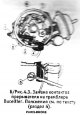
Breaker contacts — removal, tidying up and installation
1. If the breaker contacts are burned, pitted, or severely worn, they should be removed for cleaning or replacement. 2. Release the clamps of the distributor cover and remove the cover. Remove the slider from the...
1. If the breaker contacts are burned, pitted, or severely worn, they should be removed for cleaning or replacement. 2. Release the clamps of the distributor cover and remove the cover. Remove the slider from the...

Capacitor — removal, inspection and installation
1. Capacitor acts like "buffer" in the low voltage circuit, softening the current pulses generated at the moments of closing and opening of the breaker contacts. This reduces sparking on the contacts and contributes to...
1. Capacitor acts like "buffer" in the low voltage circuit, softening the current pulses generated at the moments of closing and opening of the breaker contacts. This reduces sparking on the contacts and contributes to...
Trambler — lubrication
1. The distributor should be lubricated periodically. Apply a little Vaseline or high temperature grease to the distributor cam contours to provide lubrication to the back of the contact. 2. Remove the slider and put 2...
1. The distributor should be lubricated periodically. Apply a little Vaseline or high temperature grease to the distributor cam contours to provide lubrication to the back of the contact. 2. Remove the slider and put 2...

Trambler — removal and installation
1. The distributor is located in the right rear corner of the engine. Removal and installation of the distributor will lead to a failure of the ignition timing. If the engine is on the machine, it is recommended that...
1. The distributor is located in the right rear corner of the engine. Removal and installation of the distributor will lead to a failure of the ignition timing. If the engine is on the machine, it is recommended that...

Trambler — bulkhead
1. Practice has shown that a distributor bulkhead does not make sense, even if spare parts for it are on sale. Usually, the distributor cover, slider, breaker contacts and capacitor need to be inspected. In addition to...
1. Practice has shown that a distributor bulkhead does not make sense, even if spare parts for it are on sale. Usually, the distributor cover, slider, breaker contacts and capacitor need to be inspected. In addition to...

Setting scale — checking and adjusting
1. The setting scale for adjusting the ignition timing is bolted to the clutch housing next to the crankshaft pulley. After the first installation and adjustment of the scale, its position is fixed with a smear of white...
1. The setting scale for adjusting the ignition timing is bolted to the clutch housing next to the crankshaft pulley. After the first installation and adjustment of the scale, its position is fixed with a smear of white...

Ignition timing — regulation
1. After any work with a contact breaker or distributor, when there is a possibility that the ignition timing is knocked down, it should be checked and adjusted if necessary. There are two ways to check the ignition...
1. After any work with a contact breaker or distributor, when there is a possibility that the ignition timing is knocked down, it should be checked and adjusted if necessary. There are two ways to check the ignition...

Spark Plugs and High Voltage Wires — General
1. Proper spark plug performance is critical to efficient engine operation. Use only spark plugs approved for your engine ( see specs ). Then, as long as the engine is in good condition, you do not need to deal with the...
1. Proper spark plug performance is critical to efficient engine operation. Use only spark plugs approved for your engine ( see specs ). Then, as long as the engine is in good condition, you do not need to deal with the...

Diagnostic socket
1. Peugeot 305 is equipped with a diagnostic socket for monitoring the operation of the engine and ignition system using electronic instruments. You can use this socket yourself, but the workshop can use it to check the...
1. Peugeot 305 is equipped with a diagnostic socket for monitoring the operation of the engine and ignition system using electronic instruments. You can use this socket yourself, but the workshop can use it to check the...
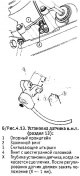
T.M.T. sensor — removal, installation and adjustment
1. The TDC sensor, which is part of the diagnostic socket, is located on the lower right side of the clutch housing. Its task is to generate a signal every time a notch on the crankshaft pulley passes by it. This allows...
1. The TDC sensor, which is part of the diagnostic socket, is located on the lower right side of the clutch housing. Its task is to generate a signal every time a notch on the crankshaft pulley passes by it. This allows...
Diagnostics of malfunctions of system of ignition
1. Most problems with engine operation are usually caused by a malfunction of the ignition system in one of the circuits: low or high voltage. There are 2 main signs indicating a malfunction of the ignition system:...
1. Most problems with engine operation are usually caused by a malfunction of the ignition system in one of the circuits: low or high voltage. There are 2 main signs indicating a malfunction of the ignition system:...
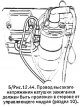
Electronic (non-contact) ignition system
Description and Precautions 1. The electronic ignition system installed on the latest models uses electrical impulses generated by the distributor for its work. The pulses are generated by magnetic induction and...
Description and Precautions 1. The electronic ignition system installed on the latest models uses electrical impulses generated by the distributor for its work. The pulses are generated by magnetic induction and...
This section is available on russian, bulgarian, belarusian, ukrainian, serbian, croatian, romanian, polish, slovak, hungarian
See similar information for other Peugeot models
➨ Power unit: Ignition system Peugeot 207 (2006-2014)
➨ Power unit: Ignition system Peugeot 405 (1987-1997)
➨ Power unit: Ignition and exhaust systems Peugeot 806 (1994-2002)
Link to this section in different formats
TEXTHTMLBB Code
- User manual
- Keys, doors and alarm
- Controls and instruments
- Driving and operation
- Maintenance
- Power unit
- Petrol engines TU3 and TU5
- Petrol engines EW10
- Diesel engines DV10
- Diesel engines DW10
- Transmission
- Clutch and drive shafts
- Mechanical gearbox
- Automatic gearbox
- Chassis, running gear
- Front suspension
- Rear suspension
- Steering
- Brake system
- Body and interior
- Exterior (external elements)
- Interior (internal elements)
- Doors, locks and windows
- Heating and air conditioning
- Electrical equipment
- Equipment and devices
- Power devices
- Airbags
- Electrical circuits
- General information
- Maintenance
- Power unit
- Gasoline engines
- Diesel engines
- Cooling system (gasoline)
- Cooling system (diesel)
- Fuel system (gasoline)
- Fuel system (diesel)
- Ignition system
- Transmission
- Clutch
- Mechanical gearbox BB8
- Mechanical gearbox BE1
- Automatic gearbox ZF4
- Shafts, hubs and wheels
- Chassis, running gear
- Brake system
- Car suspension
- Steering
- Body and interior
- Exterior (external elements)
- Interior (internal elements)
- Electrical equipment
- Equipment and devices
- Headlights and lighting
- Power devices
- Electrical circuits
- Wiring diagrams (diesel)