


Share information:

Gasoline engines TU3 and TU5 car Peugeot 307
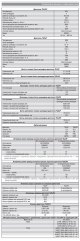
General information about TU3JP and TU5JP4 engines
Four-cylinder in-line gasoline engines TU3JP with one camshaft and TU5JP4 EURO 3 are installed on cars (L4) with two camshafts. The drive of the camshafts installed in the cylinder head is carried out by a toothed belt...
Four-cylinder in-line gasoline engines TU3JP with one camshaft and TU5JP4 EURO 3 are installed on cars (L4) with two camshafts. The drive of the camshafts installed in the cylinder head is carried out by a toothed belt...

Removal and installation of the engine
Recommendations for removing the engine Please read this section carefully before starting work. If the engine is removed for repair, it is necessary to select a place for work, provide space for maintenance and storage...
Recommendations for removing the engine Please read this section carefully before starting work. If the engine is removed for repair, it is necessary to select a place for work, provide space for maintenance and storage...

Cylinder head — removal and installation
Removal of a head of the block of cylinders spend on the cold engine. A burnt or defective cylinder head gasket is determined by the following signs: to reduce engine power; to reduce the level of coolant - white steam...
Removal of a head of the block of cylinders spend on the cold engine. A burnt or defective cylinder head gasket is determined by the following signs: to reduce engine power; to reduce the level of coolant - white steam...

Camshafts — removal and installation
TU3JP engine Removing Turn off the ignition and disconnect the wire «masses» from the battery. Drain the coolant from the engine cooling system. Remove the wiper blades. Remove the plastic windshield deflector. Remove...
TU3JP engine Removing Turn off the ignition and disconnect the wire «masses» from the battery. Drain the coolant from the engine cooling system. Remove the wiper blades. Remove the plastic windshield deflector. Remove...

Accessory drive belt
TU3JP engine Removing Remove the right front wheel. Remove the engine splash shield. Pic. 3.31. Top location (1) and lower (2) alternator mounting bolts on TU3JP engine On vehicles without power steering and air...
TU3JP engine Removing Remove the right front wheel. Remove the engine splash shield. Pic. 3.31. Top location (1) and lower (2) alternator mounting bolts on TU3JP engine On vehicles without power steering and air...

Toothed belt — removal and installation
Removing Attention! Chalk, marker or paint mark the direction of rotation of the toothed belt. If the toothed belt rotates in the opposite direction during installation, this will lead to its destruction. TU3JP engine...
Removing Attention! Chalk, marker or paint mark the direction of rotation of the toothed belt. If the toothed belt rotates in the opposite direction during installation, this will lead to its destruction. TU3JP engine...

Changes in the details of the timing drive of the TU3JP engine
The new method of mounting the timing gear of the TU3JP engine is used starting from serial serial number 3666766. Attention! Interchangeability between old and new timing gear parts is not possible. On engines with a...
The new method of mounting the timing gear of the TU3JP engine is used starting from serial serial number 3666766. Attention! Interchangeability between old and new timing gear parts is not possible. On engines with a...

Lubrication system — removal, inspection and installation
Oil in the engine from the oil pan through the strainer and fine filter is supplied under pressure by the oil pump. The bypass valve in the oil pump maintains the required pressure in the engine lubrication system. If...
Oil in the engine from the oil pan through the strainer and fine filter is supplied under pressure by the oil pump. The bypass valve in the oil pump maintains the required pressure in the engine lubrication system. If...

Coolant replacement
General information The cooling system includes a crankshaft belt driven water pump, electrically driven radiator fan, radiator, expansion tank, heater thermostat and radiator, hoses and switches. When starting a cold...
General information The cooling system includes a crankshaft belt driven water pump, electrically driven radiator fan, radiator, expansion tank, heater thermostat and radiator, hoses and switches. When starting a cold...

Water pump — removal and installation
Removing Disconnect the wire from the negative battery terminal. Drain the coolant. Remove the toothed belt. Turn out bolts of fastening of the water pump. Pic. 3.48. Location of the water pump on the engine Remove...
Removing Disconnect the wire from the negative battery terminal. Drain the coolant. Remove the toothed belt. Turn out bolts of fastening of the water pump. Pic. 3.48. Location of the water pump on the engine Remove...

Power System — Design Description
The engine power system consists of parts that supply and clean air to the engine cylinders, a fuel tank, fuel lines, a fuel filter, a fuel pump and an electronic fuel injection system. The fuel tank is vented through a...
The engine power system consists of parts that supply and clean air to the engine cylinders, a fuel tank, fuel lines, a fuel filter, a fuel pump and an electronic fuel injection system. The fuel tank is vented through a...

Exhaust gas exhaust system
The exhaust system serves to divert exhaust gases into the atmosphere, prevents them from entering the passenger compartment, even in a minimal amount, and reduces engine noise. Attention! The connection element in the...
The exhaust system serves to divert exhaust gases into the atmosphere, prevents them from entering the passenger compartment, even in a minimal amount, and reduces engine noise. Attention! The connection element in the...
This section is available on russian, bulgarian, belarusian, ukrainian, serbian, croatian, romanian, polish, slovak, hungarian
See similar information for other Peugeot models
➨ Power unit: Gasoline engines Peugeot 206 (1998-2012)
➨ Power unit: Gasoline engines Peugeot 406 (1995-2004)
➨ Power unit: Petrol engines «ES9J4» Peugeot 605 (1989-2000)
➨ Power unit: Petrol engines Peugeot Partner I (1996-2008)
Link to this section in different formats
TEXTHTMLBB Code
- User manual
- Keys, doors and alarm
- Controls and instruments
- Driving and operation
- Maintenance
- Power unit
- Petrol engines TU3 and TU5
- Petrol engines EW10
- Diesel engines DV10
- Diesel engines DW10
- Transmission
- Clutch and drive shafts
- Mechanical gearbox
- Automatic gearbox
- Chassis, running gear
- Front suspension
- Rear suspension
- Steering
- Brake system
- Body and interior
- Exterior (external elements)
- Interior (internal elements)
- Doors, locks and windows
- Heating and air conditioning
- Electrical equipment
- Equipment and devices
- Power devices
- Airbags
- Electrical circuits
- General information
- Maintenance
- Power unit
- Gasoline engines
- Diesel engines
- Cooling system (gasoline)
- Cooling system (diesel)
- Fuel system (gasoline)
- Fuel system (diesel)
- Ignition system
- Transmission
- Clutch
- Mechanical gearbox BB8
- Mechanical gearbox BE1
- Automatic gearbox ZF4
- Shafts, hubs and wheels
- Chassis, running gear
- Brake system
- Car suspension
- Steering
- Body and interior
- Exterior (external elements)
- Interior (internal elements)
- Electrical equipment
- Equipment and devices
- Headlights and lighting
- Power devices
- Electrical circuits
- Wiring diagrams (diesel)