


Share information:

Power electrical devices of the car Peugeot 305

Battery — removal and installation
1. The battery is located in the engine compartment next to the radiator. 2. Unscrew the knurled nut and disconnect the negative green from the battery) the wire. Disconnect the positive in the same way (red) the wire....
1. The battery is located in the engine compartment next to the radiator. 2. Unscrew the knurled nut and disconnect the negative green from the battery) the wire. Disconnect the positive in the same way (red) the wire....

Battery — Inspection and Maintenance
1. Weekly check the electrolyte level in each "bank" battery. The electrolyte level should be 10 mm above the plates. If necessary, add distilled water to the battery, making sure that the electrolyte does not splash...
1. Weekly check the electrolyte level in each "bank" battery. The electrolyte level should be 10 mm above the plates. If necessary, add distilled water to the battery, making sure that the electrolyte does not splash...
Battery — electrolyte replacement
1. If the battery is fully charged, and at the same time the density of the electrolyte in one of its "cans" less than in the others by 0.025 or more, check each of "cans" with a voltmeter short circuit (voltmeter...
1. If the battery is fully charged, and at the same time the density of the electrolyte in one of its "cans" less than in the others by 0.025 or more, check each of "cans" with a voltmeter short circuit (voltmeter...
Battery — Charging
1. Under normal conditions, the battery should be supported by a charged alternator. The need to frequently charge the battery from an external source indicates a malfunction of the battery or alternator, or that the...
1. Under normal conditions, the battery should be supported by a charged alternator. The need to frequently charge the battery from an external source indicates a malfunction of the battery or alternator, or that the...
Generator — general description
The generator produces an alternating electric current, which is converted by diodes into a direct current. This current is used to charge the battery. The main advantage of an alternator is that it is able to provide a...
The generator produces an alternating electric current, which is converted by diodes into a direct current. This current is used to charge the battery. The main advantage of an alternator is that it is able to provide a...
Generator — Maintenance
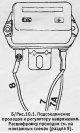
1. The only wear parts on the generator are the brushes and rotor bearings. 2. Brushes should be inspected every 120,000 km and replaced if necessary. The bearings are sealed and do not require lubrication. 3. Inspect...
1. The only wear parts on the generator are the brushes and rotor bearings. 2. Brushes should be inspected every 120,000 km and replaced if necessary. The bearings are sealed and do not require lubrication. 3. Inspect...
Generator — Special Precautions
1. When charging the battery on the machine, disconnect it from the rest of the electrical system, because. otherwise, you may damage the alternator diodes. 2. When the engine is running, the generator must not be...
1. When charging the battery on the machine, disconnect it from the rest of the electrical system, because. otherwise, you may damage the alternator diodes. 2. When the engine is running, the generator must not be...

Generator — removal and installation
1. Open the hood and disconnect the negative and then positive wires from the battery. 2. Note the position of the power wires of the generator and then disconnect them from its back cover (see photo). 3. Loosen the...
1. Open the hood and disconnect the negative and then positive wires from the battery. 2. Note the position of the power wires of the generator and then disconnect them from its back cover (see photo). 3. Loosen the...
Alternator Drive Belt — Tension Control
1. Proper alternator belt tension is critical to extending the life of the alternator. If the belt is too loose, the battery may be undercharged; if the belt is too tight, the alternator bearings will wear out quickly....
1. Proper alternator belt tension is critical to extending the life of the alternator. If the belt is too loose, the battery may be undercharged; if the belt is too tight, the alternator bearings will wear out quickly....
Alternator drive belt — replacement
1. Disconnect the wires from the battery. 2. Before removing the alternator drive belt, the water pump/fan drive belt must be removed ( see chapter 2A, section 10 ). 3. Loosen the alternator pivot and adjustment bolts,...
1. Disconnect the wires from the battery. 2. Before removing the alternator drive belt, the water pump/fan drive belt must be removed ( see chapter 2A, section 10 ). 3. Loosen the alternator pivot and adjustment bolts,...

Generator brushes — removal, inspection and installation
1. Alternator brushes can only cause problems if they are worn out. The brushes are part of the exciter circuit of the e / m field and are supported by rings on the rotor. 2. Disconnect the wires from the battery....
1. Alternator brushes can only cause problems if they are worn out. The brushes are part of the exciter circuit of the e / m field and are supported by rings on the rotor. 2. Disconnect the wires from the battery....

Replacing brushes on a generator with a built-in voltage regulator
1. Given the large number of different types of generators used, a specific procedure for each of them is not given. The instructions below apply to the Paris-Rhone 750W generator (for other generators by analogy,...
1. Given the large number of different types of generators used, a specific procedure for each of them is not given. The instructions below apply to the Paris-Rhone 750W generator (for other generators by analogy,...
Checking the alternator on the machine (all models)
1. If the alternator is not charging the battery, check the condition of its drive belt and its tension. Check the reliability of the fastening of the wires of the generator and battery. 2. To accurately measure the...
1. If the alternator is not charging the battery, check the condition of its drive belt and its tension. Check the reliability of the fastening of the wires of the generator and battery. 2. To accurately measure the...

Starter — general description
The starter is located on the clutch housing under the intake manifold. By type, it belongs to starters with pre-engagement and has a solenoid in its upper part (see photo). The starting circuit is activated when the...
The starter is located on the clutch housing under the intake manifold. By type, it belongs to starters with pre-engagement and has a solenoid in its upper part (see photo). The starting circuit is activated when the...
Starter — checking on the engine
1. If the starter does not work, check the condition of the battery by turning on the headlights. If they shine brightly for a few seconds, and then their light gradually fades, then the battery is low. 2. If the...
1. If the starter does not work, check the condition of the battery by turning on the headlights. If they shine brightly for a few seconds, and then their light gradually fades, then the battery is low. 2. If the...

Starter — removal and installation
1. Disconnect the ground wire from the battery. 2. In order to improve access to the starter, remove the air cleaner as well as the intake manifold (if you can't get to the starter terminals) ( see chapter FOR ). 3....
1. Disconnect the ground wire from the battery. 2. In order to improve access to the starter, remove the air cleaner as well as the intake manifold (if you can't get to the starter terminals) ( see chapter FOR ). 3....

Starter — disassembly and assembly
1. Unscrew and remove the nut that secures the wire from the starter to the solenoid terminal. Disconnect the wire and install the nut back on the terminal so that it is not lost (see photo). 2. Loosen and remove the 2...
1. Unscrew and remove the nut that secures the wire from the starter to the solenoid terminal. Disconnect the wire and install the nut back on the terminal so that it is not lost (see photo). 2. Loosen and remove the 2...
This section is available on russian, bulgarian, belarusian, ukrainian, serbian, croatian, romanian, polish, slovak, hungarian
See similar information for other Peugeot models
➨ Electrical equipment: Power devices Peugeot 207 (2006-2014)
➨ Electrical equipment: Power devices Peugeot 605 (1989-2000)
Link to this section in different formats
TEXTHTMLBB Code
- User manual
- Keys, doors and alarm
- Controls and instruments
- Driving and operation
- Maintenance
- Power unit
- Petrol engines TU3 and TU5
- Petrol engines EW10
- Diesel engines DV10
- Diesel engines DW10
- Transmission
- Clutch and drive shafts
- Mechanical gearbox
- Automatic gearbox
- Chassis, running gear
- Front suspension
- Rear suspension
- Steering
- Brake system
- Body and interior
- Exterior (external elements)
- Interior (internal elements)
- Doors, locks and windows
- Heating and air conditioning
- Electrical equipment
- Equipment and devices
- Power devices
- Airbags
- Electrical circuits
- General information
- Maintenance
- Power unit
- Gasoline engines
- Diesel engines
- Cooling system (gasoline)
- Cooling system (diesel)
- Fuel system (gasoline)
- Fuel system (diesel)
- Ignition system
- Transmission
- Clutch
- Mechanical gearbox BB8
- Mechanical gearbox BE1
- Automatic gearbox ZF4
- Shafts, hubs and wheels
- Chassis, running gear
- Brake system
- Car suspension
- Steering
- Body and interior
- Exterior (external elements)
- Interior (internal elements)
- Electrical equipment
- Equipment and devices
- Headlights and lighting
- Power devices
- Electrical circuits
- Wiring diagrams (diesel)