



Table of contents: Introduction 🠇 A set of tools for maintenance and…🠇 A set of tools for medium and major…🠇 Special tools and devices 🠇 Purchasing tools 🠇 Storage and maintenance of tools 🠇
Introduction
Choosing the right tools is the key to good maintenance and successful car repairs. For car owners who do not have such tools, purchasing them will entail significant expenses, which can only be partially avoided by making some of them yourself. However, if the tools you buy meet safety requirements and are of good quality, they will last for many years and will be an extremely useful purchase.
To help car owners decide what tools they need to perform the various tasks described in this manual, we have compiled three tool lists under the following headings: "Maintenance and Minor Repair Tool Kit," "Medium and Major Repair Tool Kit," and "Specialized Tools and Accessories." Owners with no previous repair experience should start with a maintenance and minor repair tool kit and limit themselves to simple tasks. Then, as your confidence grows and you gain experience, you can move on to more complex tasks, acquiring additional tools as needed. In this way, the set of tools can be expanded to a set designed for medium and major repairs. Experienced car enthusiasts may have a tool kit suitable for most repair jobs and supplement it with tools from a "special" list if they are confident that the cost of purchasing them is justified by their frequent use.
A set of tools for maintenance and minor repairs
This list provides the minimum set of tools required for maintenance and minor repairs. We recommend purchasing combination wrenches (a box-end wrench on one side and an open-end wrench of the same size on the other).
- Set of wrenches: metric from 8 to 19 mm inclusive
- Adjustable wrench-jaws 35 mm (approximately)
- Spark plug wrench (with a rubber insert)*
- Spark plug gap adjustment device*
- Set of feeler gauges
- Key for unscrewing the brake system pumping nipples
- Screwdrivers:
- with a flat end - 100 mm long x 6 mm diameter
- with a cross-shaped end - 100 mm long x 6 mm diameter
- torx type - various sizes (not for all cars)
- A set of pliers
- Hacksaw (small)
- Pump
- Tire pressure indicator
- Butter dish
- Oil filter removal tool
- Fine sandpaper on a cloth backing
- Wire brush (small)
- Funnel (medium size)
- Sump drain plug wrench (not for all cars)
* For models with petrol engine
A set of tools for medium and major repairs
These tools are essential for any major car repair and complement any maintenance and minor repair tool kit. This listing includes a set of replacement socket heads. It is absolutely necessary for more or less serious work. We recommend purchasing a set of 1/2-inch square socket heads, as they can be used with most torque wrenches.
The tools from this list sometimes need to be supplemented with tools from the "special" list.
- Set of socket heads (or open-end wrenches) in the range of the previous list (including Torx type heads)
- Reversible ratchet handle**
- Extension length 350 mm **
- Cardan joint**
- Flexible or T-shaped extension **
- Torque wrench**
- Self-tightening wrench
- Round-peen hammer
- Soft-faced hammer (plastic or rubber)
- Screwdrivers:
- flat-ended - long and strong, short (wide), narrow (for electrical work);
- with a cross-shaped end - long and strong, short (wide)
- Pliers:
- with long lips;
- side cutters (for electrical work);
- spring ring pliers - external and internal
- Chisel - 25 mm
- Marker
- Scraper
- Kerner
- Punch
- Hacksaw
- Set of hose clamps
- Kit for removing air from the brake system or clutch
- Drill and drill bit set
- Steel ruler/tape measure
- Allen keys (including slotted and Torx type)
- A set of files
- Wire brush
- Car stands
- Jack (rolling or hydraulic)
- Portable lamp with extension cord
- Universal electrical multimeter
** For use with socket heads.
Special tools and devices
The tools and equipment listed in this list are those that are used occasionally, are expensive, or are specialized. The purchase of many of these tools will not pay off if complex mechanical work is performed infrequently. If this is the case, then you could team up with friends (or join a motorist's club), to buy such tools or rent them from specialists.
The following list contains only those tools and accessories that are commercially available, not those that the vehicle manufacturer produces specifically for its dealers and service stations. You may occasionally come across references to such tools in the text of this Guide. An alternative method of doing the job without such tools is usually given. However, sometimes there is no alternative. If this is the case and the appropriate tools cannot be purchased or rented, you will have to entrust the work to specialists at the dealership service station.
- Tightening angle indicator for connections
- Valve spring compressor
- Valve grinding tool
- Piston ring compressor
- Tool for removing/installing piston rings
- Honing head for processing cylinder mirrors
- Ball joint pin puller
- Suspension spring compressor (depends on the design)
- Two- and three-jaw pullers for hubs and bearings
- Impact screwdriver
- Micrometer and/or calipers
- Pointer indicator
- Strobe lamp
- Ignition coil angle meter/tachometer
- Trouble code reader
- Compression meter
- Hand vacuum pump with pressure gauge
- Clutch slave disc centering tool
- Brake pad removal tool
- Device for pressing out/pressing in bushings and bearings
- Stud extractor
- Set of taps and dies for cutting threads
- Device for lifting loads
- Rolling jack
Purchasing tools
Supermarkets and large parts stores often offer excellent, high-quality tools and accessories at low prices.
Remember, you don't have to buy the most expensive tools, but avoid buying the cheapest ones either. Beware of "bargain" tool purchases offered in parking lots or mobile shops. There are many good tools available at reasonable prices, but you should always try to buy products that meet safety requirements. If in doubt, consult with the store owner or manager.
Storage and maintenance of tools
Once you have purchased the necessary set of tools, keep them clean and in good condition. Before storing tools after use, always clean them from dirt, oil and metal particles with a clean, dry cloth. Never leave them scattered around the work area. For tools like screwdrivers and pliers, a regular shelf on the wall is very convenient. Store wrenches and socket heads in a metal box. Any measuring instruments, indicators, etc. should be stored in places where they will be protected from damage and rust.
When using tools, take the time to care for them. Sooner or later, the hammer head becomes nicked and the screwdriver blades become dull. A little timely sanding or filing will quickly restore them to good condition. Workplace
The workplace should not be forgotten either. If the work being performed goes beyond normal maintenance, a good work area is essential.
We understand that many car owners, due to circumstances, are forced to remove the engine or similar components from the vehicle in conditions that are not as favorable as those available in a repair shop. Such work should always be carried out under a roof.
Wherever possible, any disassembly should be carried out on a clean, flat workbench or table of suitable height.
Any workbench should be equipped with a vice with a jaw opening of at least 100 mm, which is suitable for most jobs. As mentioned above, it is necessary to allocate a dry and clean place for storing tools, as well as all kinds of lubricants, liquids, touch-up paint, etc.
One of the most common tools in the garage is a power drill with a chuck for drill bits up to at least 8 mm in diameter, which can be used for a wide variety of jobs. Such a drill, as well as a large set of drill bits, are absolutely necessary when installing various auxiliary equipment.
Last but not least, always keep old newspapers and clean, lint-free cloths in your work area and keep your work area clean.
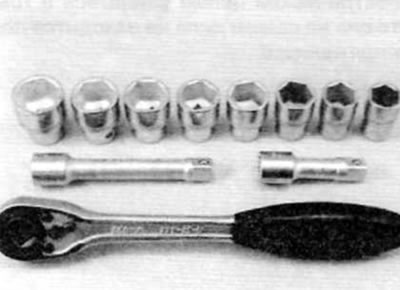
Socket heads and ratchet handles
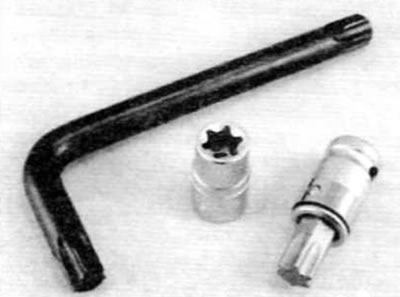
Key and end heads of the "Torx" type
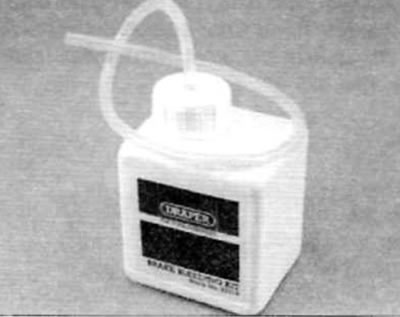
Device for removing air from the brake system
(Original publication on the website: «PEUGEOTBOOK»)
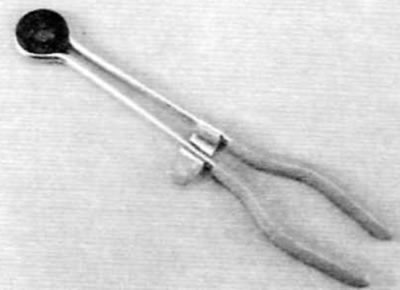
Hose clamp
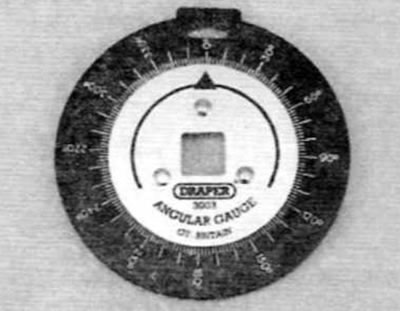
Tightening angle indicator for connections
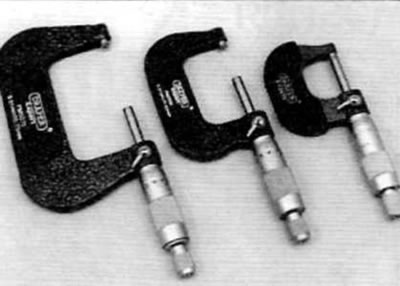
Micrometers
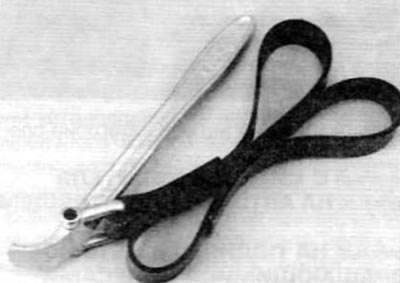
Ribbon key
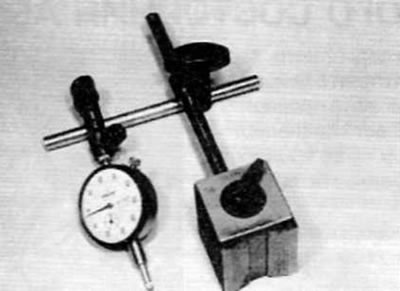
Pointer indicator
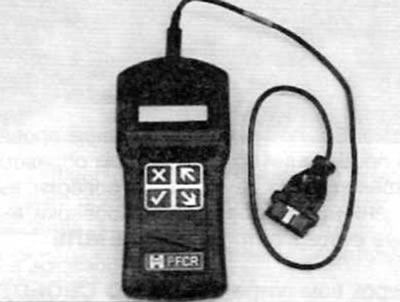
Trouble code reader
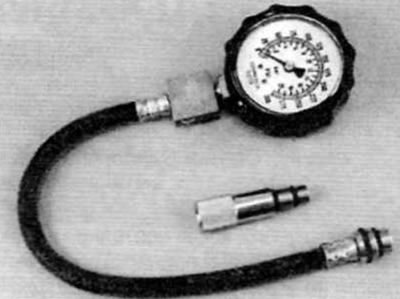
Compression meter