Table of contents: License plates 🠇 Electrical equipment 🠇 Foot brake 🠇 Steering and suspension 🠇 Shock absorbers 🠇 Exhaust system 🠇
License plates
- Number plates must be in good condition and securely attached, and the numbers must be easy to read. Letters and numbers must be correctly positioned and must comply with current regulations.
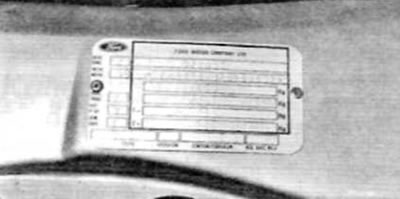
- The inscriptions on the vehicle identification number (VIN) plate and on the registration plate must be easy to read.
Electrical equipment
- Turn on the ignition and check the operation of the horn.
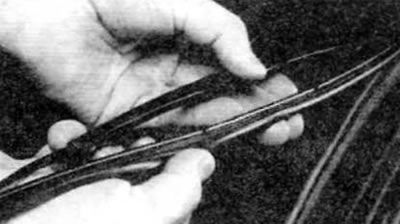
- Check the operation of the windshield wipers and washers, inspect the wiper blades; replace damaged and worn brushes. Also check the operation of the brake lights.
- Check the operation of the parking lights and license plate lights. Diffusers and reflectors must be securely fastened, clean and undamaged.
- Check the operation and adjustment of the headlights. Headlight reflectors must not be dull and the lenses must not be damaged.
- Turn on the ignition and check the operation of the turn signals (as well as control lamps on the instrument panel) and emergency alarms. Turning on the parking lights and brake lights should not affect the turn signals - if this happens, the cause may be poor grounding to the rear light assembly.
- Check the operation of the rear fog lights and, at the same time, the indicator lamp on the instrument panel or on the switch.
- The ABS warning light should come on in accordance with the vehicle owner's manual. On most models, the ABS warning light should come on when the ignition is turned on and go out after a few seconds, indicating that the system is working properly. Please refer to the operating manual.
Foot brake
- Inspect the master cylinder, brake lines and brake booster; check for leaks, corrosion, loose fittings or other defects or damage.
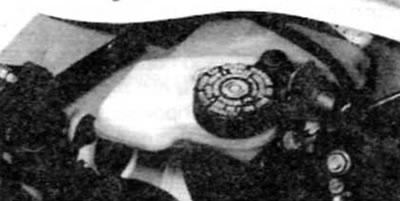
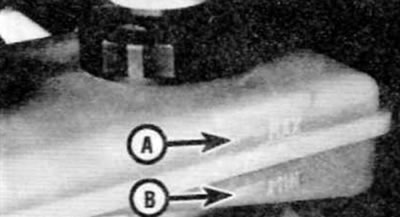
- The brake fluid reservoir must be securely fastened and the fluid level must be between the upper (A) and lower (B) marks.
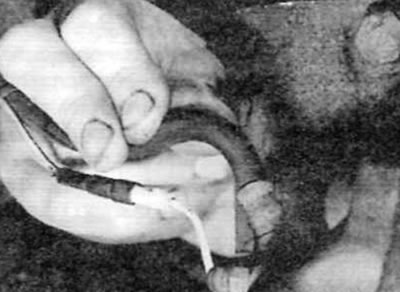
- Inspect both front rubber brake hoses for cracks or deterioration. Turn the steering wheel from lock to lock and make sure the hoses do not touch the wheels or any suspension or steering components. With the brake pedal fully depressed, check the pressurized hoses for swelling or leaks.
Steering and suspension
- Ask an assistant to turn the steering wheel slightly from side to side until the wheels begin to turn. Check for excessive play between the steering wheel and steering gear, which would indicate excessive wear or poor steering column-to-steering gear connections or the steering gear itself.
- Ask your assistant to turn the steering wheel more vigorously in both directions until the wheels just begin to turn. At this time, inspect all connections, levers, rods and fasteners of the steering system. Any element showing signs of wear or damage must be replaced with a new one. On vehicles equipped with power steering, also check the tightness and condition of the power steering pump, drive belt and hoses.
- Make sure the vehicle is level and has the correct ground clearance (approximately).
Shock absorbers
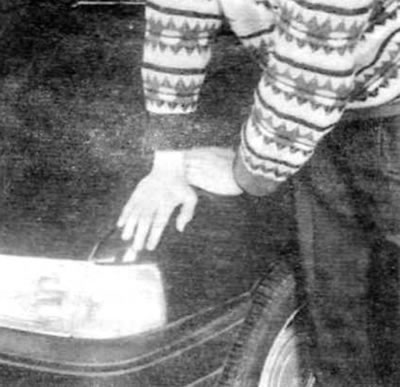
- Press down on each corner of the car in turn and then release. The car should rise and then return to its normal position. If the car continues to rise and fall, it means the shock absorber is faulty. If the car does not return to its original condition at all, this also means that the shock absorber is faulty.
Exhaust system
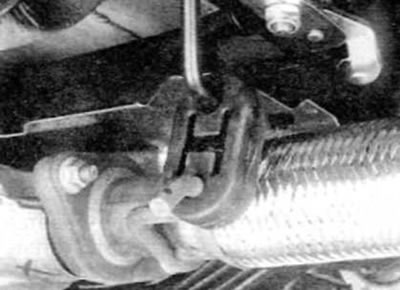
- Start the engine and ask your assistant to plug the muffler outlet pipe with a rag. Check the entire system for leaks. Repair or replace leaking sections.