
English Русский
Български
Беларускі
Український
Српски
Hrvatski
Română
Polski
Slovenský
Magyar
Bookmark Articles Sitemap Contacts
Company Hyundai Company Opel Company Skoda Company Kia Company Mitsubishi Company LADA Company Audi
PeugeotBook.ru


Series 100   Series 200   Series 300   400-500   Series 600   Crossovers   Others
 
Peugeot 106 (1991-2003)

Checks carried out with the vehicle on the ground (Peugeot 106)

  • Main
  • 10X
  • Peugeot 106 (1991-2003)
  • General information
  • Weekly checks
  • Checks carried out with the vehicle on the ground
0
Table of contents: Vehicle identification 🠇 Electrical equipment 🠇 Footbrake 🠇 Steering and suspension 🠇 Shock absorbers 🠇 Exhaust system 🠇

Vehicle identification


  • Number plates must be in good condition, secure and legible, with letters and numbers correctly spaced - spacing at (A) should be at least twice that at (B).
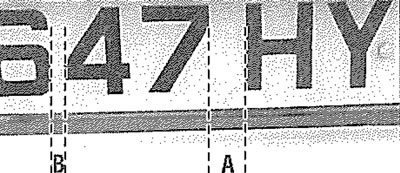
Number plates must be in good condition, secure and legible, with letters and numbers correctly…

  • The VIN plate and/or homologation plate must be legible.
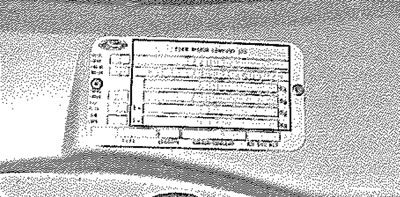
The VIN plate and/or homologation plate must be legible.


Electrical equipment


  • Switch on the ignition and check the operation of the horn.
  • Check the windscreen washers and wipers, examining the wiper blades; renew damaged or perished blades. Also check the operation of the stop-lights.
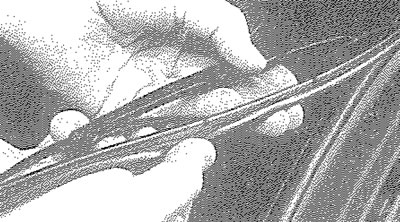
Check the windscreen washers and wipers, examining the wiper blades; renew damaged or perished…

  • Check the operation of the sidelights and number plate lights. The lenses and reflectors must be secure, clean and undamaged.
  • Check the operation and alignment of the headlights. The headlight reflectors must not be tarnished and the lenses must be undamaged.
  • Switch on the ignition and check the operation of the direction indicators (including the instrument panel tell-tale) and the hazard warning lights. Operation of the sidelights and stop-lights must not affect the indicators - if it does, the cause is usually a bad earth at the rear light cluster.
  • Check the operation of the rear foglight, including the warning light on the instrument panel or in the switch.
  • The ABS warning light must illuminate in accordance with the manufacturers' design. For most vehicles, the ABS warning light should illuminate when the ignition is switched on, and (if the system is operating properly) extinguish after a few seconds. Refer to the owner's handbook.


Footbrake


  • Examine the master cylinder, brake pipes and servo unit for leaks, loose mountings, corrosion or other damage.
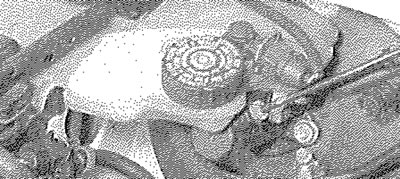
Examine the master cylinder, brake pipes and servo unit for leaks, loose mountings, corrosion or…

  • The fluid reservoir must be secure and the fluid level must be between the upper (A) and lower (B) markings.
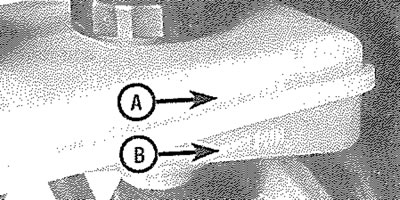
The fluid reservoir must be secure and the fluid level must be between the upper (A) and lower (B)…

  • Inspect both front brake flexible hoses for cracks or deterioration of the rubber. Turn the steering from lock to lock, and ensure that the hoses do not contact the wheel, tyre, or any part of the steering or suspension mechanism. With the brake pedal firmly depressed, check the hoses for bulges or leaks under pressure.
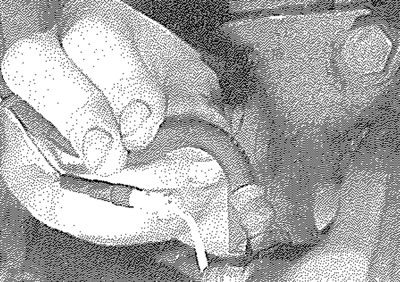
Inspect both front brake flexible hoses for cracks or deterioration of the rubber. Turn the…


Steering and suspension


  • Have your assistant turn the steering wheel from side to side slightly, up to the point where the steering gear just begins to transmit this movement to the roadwheels. Check for excessive free play between the steering wheel and the steering gear, indicating wear or insecurity of the steering column joints, the column-to-steering gear coupling, or the steering gear itself.
  • Have your assistant turn the steering wheel more vigorously in each direction, so that the roadwheels just begin to turn. As this is done, examine all the steering joints, linkages, fittings and attachments. Renew any component that shows signs of wear or damage. On vehicles with power steering, check the security and condition of the steering pump, drivebeit and hoses.
  • Check that the vehicle is standing level, and at approximately the correct ride height.

(The source is located on the website: PEUGEOTBOOK)

Shock absorbers


  • Depress each corner of the vehicle in turn, then release it. The vehicle should rise and then settle in its normal position. If the vehicle continues to rise and fall, the shock absorber is defective. A shock absorber which has seized will also cause the vehicle to fail.
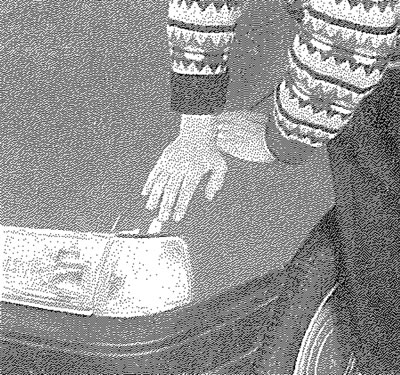
Depress each corner of the vehicle in turn, then release it. The vehicle should rise and then…


Exhaust system


  • Start the engine. With your assistant holding a rag over the tailpipe, check the entire system for leaks. Repair or renew leaking sections.
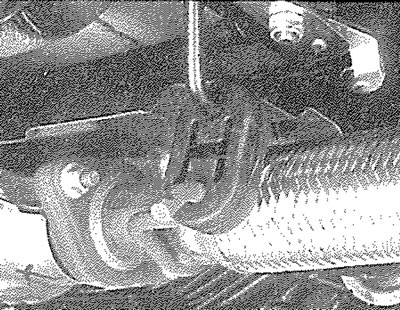
Start the engine. With your assistant holding a rag over the tailpipe, check the entire system for…
This article is available at russian, bulgarian, belarusian, ukrainian, serbian, croatian, romanian, polish, slovak, hungarian
Article reviewed by editor: Matveev Demid
Share information:
Previous
Peugeot 106: Weekly checks
Next

Checks carried out from the driver's seat
MOT test checks
Wiper blades
Washer fluid level
Tyre tread wear patterns
Checks carried out with the vehicle raised and the wheels free…
Checks carried out on your vehicle's exhaust emission system
See similar information for other Peugeot models

➨ General vehicle checks Peugeot 206 (1998-2012)
➨ Basic operations that can be carried out without removing the… Peugeot 305 (1977-1989)
➨ Vehicle identification Peugeot 405 (1987-1997)
➨ Vehicle care Peugeot 605 (1989-2000)
➨ Checks performed with the vehicle on the ground Peugeot Partner I (1996-2008)
Link to this article in different formats
Comments and feedback from visitors
No comments yet


Add two numbers 15 + 45


Peugeot 106 (1991-2003) 
  • General information
  • Introduction to manual
  • Weekly checks
  • Maintenance (petrol)
  • Maintenance (diesel)
  • Troubleshooting
  • Power unit
  • Petrol engines
  • Diesel engines
  • Engine overhaul
  • Cooling and heating
  • Fuel system (carburetor)
  • Single point injection (petrol)
  • Multipoint injection (petrol)
  • Fuel system (diesel)
  • Emission control system
  • Engine electrical equipment
  • Ignition system
  • Diesel heating
  • Transmission
  • Clutch
  • Manual gearbox
  • Automatic gearbox
  • Drive shafts
  • Chassis, running gear
  • Brake system
  • Car suspension
  • Steering
  • Body and interior
  • Exterior (external elements)
  • Interior (internal elements)
  • Doors, locks and windows
  • Electrical equipment
  • Equipment and devices
  • Electrical diagrams
PeugeotBook.ru © 2018–2026 | Mobile version | Sitemap: EN BG BY UA RS HR RO PL SK HU | Write message | Site search | Add to bookmarks | Peugeot owners
106 (1991-2003) | 206 (1998-2012) | 207 (2006-2014) | 305 (1977-1989) | 306 (1993-2002) | 307 (2001-2008) | 405 (1987-1997) | 406 (1995-2004) | 605 (1989-2000) | Partner-I (1996-2008) | Eurovans-807 (2002-2014) | Eurovans-806 (1994-2002) | J5 (1981-1993) |
Cookies are used to ensure the correct display of pages on the site.