



Fuel Evaporative Emission Control System
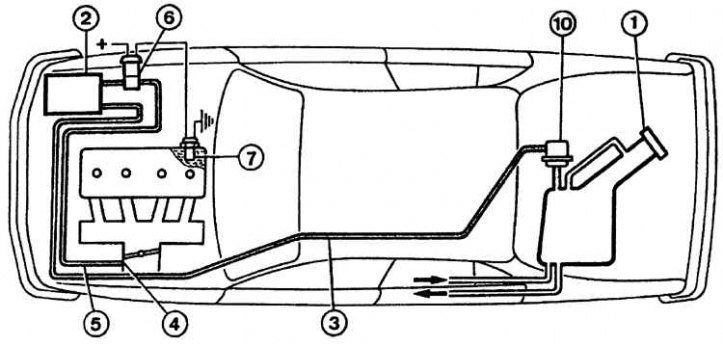
1 – filler cap, 2 – charcoal canister, 3 – hose, 4 – calibrated hole, 5 – hose, 6 – cleaning solenoid valve, 7 – coolant temperature sensor, 10 – safety valve
To minimize the release of unburned hydrocarbons into the atmosphere, later models use a fuel vapor management system. The fuel filler cap is sealed, so a canister of charcoal collects gasoline vapors that form in the fuel tank of a parked vehicle. The canister stores the fuel vapors until they are purged from the canister through a purge solenoid valve. When the valve is open, the fuel vapor passage into the engine air intake tract is open, and the vapors are burned off when the engine is running.
To ensure that the engine runs properly, when the engine is cold or idling, the ECU does not open the purge control valve until the engine is warm and does not allow stored vapor to pass into the engine air intake tract.