



Removal
1. Remove the oil pan.
2. Remove the two mounting screws and remove the sprocket cover from the front of the oil pump.
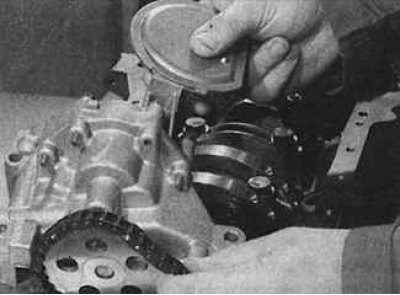
3. Unscrew the three bolts securing the oil pump to the cylinder block. Remove the chain from the pump sprocket and remove the oil pump. If necessary, remove the gasket that is installed under the pump.
Examination
1. Check the oil pump sprocket for wear. If the sprocket is worn, the oil pump must be replaced, as the sprocket is not supplied separately. In this case, it is also recommended to replace the chain and drive sprocket.
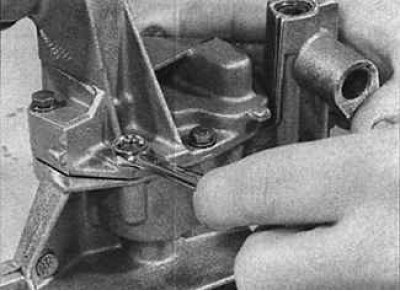
2. Unscrew the bolts securing the oil receiver to the pump.
 |
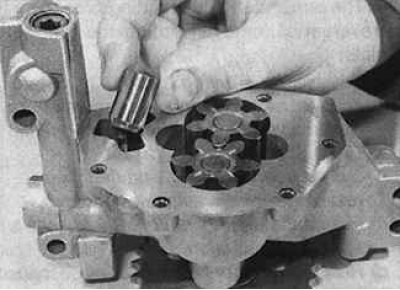 |
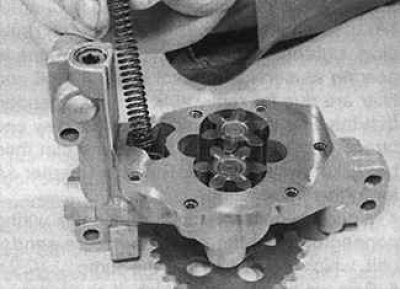
3. Remove the oil receiver and take out the relief valve and spring.
4. Check the condition of the pump rotors for signs of wear. If the rotors are worn, the pump must be replaced.
5. Check the safety valve piston for signs of wear and replace if necessary. The condition of the spring can only be assessed by comparing it with a new spring. The safety piston and spring are available as spare parts.
6. Clean the oil pickup strainer with a suitable solvent.
7. Install the safety valve spring and piston into the oil receiver. Install the oil receiver onto the pump and secure with bolts.
Installation
1. Install the spacer plate and place the chain on the pump sprocket. Install the pump on the cylinder block and secure with bolts.
2. Install the oil pump sprocket cover.
3. Install the tray.
4. Before starting the engine, fill the lubrication system with oil. To do this, remove the electrical connector from the fuel injector and, turning the engine with the starter, wait until the oil pressure indicator light goes out. Then connect the connector to the fuel injector and start the engine.