



2. If there is carbon deposits on the top of the cylinder, remove them with a soft scraper. The presence of a step on the top of the cylinder indicates excessive wear of the cylinder and the need to bore the engine cylinders.
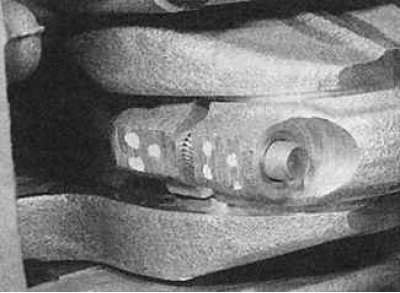
3. Using a hammer and center punch or paint, mark the position of the big end cap and the cylinder number (cylinder #3 is shown in the illustration).
4. Turn the crankshaft so that the pistons of the 1st and 4th cylinders are at BDC.
(Information copied from the resource: «PeugeotBook»)
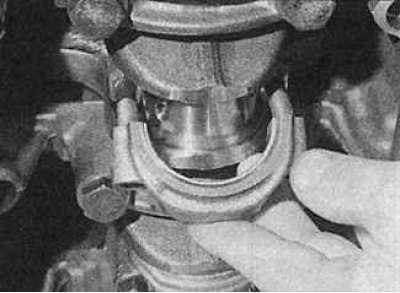
5. Loosen the nuts securing the lower connecting rod head cover of the first cylinder. Remove the lower connecting rod cover.
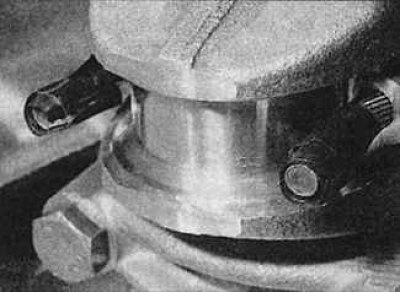
6. To prevent damage to the crankshaft journals by the connecting rod studs, wrap the studs with any soft material or put appropriate tubes made of soft material on them.
7. Using the handle of a hammer, push the piston up the cylinder block and remove it from the cylinder block.
8. Install the connecting rod cap onto the lower connecting rod head and screw it on with nuts, which will keep them together and prevent them from getting mixed up.
9. Remove the piston of the fourth cylinder in the same way.
10. Turn the crankshaft 180° to set the pistons of the 2nd and 3rd cylinders to BDC and remove the pistons in the same way.