
English Русский
Български
Беларускі
Український
Српски
Hrvatski
Română
Polski
Slovenský
Magyar
Bookmark Articles Sitemap Contacts
Company Hyundai Company Opel Company Skoda Company Kia Company Mitsubishi Company LADA Company Audi
PeugeotBook.ru


Series 100   Series 200   Series 300   400-500   Series 600   Crossovers   Others
 
Partner I (1996-2008) Peugeot 807 (2002-2014) Peugeot 806 (1994-2002) Peugeot J5 (1981-1993)

Heating and ventilation controls (Peugeot Partner I)

  • Main
  • Пежо
  • Partner I (1996-2008)
  • General information
  • User manual
  • Heating and ventilation controls
0
Table of contents: Heating and ventilation system 🠇 Air conditioning system 🠇
Cars can be equipped with either a simple heating and ventilation system or a climate control system with air conditioning.

Heating and ventilation system


Typically, the heating and ventilation controls include the following: (figure 8, a, b):
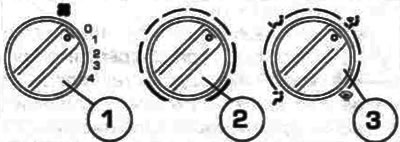
Figure 8, a. Heating and ventilation controls (option 1)

Figure 8, a. Heating and ventilation controls (option 1)
1. Blower speed controller
2. Air temperature regulator
3. Air distribution regulator
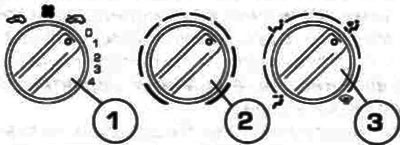

Figure 8, b. Heating and ventilation controls (option 2)

Figure 8, b. Heating and ventilation controls (option 2)
1. Blower speed controller
2. Air temperature regulator
3. Air distribution regulator


Blower speed controller


To increase fan speed, turn the knob clockwise. It is recommended to operate the blower fan at low speed.


Source available here: peugeotbook.ru

Warning. When the blower fan is off, the windshield may fog up under certain weather conditions.


The fan speed controller may have a recirculation position. The air recirculation mode should be used primarily to prevent the penetration of unpleasant odors from outside.

Caution! When using recirculation mode, windows tend to become damp more quickly. Return to outside air mode as quickly as possible.


Note: It is not recommended to use the recirculated air mode for more than 30 minutes, as air exchange does not occur in this mode.


Air temperature regulator


To ensure a cooler microclimate in the cabin, turn the regulator counterclockwise.

To achieve a higher interior temperature, turn the control clockwise.

Air distribution regulator


The regulator has four main positions:
  • All air flow is directed towards the face
  • All air flow is directed into the footwell
  • The air flow is directed towards the windshield, door windows and footwell
  • All air flow is directed towards the windshield.

At your discretion, the regulator can be set to any intermediate position.

All variants are equipped with a single heater, but some may have an additional automatic heater.

Note: Information on control settings for various driving conditions is provided in the "Vehicle Operation" section.


Air conditioning system


If the car is equipped with an air conditioning system, the heating and ventilation controls are almost identical (figure 8, in). But in addition there is an on/off button for the air conditioner, located on the central button panel (see above).
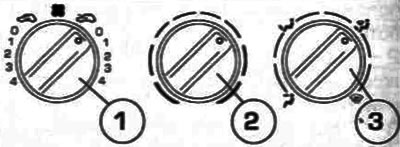


Figure 8, c. Heating and ventilation controls (version with air conditioning)

Figure 8, c. Heating and ventilation controls (version with air conditioning)

1. Blower speed controller

2. Air temperature regulator

3. Air distribution regulator


Note: The air conditioner only operates when the engine is running and the fan is on (with the fan control position other than OFF).


Use the air conditioner only for cooling the air. For heating and ventilation, an appropriate system is sufficient (see above).

To maintain the air conditioner's performance, it is recommended to turn it on in winter at least once a month for approximately 10 seconds.

Warning. The air conditioner is filled with environmentally friendly R134a refrigerant. Never mix this refrigerant with chlorinated R12 refrigerant. All work on the refrigerant circuit must be performed only by properly trained personnel.


Note: Information on the control settings with the air conditioner on for various driving conditions is given in the paragraph "Vehicle operation"
This article is available at russian, bulgarian, belarusian, ukrainian, serbian, croatian, romanian, polish, slovak, hungarian
Article reviewed by editor: Nikonova Veronica
Share information:
Previous
Partner I: User manual
Next

Gear shift lever (manual transmission)
Steering column adjustment lever
Cancelling and resuming cruise control, resetting the set speed…
Turning the system on and off and adjusting the speed
Cruise control switch block
Ventilation deflectors
Audio system compartment
Parking brake lever
Interior lighting
Adjusting mirrors, controlling windows
See similar information for other Peugeot models

➨ Cooling, heating and ventilation systems — specifications Peugeot 106 (1991-2003)
➨ Ventilation and heating system Peugeot 207 (2006-2014)
➨ Heating and ventilation controls Peugeot 307 (2001-2008)
➨ Internal heating and ventilation Peugeot 405 (1987-1997)
➨ Heating and ventilation of the passenger compartment Peugeot 605 (1989-2000)
Link to this article in different formats
Comments and feedback from visitors
No comments yet


Add two numbers 16 + 27


Partner I (1996-2008) 
  • General information
  • Introduction to the guide
  • Faults en route
  • Weekly checks
  • User manual
  • Maintenance (petrol)
  • Maintenance (diesel)
  • Power unit
  • Petrol engines
  • Diesel engines «XUD»
  • Diesel engines «DW»
  • Overhaul of petrol engines
  • Overhaul of diesel engines
  • Cooling and heating
  • Power and exhaust (petrol)
  • Power and exhaust (XUD diesels)
  • Power and exhaust (DW diesels)
  • Emission reduction
  • Starting and charging system
  • Transmission
  • Clutch
  • Mechanical gearbox
  • Drive shafts
  • Chassis, running gear
  • Brake system
  • Car suspension
  • Steering
  • Body and interior
  • Exterior (external elements)
  • Interior (internal elements)
  • Doors, locks and windows
  • Electrical equipment
  • Equipment and devices
  • Electrical circuits
Peugeot 807 (2002-2014) 
  • General information
  • Operating instructions
  • Maintenance
  • Troubleshooting
  • Power unit
  • Gasoline engines
  • Diesel engines
  • Cooling and heating
  • Fuel injection (petrol)
  • Fuel system (diesel)
  • Fuel system
  • Exhaust system
  • Ignition system
  • Transmission
  • Clutch
  • Manual gearbox
  • Automatic gearbox
  • Chassis, running gear
  • Brake system
  • Car suspension
  • Steering system
  • Body and interior
  • Exterior (external elements)
  • Interior (internal elements)
  • Electrical equipment
  • Power devices
  • Electrical circuits
Peugeot 806 (1994-2002) 
  • General information
  • User manual
  • Maintenance
  • Power unit
  • Petrol engines
  • Diesel engines
  • Lubrication system
  • Cooling system
  • Fuel injection (petrol)
  • Fuel system (diesel)
  • Ignition and exhaust systems
  • ECM Bosch Motronic MP 3.2
  • ECM Magneti-Marelli (MM)
  • Transmission
  • Clutch
  • Mechanical gearbox
  • Chassis, running gear
  • Brake system
  • Car suspension
  • Steering
  • Electrical equipment
  • Equipment and devices
  • Electrical circuits
Peugeot J5 (1981-1993) 
  • General information
  • Introduction to manual
  • Specifications
  • Gasoline engine
  • Engine repair
  • Lubrication system
  • Cooling system
  • Fuel system
  • Ignition system
  • Diesel engine
  • Engine repair (DB9)
  • Lubrication system (DB9)
  • Cooling system (DB9)
  • Fuel injection (DB9)
  • Engine repair (U25)
  • Lubrication system (U25)
  • Cooling system (U25)
  • Fuel injection (U25)
  • Transmission
  • Clutch
  • Gearbox
  • Drive shafts
  • Chassis, running gear
  • Steering system
  • Car suspension
  • Brake system
  • Electrical equipment
  • Power devices
  • Electrical circuits
PeugeotBook.ru © 2018–2026 | Mobile version | Sitemap: EN BG BY UA RS HR RO PL SK HU | Write message | Site search | Add to bookmarks | Peugeot owners
106 (1991-2003) | 206 (1998-2012) | 207 (2006-2014) | 305 (1977-1989) | 306 (1993-2002) | 307 (2001-2008) | 405 (1987-1997) | 406 (1995-2004) | 605 (1989-2000) | Partner-I (1996-2008) | Eurovans-807 (2002-2014) | Eurovans-806 (1994-2002) | J5 (1981-1993) |
Cookies are used to ensure the correct display of pages on the site.