



2. Visually inspect the ball joint dust boots and steering gear boots for cracks, cuts and abrasions. Any wear on these components results in loss of lubrication, dirt and water ingress, and ultimately rapid wear of the ball joints or steering gear.
3. On vehicles with power steering, check the power steering hoses for chafing or other damage, and the fittings of the lines and hoses for leaks. Also check for leaks of pressurized power steering fluid through the steering gear boots, which is a sign of failure of the steering gear seals.
4. Grasp the wheel from the top (at 12 o'clock) and bottom (at 6 o'clock) and try to rock it (figure 15.4). A very slight amount of play is acceptable, but if the movement is noticeable, further investigation is necessary to determine the cause. Continue rocking the wheel and ask your assistant to depress the brake pedal. If the large amount of play is now gone or has significantly decreased, the wheel bearings are probably faulty. If significant play remains when the brake pedal is depressed, this means that the suspension joints or supports are worn out.
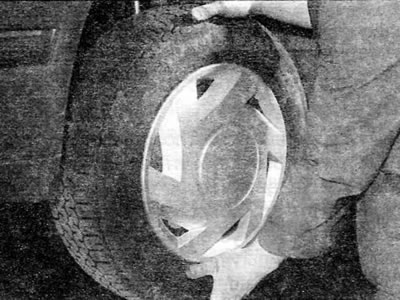
Figure 15.4. To check the hub bearings for wear, grasp the wheel from the top and bottom and try to rock it
5. Now grab the wheel at the sides (9 o'clock and 3 o'clock) and try to rock it again. Any play currently perceived could also be caused by worn wheel bearings or tie rod ball joints. If the inner or outer ball joint is worn, movement will be visible.
Source can be seen at: peugeotbook.ru
6. Using a large screwdriver or pry bar, check the suspension support bushings for wear. To do this, use an improvised lever to pry up the corresponding suspension element relative to its attachment point. Some movement is acceptable as the bushings are made of rubber. Any increased wear will be evident. Also check the condition of all visible rubber bushings, looking for cuts, cracks or contamination.
7. Place the vehicle on its wheels and have an assistant turn the steering wheel back and forth approximately 45 degrees in each direction. There should be very little or no play in the steering wheel. If this is not the case, carefully inspect the hinges and supports described above. Also, check the steering column universal joints and steering gear for wear.
Suspension struts/shock absorbers
8. Check for leaks in the areas around the suspension struts/shock absorber housings or from under the rubber piston rod boot. If there are traces of any liquid, the suspension strut or shock absorber has an internal defect and requires replacement.
Note: Suspension struts/shock absorbers on the same axle should always be replaced in pairs.
9. The effectiveness of the suspension strut/shock absorber can be checked by pressing on each corner of the car. Usually, after pressing it, the body returns to its normal position and stops. If it rises and returns after being pressed, the suspension strut/shock absorber is likely faulty. Inspect the upper and lower suspension/shock absorber mounts for signs of wear.