



Table of contents: Models with 1.9L engine 🠇 Models with a 2.0L engine 🠇
Caution: Take special precautions when working with fuel injectors. Never place your hands or other body parts under the fuel jet from the nozzle, as high operating pressure may cause fuel to penetrate the skin, possibly causing death. It is highly recommended that pressure injector testing be performed by a dealer or diesel fuel system specialist.
Models with 1.9L engine
Warning. Be careful not to allow dirt to enter the high pressure fuel pump or injectors during this procedure.
Removal
1. Remove the upper section of the intake manifold as described in paragraph 17.
2. Disconnect the return line from the injector to be removed (figure 15.2).
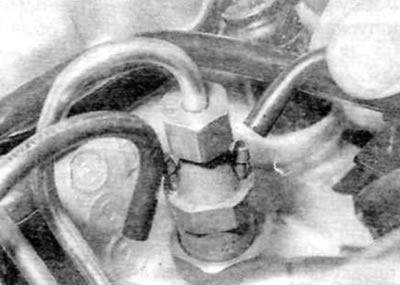
Figure 15.2. Disconnecting the return fuel line from the injector (models with a 1.9 L engine)
3. Thoroughly remove dirt from all injector line fittings. Loosen the union nuts securing the fuel lines to the high-pressure fuel pump and injectors (figure 15.3).
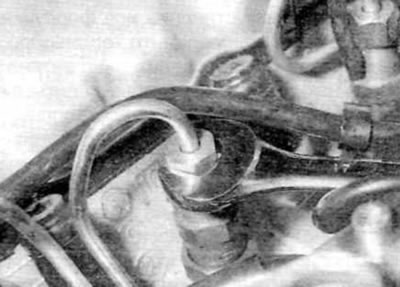
Figure 15.3 Unscrewing the union nut on the injector (models with a 1.9 L engine)
Hold the fittings on the pump while unscrewing the union nuts securing the pipelines to the pump. Remove the fuel lines as a set. Cap the connections on the high pressure fuel pump/injectors to prevent dirt from entering.
4. On WJY engines, if injector #1 is removed, trace the needle lift sensor wiring from the injector and disconnect the corresponding electrical connector on the main wiring harness.
5. Remove all traces of dirt from the area around the injector, then unscrew the injector from the cylinder head. Remove the injector flame deflector washer from the cylinder head and discard it; when installing, you should use a new one.
Warning. Do not allow the injectors to fall and be careful not to damage the injector tips. The injectors are manufactured to very precise tolerances and require careful handling. For example, never clamp them in a vice.
Installation
6. Install the new flame deflector washer so that its convex surface faces upward (to the nozzle).
7. Carefully install the injector onto the cylinder head and tighten it to the specified torque.
8. Connect the return line to the nozzle. If necessary, connect the electrical connector of the needle lift sensor.
9. After all injectors are correctly installed, install and connect the injector fuel lines. Pre-tighten all union nuts to ensure all fuel lines are properly seated, then tighten them to the specified torque in the same sequence. Hold the fittings on the high pressure fuel pump while tightening the nuts on the pump side. Install and connect the fuel injector lines.
10. Install the intake manifold as described in paragraph 17.
11. Fill the fuel system as described in paragraph 6. Before installing the engine cover, start the engine and check it for signs of fuel leaks.
Models with a 2.0L engine
Caution: Before starting work, please refer to the safety precautions described in paragraph 2.
Note: The following procedure describes the removal and installation of the injectors as a set, although each injector can be removed individually if necessary. During installation, each damaged injector will require new copper washers, top seals, injector clamp nuts, and high pressure fuel lines.
Removal
12. Follow the steps described in paragraphs 1-4 of clause 16.
13. Disconnect the quick release couplings of the fuel supply and return hoses at the top of the fuel pump, using a screwdriver to release the retaining clip. Properly plug open connections to prevent dirt from entering, then release the fuel hoses (and on later models, a booster pump) from the corresponding clamps.
14. Thoroughly clean all high-pressure fuel line fittings on the fuel injectors and fuel rail. Using two open-end wrenches, loosen the union nuts securing the high-pressure fuel lines to the fuel injectors and fuel rail (figure 15.14). Remove the high pressure fuel lines and plug any open connections at the injectors and fuel rail to prevent dirt from entering. Please note that installation will require a new high pressure fuel line for each injector removed.
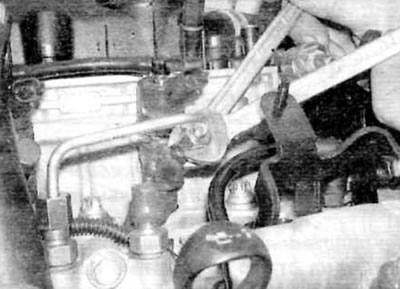
Figure 15.14. Hold the adapters while loosening the union nuts, then remove and discard the high-pressure fuel line running from the injector to the fuel rail (models with a 2.0 L engine)
15. Remove the retaining ring and disconnect the return line from each fuel injector (figure 15.15).
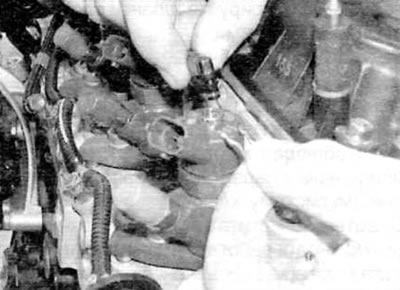
Figure 15.15. Remove the clamp and disconnect the return fuel line fitting from the injector (models with a 2.0 L engine)
16. Loosen the nut and washer securing each injector clamp to its stud on the cylinder head (figure 15.16). Please note that new clamp nuts will be required for installation.
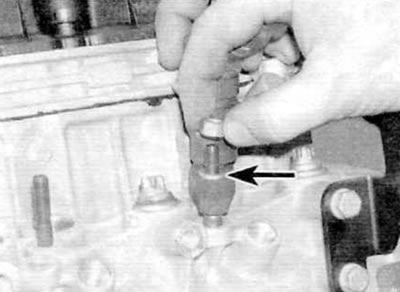
Figure 15.16. Unscrew the injector mounting nut and remove the washer (marked with an arrow) (models with a 2.0 L engine)
17. Remove the injectors together with their clamps from the cylinder head (figure 15.17). Remove the clamp from the injector after moving it away from the support pin. If the injectors are tightly seated in the cylinder head and cannot be released, remove the support stud with a stud puller and slide the injector clamp out. By inserting an open-end wrench into the mounting section on the injector body, release the injector by turning it and simultaneously pulling it upward.
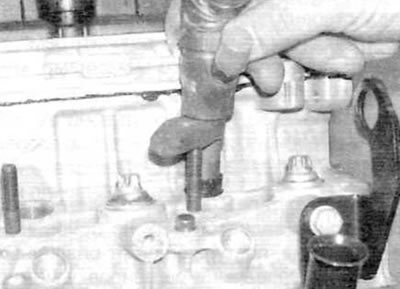
Figure 15.17. Remove the injector and clamp from the cylinder head (models with a 2.0 L engine)
18. Remove the injector clamp mounting pin from the cylinder head (figure 15.18).
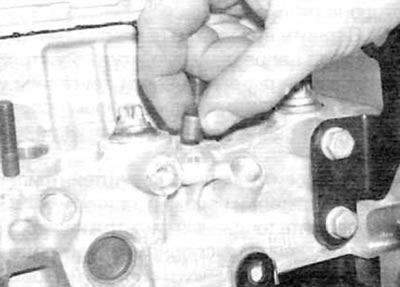
Figure 15.18. Remove the injector clamp mounting pin (models with a 2.0 L engine)
19. Remove the copper washer and top seal from each injector or from the mounting hole in the cylinder head. if they remained there when the injector was removed. New copper washers and top seals will be required for installation.
20. Visually inspect each injector for obvious signs of damage or deterioration. If there are obvious defects, replace the injector.
Warning. Fuel injectors are manufactured to very tight tolerances and should never be disassembled under any circumstances. Do not unscrew the fuel line fitting on the side of the injector or disconnect any components from the injector body. Do not attempt to remove carbon deposits from the injector nozzle or perform any testing using ultrasound or pressure.
21. If the injectors are in satisfactory condition, plug the fuel line fitting (if you haven't done so yet) and plug the electrical connector and injector accordingly.
22. Before installation, obtain a new copper washer, top seal, injector clamp retaining nut and high pressure fuel line for each injector removed.
Installation
23. Install a new top seal onto the body of each injector and install a new copper washer onto the injector (figure 15.23, a, b).
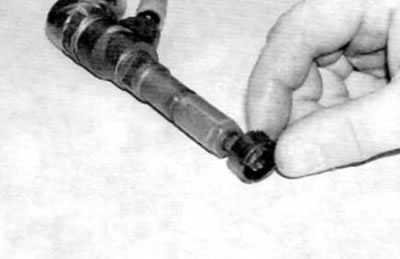
Figure 15.23, a. Place the new upper seal on the injector...
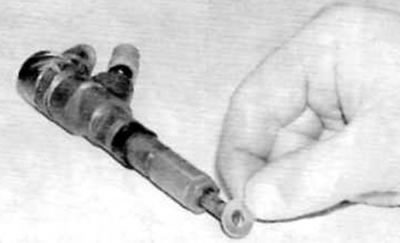
Figure 15.23, b....then install a new copper washer (models with a 2.0 L engine)
24. Install the injector clamp mounting pins onto the cylinder head.
25. Install the injector clamp into the groove on the body of each injector and install the injectors into the cylinder head. Direct the clamp onto the support stud and the dowel pin when installing each injector.
26. Install a washer and thread a new injector clamp retaining nut onto each support stud. At this stage, tighten the nuts with hand force only.
27. Working with one fuel injector at a time, remove the plugs from the fittings on the fuel rail and the corresponding injector. Connect the new high-pressure fuel line to the fittings and screw on the union nuts. Be careful not to damage the threads on the nut or deform the fuel lines when installing them. After "tacking" the union nut, tighten it at this stage only with medium force.
28. After preliminary connecting all fuel lines, tighten the injector clamp nuts to the specified torque.
29. Using an open-end wrench, hold the fitting of each fuel line in turn and tighten the union nut to the specified torque using a torque wrench and a special adapter. Tighten all loose union nuts in the same manner.
30. Connect the return lines to each fuel injector and secure with retaining rings.
31. Remove the plugs and connect the quick-release couplings of the feed and return hoses at the top of the fuel pump. Secure the hoses with appropriate clamps.
32. Install the plastic wiring harness guide onto the two support studs and secure with nuts.
33. Reconnect the electrical connectors for the fuel injectors and the pump piston cut-off switch and reconnect all other wiring that was disconnected for access.
34. Make sure all connectors are connected and all wiring is secured with the appropriate clamps, then connect the ground cable to the battery.
35. Observing the precautions described in paragraph 2. Fill the fuel system as described in paragraph 6. Then start the engine and allow it to idle. Check high pressure fuel line connections for leaks while the engine is idling. If everything is OK, increase the engine speed to 4000 rpm and check for leaks again. Take the vehicle for a short road test and check for leaks again upon return. If leaks are detected, purchase and install new high-pressure fuel lines. Do not attempt to fix even the smallest leak by tightening the fuel line fittings.
36. Finally, install the engine cover.