



To measure compression pressure, a compression tester for diesel engines with a maximum reading of at least 30 bar is required.
1. Fully charge the battery. Adjust the valve clearances. Warm up the engine to operating temperature. Unscrew all the injectors.
2. Disconnect the glow plug power supply and the fuel injection solenoid valve connector. On 2.1 liter engines, remove the fuel injection system relay located in the ECU.
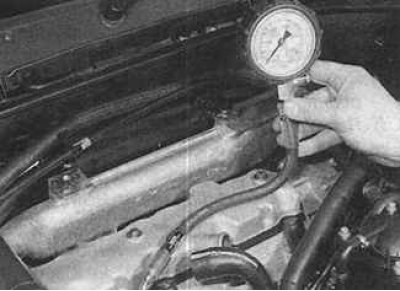
3. Screw the compression gauge adapter into the injector socket. Turn the crankshaft with the starter several times. Record the maximum compression pressure value.
4. Repeat the measurements on the remaining three cylinders.
5. The compression pressure in all cylinders should not differ by more than two units. Note that the compression value should increase quickly on a healthy engine; low compression pressure on the first revolution of the crankshaft, followed by a gradual increase in pressure on subsequent revolutions of the crankshaft, indicates wear of the piston rings. Low pressure on the first revolution of the crankshaft, which increases slightly thereafter, indicates loose valves, a broken cylinder head gasket, or a crack in the cylinder head. Worn valve stem ends can also cause low compression pressure.
6. If the pressure in one cylinder is low, then perform the following test. Pour some engine oil into the cylinder through the spark plug hole and check the compression pressure. If pouring oil into the cylinder increases the compression pressure, this indicates that the cylinder or piston rings are worn out.
7. Low pressure in two adjacent cylinders indicates a burnt-out gasket between the cylinders.
8. If the pressure in one cylinder is 20% less than the others and the engine idles rough, this indicates a worn camshaft lobe.
9. If the compression pressure is too high, this indicates that the combustion chamber is covered with a thick layer of carbon deposits.