



General information
1. On early models, the exhaust system consists of four sections: a downpipe, a catalytic converter, an intermediate pipe and a center muffler, and a rear pipe with a rear muffler. All sections are connected by means of flange connections. The exhaust pipe is secured with nuts and bolts, the catalytic converter has retainers using spring-loaded balls (which allows for some mobility of the exhaust system). The connections between the catalytic converter and the intermediate pipe and between the intermediate pipe and the muffler are secured with a clamping ring.
2. On later models, the exhaust system consists of three sections: a downpipe with a built-in catalytic converter, an intermediate pipe and a central muffler, and a rear pipe with a rear muffler. The receiving and intermediate pipes are connected by means of a flange joint. All other connections are secured with clamping rings.
3. The system is suspended along its entire length using rubber supports.
Removal
4. Each section can be removed individually or, alternatively, the entire system can be removed. Even if only one part of the system requires attention, it is often easier to remove the entire system and separate the sections on the bench.
5. To remove the system or part of the system, first raise the front or rear of the vehicle and place secure supports underneath it (see "Lifting and installing the car on supports"). Alternatively, place the car over an inspection pit or lift it onto an overpass.
Downpipe
Note: On later models, the catalytic converter is integrated into the downpipe.
6. Trace the oxygen sensor wiring from the sensor to its electrical connectors, which are secured to the transmission housing, and disconnect the connectors by disconnecting the wiring from the main wiring harness.
7. Unscrew the nuts of the flange connection of the inlet pipe to the manifold and unscrew one bolt securing the inlet pipe to the corresponding support bracket (figure 16.7). Disassemble the flange connection and remove the gasket.
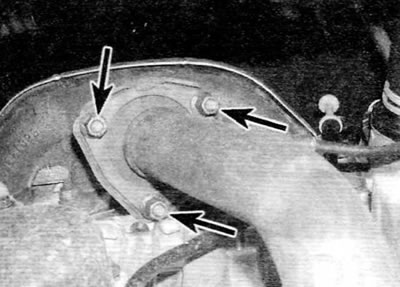
Figure 16.7. Nuts securing the intake pipe to the manifold (marked with arrows) (early models)
8. Unscrew the two nuts securing the flange connection of the inlet pipe to the catalytic converter or intermediate pipe and remove the spring caps and springs. Remove the bolts, then remove the downpipe from under the vehicle and remove the wire mesh gasket.
Catalytic converter (early models)
Note: On later models, the catalytic converter is integrated into the downpipe.
9. Unscrew the two nuts securing the flange connection of the inlet pipe to the catalytic converter. Remove the springs and spring caps and take out the bolts.
10. Loosen the catalytic converter clamp ring bolts and remove the clamp from the flange connection.
11. Release the catalytic converter and then remove it from under the vehicle. Remove the wire mesh gasket from the downpipe joint.
Intermediate pipe
12. On later models, remove the two nuts on the flange connection between the downpipe and the intermediate pipe and remove the spring caps and springs (figure 16.12). Remove the bolts, then remove the downpipe from under the vehicle and remove the wire mesh gasket.
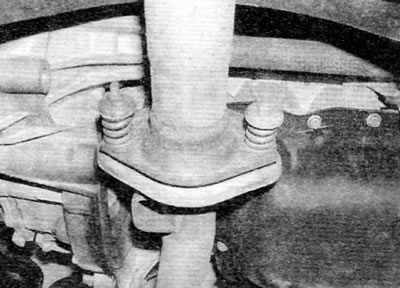
Figure 16.12. Spring-loaded flange connection between the receiving pipe and the intermediate pipe (late models)
13. Loosen the clamp ring bolts and remove the clamp from the flange joints) (figure 16.13).
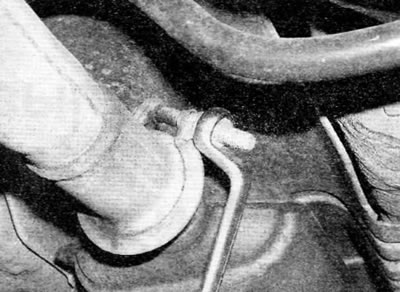
Figure 16.13. Loosen the nut, remove the washer and bolt, then remove the clamping ring from the flange connection
14. Release the intermediate pipe from the corresponding rubber support and remove it from under the vehicle.
Rear pipe
15. Loosen the rear pipe clamp ring bolts and remove the clamp from the flange joint.
16. Release the rear pipe from its corresponding rubber support and remove it from the vehicle.
Complete system
17. Disconnect the oxygen sensor electrical connectors in the main wiring harness.
18. Unscrew the nuts securing the flange connection between the exhaust pipe and the manifold and one bolt securing the exhaust pipe to the corresponding support bracket. Disassemble the flange connection and remove the gasket. Release the system from all rubber mounts and remove it from under the vehicle.
Heat shield
19. Heat shields are secured to the underbody of the vehicle using various nuts and bolts. Each screen can only be removed after removing the corresponding section of the exhaust system. If the screen is removed to gain access to components located behind it, in some cases it may be sufficient to remove the nuts and/or bolts and simply lower the screen without touching the exhaust system.
Installation
20. Each section is installed in the reverse order of removal, taking into account the following points:
- a) Remove all traces of corrosion from the flanges and replace all necessary gaskets.
- b) Inspect the rubber mounts for signs of damage or deterioration and replace if necessary.
- c) Before assembling the spring-loaded joint, apply high-temperature grease to the mating surfaces of the joint.
- d) If the connection uses a clamping ring, apply exhaust system assembly paste to the flange connection to ensure gas-tightness of the joint. Tighten the clamp ring nuts evenly and gradually until the gap between the clamp sections is equal on both sides.
- d) Before tightening the exhaust system bolts/nuts, make sure that all rubber mounts are correctly positioned and that there is sufficient clearance between the exhaust system and the underbody of the vehicle.
- e) Ensure that the oxygen sensor electrical connectors are properly connected and that the wiring is secured to the underbody with the appropriate clamps.