



Table of contents: Coolant 🠇 Fuel 🠇 Motor oil 🠇 Automatic transmission oil 🠇 Fluid in the power steering system 🠇 Air conditioner (cooling agent) 🠇 Brake fluid 🠇 Unidentified liquid leaks 🠇 Vacuum hoses 🠇
Coolant
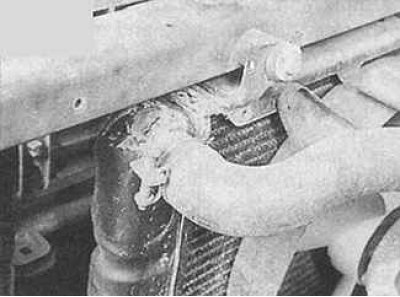
1. A cooling system leak is usually detected by a white or rust-colored coating in the area adjacent to the leak.
2. Carefully inspect the radiator and coolant hoses along their entire length. Replace hoses that have cracks, breaks, or signs of aging. Cracks are easier to spot if the hose is pinched. Pay special attention to the clamps that attach the hoses to the cooling system components. Hose clamps that have been tightened too much can cause the hose to rupture or puncture, resulting in leaks in the cooling system.
3. Inspect all components of the cooling system (hoses, connector surfaces, etc.) for leaks. If any problems of this nature are found with system components, replace that component or gasket.
Fuel
Fuel leaks are difficult to pinpoint until the leak is significant and therefore easily visible. Fuel tends to evaporate quickly once it comes into contact with air, especially in a hot engine bay. Small droplets may disappear before you can pinpoint the leak. If you suspect a fuel leak in the engine bay area, then cool the engine and start it while it is cold with the hood open. Metal components tend to shrink when cold, rubber hoses tend to loosen, so any leaks will be more obvious as the engine warms up from cold starting.
1. Check all fuel line connections to the fuel rail, fuel pressure regulator, and fuel filter. Check each rubber fuel hose along its entire length for rips or cracks. Check for leaks from the corrugated connections between the rubber and metal fuel lines. Check the connections between the metal fuel lines and the fuel filter housing. Also check the area around the fuel injectors for signs of a ring leak.
2. To detect fuel leaks between the fuel tank and the engine bay, the vehicle must be raised. Inspect the tank and filler hose for punctures, cracks, or other damage. This connection is particularly vulnerable.
3. Carefully inspect all rubber hoses and metal fuel lines coming from the tank. Check for loose connections, deteriorated hoses, kinked fuel lines, and other damage. Pay special attention to vent pipes and hoses, which often twist around the filler hose and can become blocked, making the tank difficult to fill. Follow the fuel feed and return hoses to the front of the vehicle, carefully inspecting them all over for signs of damage or corrosion. Replace damaged sections as needed.
Motor oil
Inspect the area around the cylinder head cover, oil filter, and oil pan mating surfaces. Keep in mind that very small leaks can develop in this area over time, so what you are really looking for are signs of a major leak caused by a blown gasket. Engine oil leaking from the timing belt cover or clutch housing can be a sign of worn crankshaft or transmission input shaft seals. If a leak is found, replace the faulty gasket or oil seal.
Automatic transmission oil
Check the hoses leading to the oil cooler at the front of the engine compartment for leaks. Look for defects caused by corrosion and damage from contact with the ground or dirt thrown up from the road surface. Transmission fluid is usually red.
Fluid in the power steering system
1. Check the hose located between the feeder tank and the power steering pump and the return hose from the control shelf to the feeder tank. Also check the high pressure hose between the pump and the control shelf.
2. Check the hoses leading to the fluid cooler at the front of the engine compartment (in some models). Look for defects caused by corrosion and damage from contact with the ground or dirt thrown up from the road surface.
3. Pay particular attention to the corrugated connections and the area surrounding the hoses that are secured to the adjustable steering gear brackets. Like transmission fluid, this fluid is red in color.
Source of the article is website: peugeotbook.ru
Air conditioner (cooling agent)
The air conditioning system is filled with coolant under high pressure. If the air conditioning system is opened and depressurized without the help of special equipment, the liquid will evaporate immediately. If the liquid comes into contact with your skin, it can cause severe frostbite.
Any suspected air conditioning leak should be reported to your Peugeot dealer or air conditioning specialist immediately. A leak can be detected by a noticeable and persistent drop in coolant level.
Warning! Moisture appears on the condenser drain pipe (gas cooler) under the car immediately after using the air conditioner is normal and should not be a cause for concern.
Brake fluid
Brake fluid is a poisonous substance with a watery consistency. New fluid is almost colorless, but it darkens over time and with intensive use.
1. Check the area where the brake lines connect to the master cylinder for leaks. Check the area around the base of the reservoir for signs of leaks caused by a faulty gasket. Also inspect the brake line couplings in the ABS hydraulic system.
2. If fluid loss is obvious but the leak cannot be pinpointed, the engine bay, brake caliper and brake lines should be thoroughly inspected with the vehicle raised. Brake fluid leakage is a serious problem that must be repaired immediately.
Unidentified liquid leaks
If there are signs of a fluid leak, but you cannot identify the type of fluid or its exact origin, you should leave the car for a long time and place a large piece of paper or rag under the car. This will help you find the leak, and also help you identify the leaking fluid by color. But keep in mind that some leaks may only appear when the engine is running.
Vacuum hoses
Although the brake system is hydraulic, the brake booster increases the force applied to the brake pedal by using the vacuum in the intake manifold created by the engine. The vacuum is transmitted to the booster through a large-section hose. Any leakage in this hose will reduce the effectiveness of the brake system.
In addition, many of the components, especially emission control components, are driven by vacuum created in the intake manifold through small hoses. A leak in a vacuum hose means that air is sucked into the hose (but it doesn't come out of the hose), and this makes the leak very difficult to detect. The detection method is to use an old vacuum hose as a kind of stethoscope: hold one end of the hose close to your ear (but not in the ear), and use the other end to probe the area around the suspected leak. When the end of the hose is directly over the leak, a hissing sound will be clearly audible through the hose. Avoid contact with hot or moving parts, as the engine must be running when checking. Replace any leaky vacuum hoses found.