



Table of contents: Replacing spark plugs 🠇 Checking the ignition system 🠇
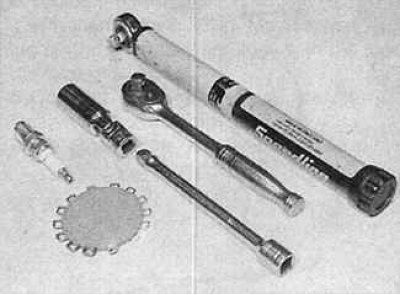
Spark Plug Removal and Gap Adjustment Tools
Replacing spark plugs
Correct functioning of spark plugs is one of the most important conditions for efficient engine operation. It is necessary that only the prescribed type of spark plugs are installed on the engine. If the engine is in good condition, cleaning the spark plugs is a rare operation.
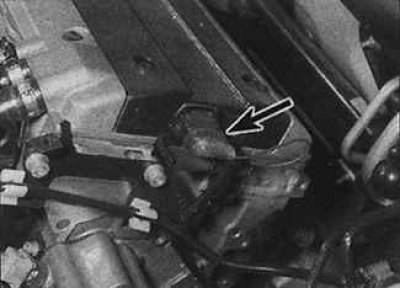
1. On 1.8 and 2.0 liter models, to access the spark plugs, you must remove the ignition coil, which is secured in the center of the cylinder head cover. Remove the electrical connector (indicated by the arrow) on the left side of the ignition coil and unscrew the 6 mounting bolts. Remove the ignition coil upwards and unscrew the spark plugs.
2. On some models, the air ducts must be removed to access the spark plugs.
3. On 1.6 liter engine models, if there are no marks on the high-voltage wires, they must be marked to avoid mistakes during their subsequent installation.
4. Clean the spark plugs using a brush, vacuum cleaner or compressed air, which will prevent dirt from getting into the engine cylinders after unscrewing the spark plugs.
5. Unscrew the spark plugs using a spark plug wrench (see picture Tools for removing spark plugs and adjusting the spark gap).
6. A visual inspection of the working part of the spark plug can indicate the condition of the engine. If the nose of the spark plug insulator is clean and white, without any deposits, this indicates that the mixture is too lean. This also indicates that the plug is too hot, i.e. the heat from the central electrode is being slowly removed.
If this is the case, then it is necessary to adjust the mixture composition or replace the spark plug.
7. If the nose of the spark plug insulator is covered with a black coating, this indicates that the mixture is too rich. If the coating is black and oily, this indicates engine wear and the need for inspection and repair.
8. If the nose of the insulator is covered with a light brown coating, then the mixture composition is optimal and the engine is in good condition.
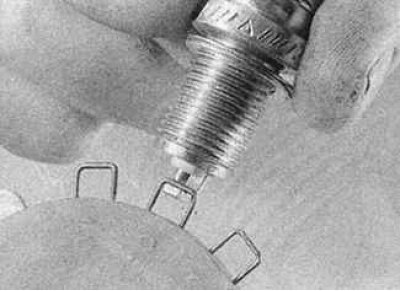
9. The spark plug gap is very important because if the gap is too large or too small, the spark size changes, which leads to a decrease in engine efficiency. The gap must always meet technical requirements.
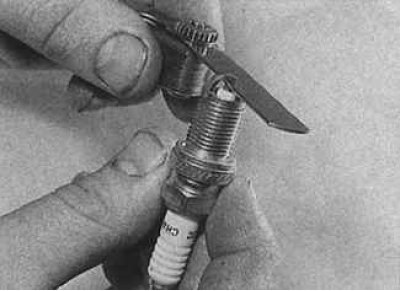
10. The gap is checked with a wire template or feeler gauge. The gap is adjusted by bending the side electrode. The central electrode should never be bent, as this can lead to breakage of the insulator and failure of the spark plug.
11. Before installing the spark plug in the engine, check that the threads are clean and all threads are intact. Before installing the spark plug in the engine, you can lubricate the threaded part of the spark plug with a special copper-containing anti-stick compound.
12. To screw the spark plug several turns, you can use a piece of rubber hose, insert the spark plug insulator into one end and, rotating the hose, screw the spark plug several turns. Then you need to remove the rubber hose and screw the spark plug to the required torque.
Original publication on the website (PeugeotBook)
13. On 1.8 and 2.0 liter models, install the spark plug coils onto the spark plugs, secure them with bolts and connect the electrical connectors.
14. On engines with a working volume of 1.6 liters, install high-voltage wires in accordance with the marking and all previously removed elements that prevented access to the spark plugs.
Checking the ignition system
1. On 1.6-liter models, check the condition of the high-voltage wires, which should be clean and dry, and should not have any signs of electrical breakdown or oxidation. On 1.8- and 2.0-liter models, check the condition of the ignition coil primary winding connectors, which should also have no signs of oxidation.
2. Check the internal condition of the spark plug tip, which should not show signs of corrosion, which is a hard white powder. Firmly install the spark plug tip onto the spark plug.
3. The spark plugs are replaced as a set.