



Note: To correctly adjust the timing belt tension, Peugeot/Citroen recommends the use of a special electronic tool (sEEM C.TRONIC belt tension measuring tool, type 105). The following procedure is based on the use of this equipment (or suitable alternative equipment calibrated to measure belt tension in SEEM units). Accurate timing belt tensioning is very important and if electronic equipment is not available, it is recommended that this work be carried out by a Peugeot/Citroen dealer or a workshop equipped with the appropriate equipment.
General information
1. The timing belt drives the camshaft, high pressure fuel pump and coolant pump from a toothed pulley on the end of the crankshaft. In addition, the belt drives the brake system's vacuum pump, but not directly, but from the camshaft on the flywheel side. If the belt breaks or slips during operation, the pistons can come into contact with the valve heads, causing extensive damage that can lead to costly repairs.
2. The timing belt should be replaced at the prescribed intervals or sooner if it is contaminated with oil or makes noise during operation (squealing/creaking noise due to uneven wear).
3. If the timing belt is removed, it is recommended to simultaneously check the condition of the coolant pump (check for signs of coolant leakage). This will help avoid having to remove the belt at a later stage if the coolant pump fails.
4. There are two design options for the timing belt toothed pulley. Early engines use a "floating" type camshaft sprocket, secured to the sprocket hub with three bolts. The bolt holes are elongated and allow some lateral movement of the timing pulley to ensure accurate timing belt tension during installation. On later engines, the camshaft sprocket is fixed, but the crankshaft sprocket is "floating." Lateral movement of the crankshaft sprocket is achieved by using a wider Woodruff keyway. Both options use the same timing belt removal procedure, but different procedures must be used for installation.
Removal
5. Remove the crankshaft pulley as described in paragraph 5. Install and tighten the pulley mounting bolt so that the engine can be turned during the following steps.
6. Remove the upper, intermediate and lower timing belt covers as described in paragraph 6.
7. Now it is necessary to identify the type of construction of the camshaft toothed pulley. On early engines, the toothed pulley and hub are a two-piece unit. The timing pulley is attached to the hub with three bolts, and the hub is attached to the camshaft with one center bolt. On later engines, the timing pulley and hub are a single piece, secured to the camshaft only by the central bolt. When installing, proceed as described in the relevant subsections according to the type of toothed pulley.
8. If not already done, align the engine/timing assembly alignment holes as described in paragraph 3 and lock the crankshaft and camshaft sprocket. Do not attempt to crank the engine with the locking rods installed.
9. On early engines, loosen the three bolts securing the camshaft timing pulley to the timing pulley hub (figure 8.9).
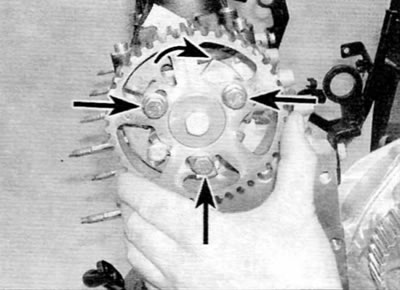
Figure 8.9. On early engines, loosen the bolts (marked with arrows) and turn the camshaft toothed pulley on the corresponding hub clockwise until it stops (2.0 L engines)
10. Loosen the timing belt tensioner pulley mounting bolt and insert a short 8.0mm square rod into the square hole on the front side of the tensioner pulley. Alternatively, although access is limited, you can also use the square end of a socket extension with a 1/4-inch drive. Using the extension bar and a wrench, rotate the pulley clockwise to relieve tension on the timing belt. Retighten the idler pulley mounting bolt to secure it in the released position.
Tip: A tool for holding a toothed pulley can be made from two steel strips fastened together with a bolt and nut, forming a fork-shaped structure. Bend the ends of the strips 90° to form tabs.
Tip: Make a pulley release tool from a short steel plate. Drill two holes in the plate, corresponding in location to the two holes in the pulley. Drill a third hole in the center, the size of which should be sufficient to fit the plate onto the pulley mounting nut.
11. If the timing belt is to be used further, mark the direction of rotation on the belt with white paint or a marker (if the standard markings are not visible). Remove the belt from the timing pulleys. Please note that you should not turn the crankshaft with the belt removed.
12. Carefully inspect the timing belt for signs of uneven wear, delamination or oil contamination. Pay special attention to the gullets of the teeth. Replace the belt if you have even the slightest doubt about its condition. If the engine undergoes a major overhaul, the belt must be replaced, regardless of its external condition. The cost of a new belt is incomparable to the cost of engine repair if the belt breaks. If signs of oil contamination are detected, locate the leak and correct the cause of the leak. Wash the engine in the timing belt area, as well as all related components, until all traces of oil are removed. Make sure the tensioner and pulleys rotate freely without binding. If necessary, replace them as described in paragraph 9.
Installation
Two-section toothed camshaft pulley
13. Begin installation by checking that the engine assembly/camshaft timing alignment holes are still aligned as described in paragraph 3, and the crankshaft and the hub of the camshaft toothed pulley are locked.
14. Lightly tighten the camshaft timing pulley mounting bolts so that the timing pulley can still move within the elongated slots. Turn the toothed pulley clockwise until the end of the grooves.
15. Place the timing belt on the crankshaft sprocket, making sure the arrow on the belt faces the correct direction (according to the direction of belt rotation).
16. Hold the belt on the crankshaft toothed pulley and, keeping the lower section of the belt taut, (between the crankshaft and the intermediate pulley), place the belt on the remaining toothed and smooth pulleys in the following sequence (Figure 8.16, a-g):
- a) intermediate pulley;
- b) high-pressure fuel pump;
- c) camshaft;
- d) coolant pump;
- d) tension pulley.
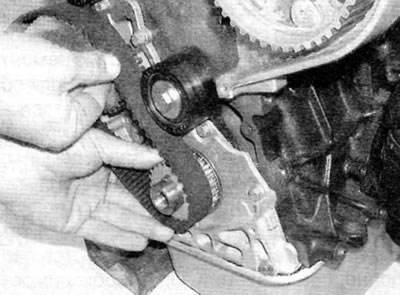
Figure 8.16, a. Hold the timing belt on the crankshaft toothed pulley and pass it around the intermediate pulley...
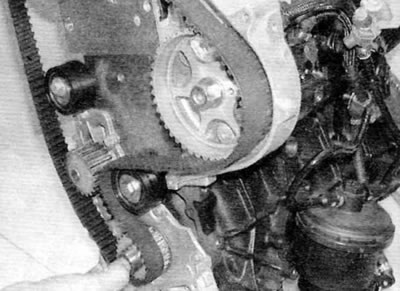
Figure 8.16, b....put it on the toothed pulley of the high-pressure fuel pump...
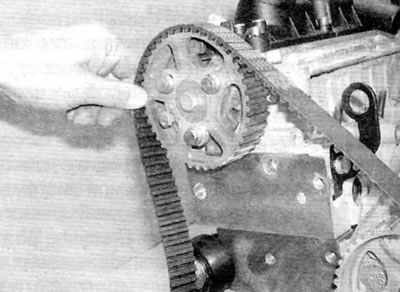
Figure 8.16, c....camshaft toothed pulley...
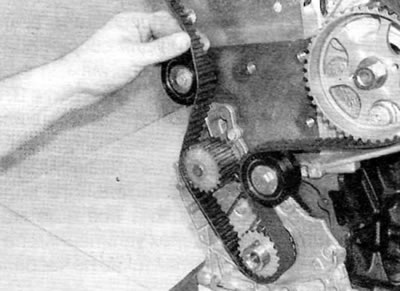
Figure 8.16, g....toothed pulley of the coolant pump and tension pulley (2.0 L engines)
17. Position the electronic belt tension measuring equipment's sensor head against the upper portion of the timing belt, approximately midway between the camshaft and high pressure fuel pump sprockets.
18. Loosen the tensioner pulley mounting bolt and, using a square bar and wrench, turn the tensioner pulley counterclockwise until the measuring equipment displays an initial tension of 98±2 SEEM units (figure 8.18, a, b). Hold the tensioner pulley in this position and tighten the bolt again.
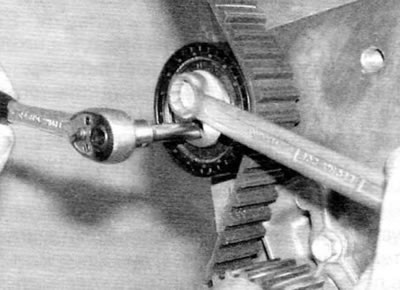
Figure 8.18, a. Turn the tension pulley counterclockwise and then tighten the bolt...
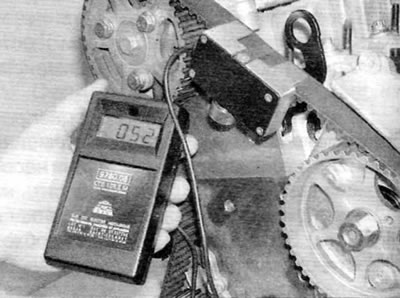
Figure 8.18, b....when the measuring device shows the prescribed tension value (2.0 L engines)
19. Make sure that the camshaft timing pulley mounting bolts are not in the limit position in the corresponding grooves (if necessary, to check this, unscrew one of the bolts). If so, please repeat the installation procedure. If everything is normal, tighten the three toothed pulley mounting bolts to the specified torque.
20. Remove the belt tension measuring equipment and the crankshaft and camshaft timing pulley hub locking tools.
21. Turn the crankshaft 8 full turns clockwise (when viewed from the right end of the engine). Re-align the engine/camshaft assembly alignment holes and insert the crankshaft locking tool.
22. Loosen the camshaft timing pulley mounting bolts and install the camshaft timing pulley hub locking tool.
23. Loosen the tension pulley mounting bolt again.
24. Position the belt tension measuring equipment at the top of the belt and rotate the idler pulley to achieve a final setting of 54±2 SEEM. Hold the idler pulley in this position and tighten the bolt to the specified torque.
25. Tighten all camshaft timing pulley mounting bolts to the specified torque.
26. Move the belt tension measuring equipment's sensor head back toward the belt and then back toward the belt, ensuring that the reading is within 54±3 SEEM units. Remove the measuring equipment.
27. Remove the locking tools, then rotate the crankshaft two more full turns clockwise. Re-align the engine/camshaft assembly alignment holes and insert the crankshaft locking tool.
Original is located at (peugeotbook)
28. Make sure that the camshaft timing pulley hub locking tools can be inserted. If the tool fails to insert, ensure that the offset between the timing belt hub alignment groove and the cylinder head alignment hole does not exceed 1.0 mm. If it does, repeat the entire timing belt installation and tensioning procedure.
29. Install the lower, intermediate and upper timing belt covers as described in paragraph 6. Install the crankshaft pulley as described in paragraph 5.
Fixed camshaft timing pulley
30. Ensure that the engine/camshaft assembly mounting holes are still aligned as described in paragraph 3, and the crankshaft and camshaft sprocket are locked.
31. Turn the crankshaft toothed pulley counterclockwise until it stops, as far as the keyway allows. Lock the toothed pulley in this position by inserting a 2.0 mm diameter rod into the slot to the left of the woodruff key (figure 8.31).
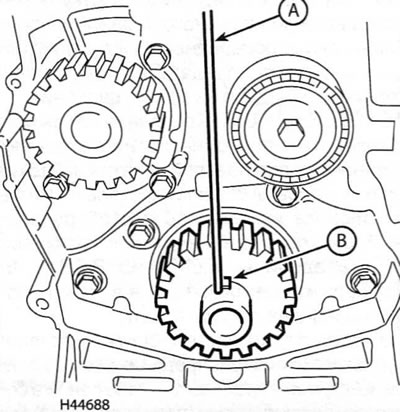
Figure 8.31. Insert a 2 mm diameter rod (A) into the groove on the left side of the woodruff key (B) (2.0 L engines)
32. Place the timing belt on the camshaft sprocket, making sure the arrow on the belt faces the correct direction (according to the direction of belt rotation).
33. Hold the belt on the camshaft toothed pulley using a suitable clamp to prevent the belt from slipping off the teeth. Keeping the top section of the belt taut (between the toothed pulleys of the camshaft and the fuel pump), place the belt on the remaining toothed and smooth pulleys in the following sequence:
- a) high-pressure fuel pump;
- b) intermediate pulley;c) crankshaft;
- d) coolant pump;
- d) tension pulley.
34. Hold the timing belt retaining clamp on the camshaft toothed pulley and remove the rod from the keyway of the crankshaft toothed pulley.
35. Position the electronic belt tension measuring equipment's sensor head against the top of the timing belt, approximately midway between the camshaft and fuel pump sprockets.
36. Loosen the idler pulley mounting bolt and, using a square bar and wrench, rotate the idler pulley counterclockwise until the measuring equipment displays an initial tension of 98±2 SEEM units. Hold the idler pulley in this position and retighten the bolt.
37. If you have not already done so, screw in the crankshaft pulley mounting bolt (don't forget to install the washer) and tighten it to 70 Nm. Hold the crankshaft from turning using the flywheel ring gear locking tool described in the pulley removal procedure in paragraph 5. Do not attempt to use engine/camshaft timing tools to prevent the crankshaft from turning when tightening the bolt.
38. Remove the belt tension measuring equipment, as well as the flywheel gear locking tool and tools that are inserted into the engine/timing assembly mounting holes.
39. Turn the crankshaft 8 full turns clockwise (when viewed from the right end of the engine). Re-align the engine/timing assembly alignment holes and insert the crankshaft and camshaft timing pulley locking tools.
40. Install the flywheel ring gear locking tool and loosen the crankshaft pulley mounting bolt.
41. Loosen the tension pulley mounting bolt again. Place the belt tension measuring equipment at the top of the belt and rotate the idler pulley to achieve a final setting of 54±2 SEEM. Hold the idler pulley in this position and tighten the bolt to the specified torque.
42. Move the belt tension measuring equipment's sensor head back toward the belt and then back toward the belt. Verify that the reading is within 54±3 SEEM units. If not, repeat the entire installation procedure. If the reading is normal, remove the measuring equipment.
43. Remove all locking tools, then rotate the crankshaft two more full turns clockwise. Re-align the engine/timing assembly alignment holes and insert the crankshaft and camshaft timing pulley locking tools. If both tools fail to insert, repeat the entire belt tensioning procedure.
44. If everything is OK, install the lower timing belt cover. Screw in the appropriate bolts and tighten them securely.
45. Provided that the engine/camshaft timing assembly mounting holes are aligned and the crankshaft and camshaft timing pulley locking tools are properly inserted, install the flywheel timing pulley locking tool and tighten the crankshaft timing pulley mounting bolt.
46. Install the crankshaft pulley onto the end of the crankshaft.
47. Thoroughly clean the threads of the pulley mounting bolt, and then apply locking compound to the threads (peugeot/Citroen recommends using Loctite Frenetanch).
48. Screw in the crankshaft pulley mounting bolt (don't forget to install the washer). Tighten the bolt to the specified torque and then turn it further to the specified angle.
49. Remove the flywheel ring gear locking tool and the crankshaft and camshaft timing pulley locking tools.
50. Install the intermediate and upper timing belt covers as described in paragraph 6, then install and tension the accessory drive belt as described in chapter 1B.