
English Русский
Български
Беларускі
Український
Српски
Hrvatski
Română
Polski
Slovenský
Magyar
Bookmark Articles Sitemap Contacts
Company Hyundai Company Opel Company Skoda Company Kia Company Mitsubishi Company LADA Company Audi
PeugeotBook.ru


Series 100   Series 200   Series 300   400-500   Series 600   Crossovers   Others
 
Peugeot 305 (1977-1989) Peugeot 306 (1993-2002) Peugeot 307 (2001-2008)

Opening and closing doors (Peugeot 307)

  • Main
  • 30X
  • Peugeot 307 (2001-2008)
  • User manual
  • Keys, doors and alarm
  • Opening and closing doors
0
Table of contents: Opening from the outside 🠇 Opening from the inside 🠇 Locking/unlocking locks from the…🠇 Door open alarm 🠇 Child safety latches 🠇

Opening from the outside
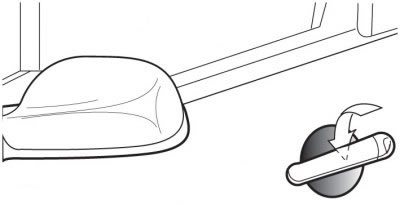


Figure 1.3. Directions for unlocking the door with the outside handle

Figure 1.3. Directions for unlocking the door with the outside handle


Open the door lock and pull the outside door handle to open the door (figure 1.3).

Opening from the inside
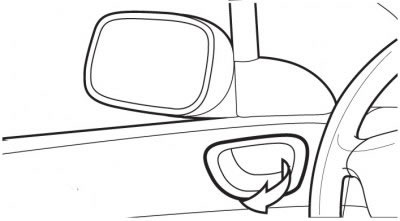


Figure 1.4. Directions for unlocking the door with the inside handle

Figure 1.4. Directions for unlocking the door with the inside handle


Pull the inside door handle to open the door (figure 1.4).

Unlocking the front door lock also unlocks the other locks on the vehicle. Conversely, when unlocking the rear door locks, only the corresponding rear door is unlocked.

Locking/unlocking locks from the inside


Note: When the full locking mode is enabled, the door handles do not work.
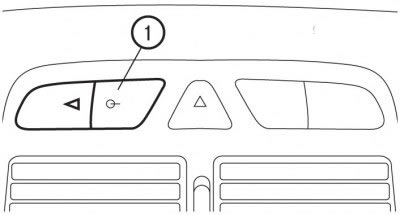


Figure 1.5. Location of the locking/unlocking button from the inside

Figure 1.5. Location of the locking/unlocking button from the inside


Press button 1 (figure 1.5). It can be used to lock the remaining doors and the tailgate.

Note: When full locking of all locks is enabled, button 1 does not work. In this case, use the remote control to unlock.


Door open alarm


If any door is not closed tightly, then when the engine is started or while the vehicle is moving, the "STOP" malfunction indicator will light up on the display, accompanied by a buzzer and a pictogram depicting a vehicle with an open door for a few seconds.

Child safety latches
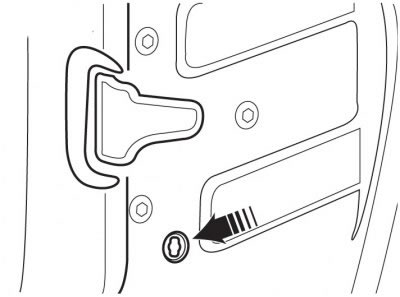


Figure 1.6. Location of the child safety latch on the rear door

Figure 1.6. Location of the child safety latch on the rear door


The design of the rear side doors includes an additional device to ensure child safety, preventing them from being opened from the inside of the car (figure 1.6).


To engage the latch, open the rear door and use the ignition key to turn the button a quarter turn. The interior door lock handle is now locked and the door can only be opened from the outside.

To disengage the safety latch, open the rear door and use the ignition key to turn the button a quarter turn back. Now the door can be opened from the inside again.
This article is available at russian, bulgarian, belarusian, ukrainian, serbian, croatian, romanian, polish, slovak, hungarian
Article reviewed by editor: Sidorov Timofey
Share information:
Previous
Peugeot 307: Keys, doors and alarm
Next

Initializing the remote control
Replacing the remote control battery
Finding your car in a parking lot
Automatic activation of the anti-theft system
Enable only the vehicle perimeter monitoring function
Rear luggage compartment door
See similar information for other Peugeot models

➨ Opening rear quarter windows — removal and refitting Peugeot 106 (1991-2003)
➨ Hood — opening and closing Peugeot 207 (2006-2014)
➨ Doors — removal, installation and adjustment Peugeot 405 (1987-1997)
➨ Front doors Peugeot 806 (1994-2002)
Link to this article in different formats
Comments and feedback from visitors
No comments yet


Add two numbers 45 + 28


Peugeot 307 (2001-2008) 
  • User manual
  • Keys, doors and alarm
  • Controls and instruments
  • Driving and operation
  • Maintenance
  • Power unit
  • Petrol engines TU3 and TU5
  • Petrol engines EW10
  • Diesel engines DV10
  • Diesel engines DW10
  • Transmission
  • Clutch and drive shafts
  • Mechanical gearbox
  • Automatic gearbox
  • Chassis, running gear
  • Front suspension
  • Rear suspension
  • Steering
  • Brake system
  • Body and interior
  • Exterior (external elements)
  • Interior (internal elements)
  • Doors, locks and windows
  • Heating and air conditioning
  • Electrical equipment
  • Equipment and devices
  • Power devices
  • Airbags
  • Electrical circuits
Peugeot 306 (1993-2002) 
  • General information
  • Introduction to manual
  • Specifications
  • Gasoline engine
  • Engine repair
  • Lubrication system
  • Cooling system
  • Fuel injection
  • Ignition system
  • Diesel engine
  • Engine repair
  • Lubrication system
  • Cooling system
  • Fuel injection
  • Transmission
  • Clutch
  • Gearbox
  • Drive shafts
  • Chassis, running gear
  • Steering system
  • Front suspension
  • Rear suspension
  • Brake system
  • Electrical equipment
  • Power devices
  • Electrical circuits
Peugeot 305 (1977-1989) 
  • General information
  • Maintenance
  • Power unit
  • Gasoline engines
  • Diesel engines
  • Cooling system (gasoline)
  • Cooling system (diesel)
  • Fuel system (gasoline)
  • Fuel system (diesel)
  • Ignition system
  • Transmission
  • Clutch
  • Mechanical gearbox BB8
  • Mechanical gearbox BE1
  • Automatic gearbox ZF4
  • Shafts, hubs and wheels
  • Chassis, running gear
  • Brake system
  • Car suspension
  • Steering
  • Body and interior
  • Exterior (external elements)
  • Interior (internal elements)
  • Electrical equipment
  • Equipment and devices
  • Headlights and lighting
  • Power devices
  • Electrical circuits
  • Wiring diagrams (diesel)
PeugeotBook.ru © 2018–2026 | Mobile version | Sitemap: EN BG BY UA RS HR RO PL SK HU | Write message | Site search | Add to bookmarks | Peugeot owners
106 (1991-2003) | 206 (1998-2012) | 207 (2006-2014) | 305 (1977-1989) | 306 (1993-2002) | 307 (2001-2008) | 405 (1987-1997) | 406 (1995-2004) | 605 (1989-2000) | Partner-I (1996-2008) | Eurovans-807 (2002-2014) | Eurovans-806 (1994-2002) | J5 (1981-1993) |
Cookies are used to ensure the correct display of pages on the site.