



Table of contents: Luggage compartment 🠇 Luggage compartment curtain 🠇 Protective net 🠇 Roof rack 🠇 Carrying baggage in the cabin 🠇
There are two luggage racks for transporting luggage: a luggage compartment in the rear of the car and a roof rack (removable). In addition, luggage can be transported directly on the seats and in numerous storage compartments located throughout the car (see the relevant point in paragraph 2).
When transporting luggage, you must take into account the following vehicle characteristics:
- own mass,
- payload,
- gross weight,
- maximum front axle load,
- maximum rear axle load,
- maximum towing weight.
Caution: Never exceed any of these values. In particular, maximum axle load values should be taken into account when distributing loads in the vehicle.
Luggage compartment
If possible, luggage should be secured in any way available. The luggage compartment has six eyelets for securing cargo (three on each side). Use cords and straps strong enough to prevent loads from shifting when moving.
Caution! Close the tailgate properly to prevent it from opening while driving. Driving with the tailgate open is very dangerous, as exhaust gases can enter the vehicle's interior.
Depending on how you use your vehicle, you can equip it with various load-securing devices, such as nets, grates, etc.
Below is a description of some of the rear luggage compartment equipment.
Luggage compartment curtain
Luggage compartment curtain (figure 19, a) it has a tension structure and is equipped with a winding device, meaning it can be unwound and wound. The closed flap allows you to hide the contents of the luggage compartment from prying eyes.
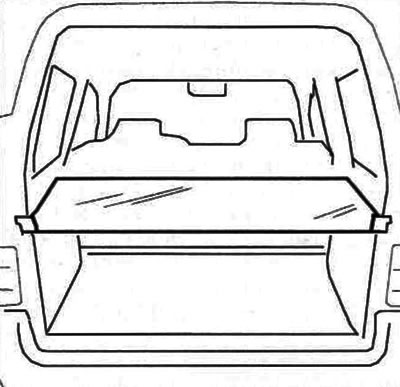
Figure 19, a. Luggage compartment curtain
To unroll the canopy, simply pull it towards you and to secure it, insert the left and right tabs on the rear corners of the canopy into the specially provided slots on the side panels of the luggage compartment (figure 19, b).
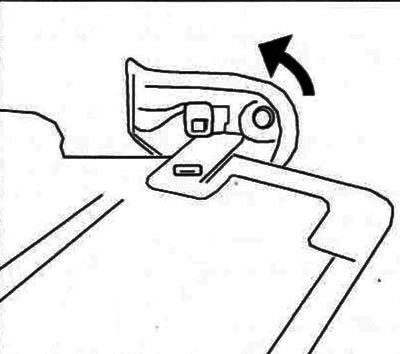
Figure 19, b. Luggage compartment cover fixing socket
To roll up the canopy, pull it towards you, release the tabs from the slots and, holding it, allow it to roll up automatically.
The canopy can be completely removed. To do this, squeeze the edge of the winder and lift it up to remove it.
Protective net
The luggage compartment can be separated from the passenger compartment using a special protective net (figure 20, a).
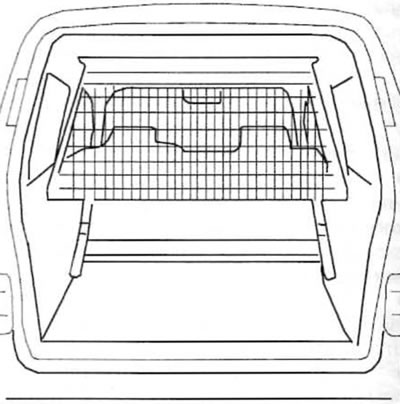
Figure 20, a. Luggage compartment protective net
To install the mesh:
- Open the two slots located in the coat hook housings on each side of the vehicle (figure 20, b).
- Secure the top corners of the net into the slots by first turning the net crossbar a quarter turn. Make sure the crossbar is securely fastened.
- Secure the net tension straps to the designated locations in the body floor.
- Stretch the net using straps (figure 20, in).
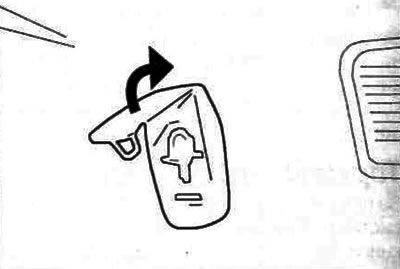
Figure 20, b. Protective net fixing socket
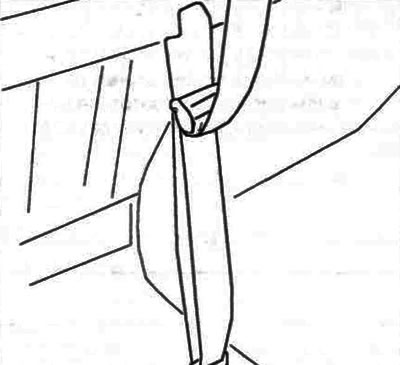
Figure 20, c. Tension belt of the protective net
Note: The net can be installed in two positions depending on whether the rear seat is folded or unfolded.
Folding the rear seat forward increases the luggage compartment volume. The useful luggage compartment volume can be increased by folding the rear seat forward. To fold the seat:
- Unlock the rear seat back by pressing the locking tabs located at the top of the seat and using the corresponding rotary switches on the side bolsters of the seats.
- Fold the seatback completely forward to unlock the seats. At this point, seat mounting hooks will appear.
- After this, fold the seat cushion together with the folded backrest forward to a vertical position along the backrests of the front seats.
Installing the rear seat back into place is done in reverse order. Make sure the seat is securely fastened.
Note: The presence of a visible red strip on the seat lock indicates that the seat back is securely locked.
Roof rack
Two longitudinal roof rails on the car allow you to secure luggage on the roof using four fastening straps (maximum payload 35 kg). For transporting large items, the rails can be removed and installed transversely (maximum payload 70 kg or 35 kg per rail). The key for removing the roof rails is located in the rear storage compartment on the ceiling (see the relevant point in paragraph 2). When the dimensions of the load allow it, it is recommended to place the load with support on the rails before securing the load with straps.
Warning. Never place items directly on the roof surface.
In any case, the load must lie on special anti-slip strips and must not touch either the painted surface of the roof or the glazed section of the roof.
Caution! Do not exceed the vehicle's maximum gross vehicle weight.
Please note: Placing luggage on the roof rack changes the vehicle's center of gravity and aerodynamic characteristics. This may have a negative impact on the vehicle's handling. When driving at high speed and with luggage on the roof (for example, when transporting covered skis) a significant lifting force may occur. In addition, this may cause an increase in braking distance. To accommodate changing traffic conditions, make necessary adjustments to your driving style. Be especially careful when cornering and in crosswinds.
Carrying baggage in the cabin
When transporting luggage in the car, secure it with seat belts.