



Table of contents: Removal 🠇 Preparing for installation 🠇 Selecting a gasket 🠇 Inspection of cylinder head bolts 🠇 Installation 🠇
Note: Due to limited access, it is not possible to remove the cylinder head while the engine is on the vehicle without performing significant additional disassembly first (for example, remove the front subframe and related components). Below is a description of the procedures for removing and installing the cylinder head, taking into account that the engine and gearbox assembly has been removed from the vehicle.
Removal
1. Remove the engine assembly with the gearbox as described in paragraph 4.
2. Remove the timing belt as described in chapter 2B.
3. Follow the steps below as described in chapter 4B:
- a) Remove the exhaust manifold and turbocharger.
- b) Remove the intake manifold.
- c) Remove the fuel rail.
4. Remove the three bolts and the upper right engine mount bracket from the engine support bracket. Remove the bolts securing the engine support bracket to the cylinder head and block and remove the bracket.
5. Remove the brake system vacuum pump as described in chapter 9.
6. Disconnect the electrical connectors and disconnect the coolant hoses at the thermostat housing on the left end of the cylinder head.
7. Remove the bolts and release the wiring harness guide from the retainer on the thermostat housing.
8. Loosen the nuts, remove the bolts and remove the left fuel injector wiring harness guide support bracket.
9. Remove the bolt and release the dipstick tube from the clamp on the cylinder head.
10. Move aside all adjacent elements, then unscrew the three bolts and unscrew the two nuts securing the thermostat housing to the cylinder head. Remove the hose and wiring support bracket, then remove the thermostat housing. Remove the housing gasket.
11. Remove the cylinder head cover as described in chapter 2B.
12. Gradually loosen the cylinder head bolts in the reverse order shown (figure 5.29).
13. Once all the bolts are loosened, unscrew them completely and remove them from the cylinder head.
14. Separate the cylinder head from the cylinder block and dowel pins by rocking it. The special Peugeot/Citroen tool for this procedure consists of two metal rods with the ends bent at right angles (figure 5.14). Do not pry with improvised levers inserted between the mating surfaces of the head and cylinder block, as this may result in damage to the gasket surfaces.
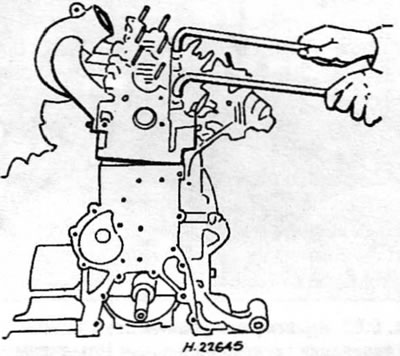
Figure 5.14. Release the cylinder head using rods with the ends bent at a right angle
15. Remove the cylinder head from the block and remove the gasket.
Preparing for installation
16. Before installing the cylinder head, thoroughly clean the mating surfaces of the cylinder head and cylinder block. Peugeot/Citroen recommends using a dedicated cleaning agent for this purpose, but a hard plastic or wooden scraper can achieve satisfactory results in removing all traces of gasket and carbon deposits. The same method can be used to clean piston crowns. Be extremely careful not to scratch or otherwise damage the mating surfaces of the cylinder block and cylinder head when cleaning, as the aluminum alloy can be easily damaged. Make sure that carbon deposits do not get into the lubrication channels and cooling system channels. This is especially important for the lubrication system, as carbon deposits can block the supply of oil to engine components. Use tape and paper to seal the oil passages, coolant passages, and bolt holes in the cylinder block. To prevent the removed carbon deposits from getting into the gaps between the pistons and the cylinder walls, introduce a small amount of grease into the gap. After cleaning each piston, take a small brush and remove all traces of grease and carbon deposits from the gap, then wipe everything with a clean rag.
17. Check the mating surfaces of the engine cylinder block and cylinder head for scoring, deep scratches and other damage. If they are minor, they can be carefully removed with a file. If they are large, the only alternative to replacement is mechanical treatment. If there is a suspicion of deformation of the mating surface of the cylinder head (under the gasket), check this surface with a ruler. If necessary, please contact paragraph 8.
18. Thoroughly clean the threads of the holes for the cylinder head mounting bolts in the cylinder block. Make sure the bolts turn freely and that all traces of oil and water have been removed from each bolt hole.
Selecting a gasket
19. Turn the crankshaft until pistons #1 and #4 are at TDC. Install a dial indicator on the cylinder block and reset the dial by moving the plunger to the mating surface of the block. Move the plunger to the edge of piston No. 1, then slowly rotate the crankshaft back and forth until the piston passes through the TDC position, monitoring the highest reading on the indicator scale. Write down this reading.
20. Repeat this procedure on piston No. 4, then turn the crankshaft half a turn (180°) and repeat the procedure on pistons No. 2 and 3 (figure 5.20).
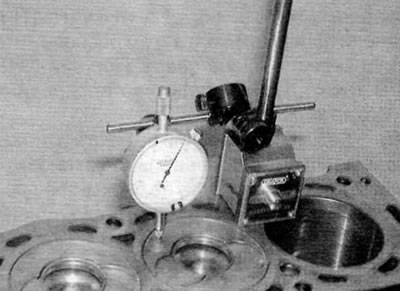
Figure 5.20. Measure the piston protrusion using a dial indicator
21. If there is no dial indicator, the piston protrusion can be measured using a ruler and a fan-shaped feeler gauge or using a caliper. However, this is less accurate and therefore not recommended.
22. Record the largest piston protrusion value and use it to select the correct cylinder head gasket from the following table. The grooves on the side of the gasket are used to identify the thickness.
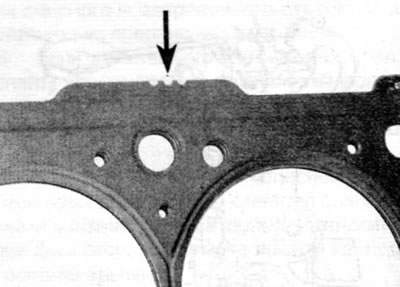
Figure 5.22. Cylinder head gasket thickness identification grooves (marked with arrows)
| Piston protrusion | Gasket identification |
| 0.470...0.605 mm | 7 groove |
| 0.605...0.655 mm | 9 grooves |
| 0.655...0.705 mm | 3 grooves |
| 0.705...0.755 mm | 4 grooves |
| 0.755...0.830 mm | 5 slots |
Inspection of cylinder head bolts
23. Carefully inspect the cylinder head bolts for signs of thread or head damage and for signs of corrosion. If the bolts are in satisfactory condition, measure the length of each bolt from the back of the head to the end of the bolt. Bolts may be reused if their length does not exceed 133.3 mm. Note: Due to the stresses that occur in the cylinder head bolts, it is strongly recommended to replace them, regardless of their external condition.
Installation
24. Turn the crankshaft clockwise (when viewed from the timing belt side) so that pistons No. 1 and 4 pass the bottom dead center (BDC) and begin to rise, and then position them in the middle of the upward stroke. Pistons #2 and #3 will also be in the middle of their stroke, but on a downward stroke.
25. Make sure the locating pins are in place. Properly install the correct gasket onto the cylinder block with the identification grooves facing the side of the engine where the fuel pump is located.
26. Lower the cylinder head onto the cylinder block.
27. Apply a small amount of grease to the threads and to the back of the cylinder head bolt heads. Peugeot/Citroen recommends using Molykote G Rapid Plus grease (can be purchased from a dealer).
28. Carefully insert each bolt into its corresponding hole (don't let them fall) and screw them in with just the force of your hand.
29. Working gradually and in the prescribed sequence, using a torque wrench and a suitable socket, tighten the cylinder head bolts to the prescribed torque as per stage 1 (figure 5.29).
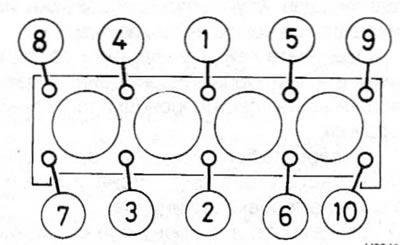
Figure 5.29. Cylinder head bolt tightening sequence
30. After tightening all bolts according to stage 1, working again in the same sequence, tighten each bolt to the specified torque according to stage 2. Finally, tighten the bolts to the specified angle according to stage 3. To ensure accuracy, it is recommended to use a protractor at this stage of tightening.
31. Install the cylinder head cover as described in chapter 2B.
32. Clean the mating surface of the cylinder head and thermostat housing, then install the housing using a new gasket. Install the support bracket for the hoses and wires, tighten the nuts and screw in the thermostat housing mounting bolts. Tighten the nuts and bolts securely.
33. Screw in and tighten the oil level indicator tube mounting bolt.
34. Install the wiring harness guide support bracket.
35. Connect the coolant hoses to the thermostat housing.
36. Install the timing belt as described in chapter 2B.
37. Install the fuel rail, intake manifold, exhaust manifold and turbocharger as described in chapter 4B.
38. Install the brake system vacuum pump as described in chapter 9.
39. Install the right engine mount components (see chapter 2B).
40. Install the engine assembly with the gearbox as described in paragraph 4.