



Table of contents: Checking the axial clearance 🠇 Inspection 🠇
Checking the axial clearance
1. If you want to check the crankshaft end play, this should be done while the crankshaft is still in the cylinder block/crankcase, but can be moved (see paragraph 11).
2. Check the axial clearance using a dial indicator, the plunger of which is brought to the end of the crankshaft. Move the crankshaft fully to one side and set the indicator to zero. Move the crankshaft fully to the other side and read the axial clearance. The result can be compared with the prescribed value. After this, you can decide whether new thrust washers are required (figure 14.2).
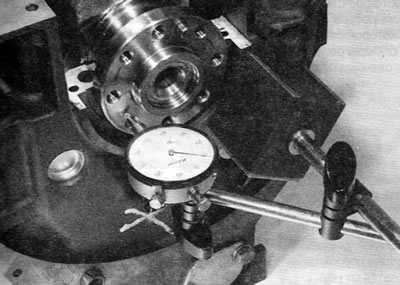
Figure 14.2. Checking the crankshaft axial clearance using a dial indicator
3. If there is no pointer indicator, you can use a feeler gauge. First, press the crankshaft completely towards the flywheel, and then use a feeler gauge to measure the clearance between the cheek of the connecting rod journal No. 2 and the thrust washer (figure 14.3).
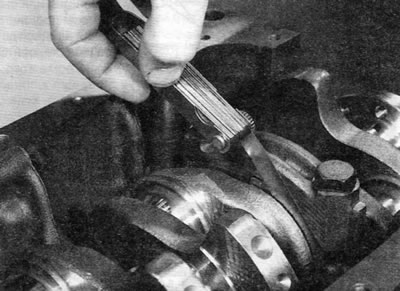
Figure 14.3. Checking the crankshaft axial clearance using a fan-shaped feeler gauge
Inspection
4. Clean the crankshaft with kerosene or a suitable solvent and dry it. It is advisable to use compressed air if you have it. Inspect and, if necessary, clean the oil holes using a tubular punch or similar probe. The holes should not be clogged.
Original is located at (peugeotbook)
Caution! Wear eye protection when working with compressed air.
5. Inspect the main and connecting rod journals for uneven wear, scoring, pitting and cracks.
6. Wear of the lower connecting rod bearings is accompanied by a clear metallic knocking sound when the engine is running (especially noticeable when the engine accelerates from low speed) and some loss of oil pressure.
7. Wear of main bearings is accompanied by severe engine vibration and rattling (the level of which increases with increasing crankshaft speed), as well as loss of oil pressure.
8. Check the roughness of the journal by lightly running your finger over the working surface of the bearing. Any increased roughness (which will be accompanied by obvious wear of the bearings) indicates that the crankshaft requires regrinding (if allowed) or replacements.
9. Inspect the seal contact surfaces at each end of the crankshaft for wear or damage. If the seal has left a deep groove on the crankshaft surface, consult an engine overhaul specialist; repairs may be possible. If not, a new crankshaft will be required.
10. Take the crankshaft to an engine repair specialist to have the journals assessed for wear. If excessive wear is evident, he will be able to give you the necessary recommendations for resurfacing the crankshaft and purchasing new bearing shells.
11. If the crankshaft has been reground, check the areas around the crankshaft oil holes for burrs (usually the holes are chamfered, so there should be no burrs unless the re-grinding was done carelessly). Remove burrs with a fine file or scraper and thoroughly clean the oil holes as described above..
12. At the time of writing, it is not known whether Peugeot/Citroen produces oversized bearing shells for all engines described. On some engines, if the crankshaft journals have not already been reground, it may be possible to reground the crankshaft and install oversized bearings. If oversized liners are not provided and the crankshaft wear has exceeded the permissible limits, the crankshaft must be replaced. For information on parts availability, please contact your dealer or engine repair specialist.