



Table of contents: Selection of bearing shells 🠇 Installation 🠇
Selection of bearing shells
1. The crankshaft should be submitted to an engine overhaul specialist for inspection and measurement. Our specialists can perform any regrinding/repair and select the appropriate main and connecting rod bearing shells.
Installation
2. If applicable, install oil jets in the bearing area of the cylinder block.
3. Using a small amount of grease, glue the upper thrust washers to each side of the top of the No. 2 main bearing. Make sure the oil grooves on each thrust washer are facing outward (away from the cylinder block) (figure 18.3).
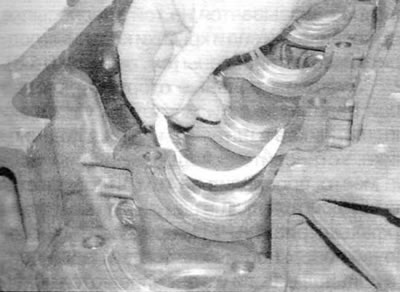
Figure 18.3. Install the upper thrust washers onto main bearing No. 2 with the oil groove facing outward
4. Wipe clean the backs of the bearing shells and the bearing mounting areas in both the cylinder block/crankcase and the bearing caps. Install the bearing shells into their original locations, ensuring that the protrusion on each shell fits into the groove in the cylinder block/crankcase or bearing cap. Be careful not to touch the working surfaces of the bearing shells with your fingers. Please note that the upper bearing shells of all bearings have a groove, the lower shells have a normal smooth surface (figure 18.4, a, b). If installing new liners, remove all traces of protective grease from them using kerosene. Dry the bearings and connecting rods thoroughly with a lint-free cloth. Generously lubricate each bearing shell in the cylinder block/crankcase and cover with clean engine oil.
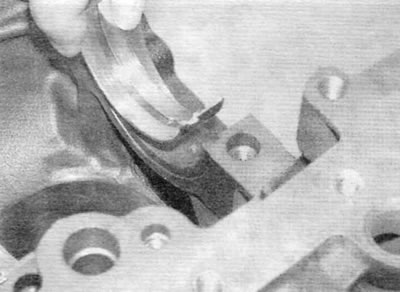
Figure 18.4, a. Install the bearing shells, ensuring that the protrusions enter the grooves in the cylinder block/engine crankcase...
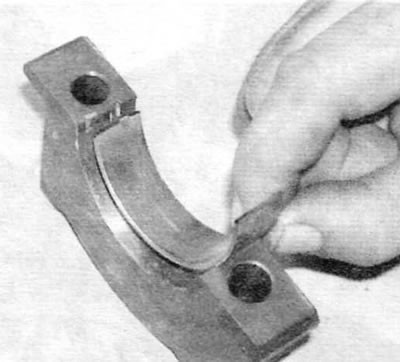
Figure 18.4, b....and in the bearing cap
5. Install the crankshaft in place so that connecting rod journals No. 2 and 3 are in the TDC position; the crankpins of cylinders #1 and #4 will be in the BDC position. This is the ready position for installing piston #1. Check the crankshaft end clearance as described in paragraph 14.
6. Lubricate the lower bearing shells with clean engine oil. Make sure that the mounting tabs on the inserts fit into the corresponding recesses in the covers.
7. Install main bearing caps No. 2-5 according to their original position, orienting them correctly (the protrusions on the bearing shells and the recesses in the block and covers must be located on the same side). Screw in the bolts and only tighten them lightly at this stage.
8. Apply a small amount of sealant to the cylinder block surface mating with the No. 1 main bearing cap around the sealing strip holes (figure 18.8).
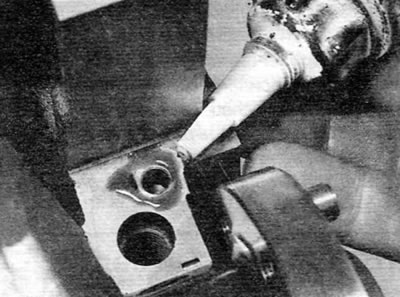
Figure 18.8. Applying sealant to the cylinder block surface mating with main bearing cap No. 1
9. Position the tab of each sealing strip onto the pins on the base of bearing cap No. 1 and press the strips into the grooves in the bearing cap. Now you need to prepare two thin metal strips, 0.25 mm or less thick, to prevent the strips from shifting when installing the cover. Peugeot/Citroen service stations use the tool shown which acts as a clamp. Metal strips (such as "old" feeler gauges) can be used, provided that all burrs that could damage the seals are removed (figure 18.9, a, b).
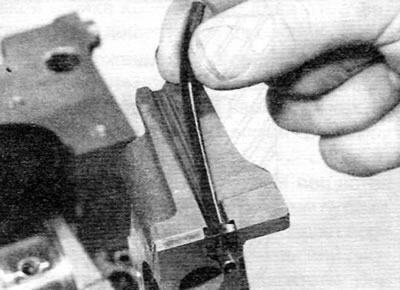
Figure 18.9, a. Installing the sealing strip on the main bearing cap No. 1
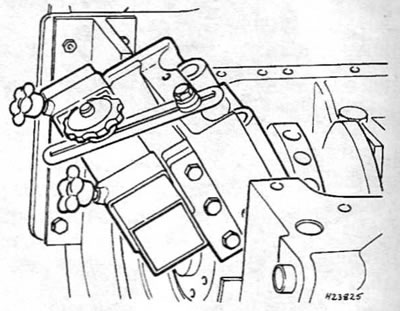
Figure 18.9, b. Using the Peugeot special tool to install main bearing cap No. 1
10. Lubricate both sides of the metal strips with oil and hold them on the sealing strips. Install the main bearing cap No. 1, loosely screw in the bolts, and then use pliers to carefully pull out the metal strips in a horizontal direction (figure 18.10, a, b).
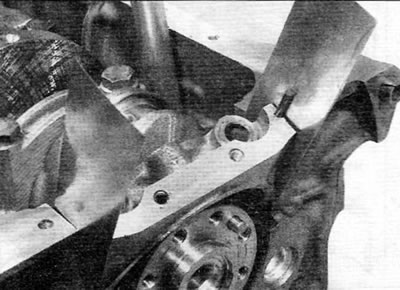
Figure 18.10, a. Installing main bearing cap No. 1 using metal strips to support the side seals
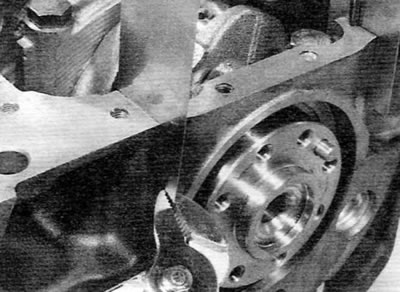
Figure 18.10, b. Removing the metal strip from the main bearing cap No. 1 using pliers
11. Tighten all main bearing cap bolts evenly to the specified torque, and on 2.0L engines, tighten additionally to the specified angle.
12. Check that the sealing strips protrude slightly above the mating surface of the cylinder block/crankcase, approximately 1.0 mm. If not, remove the bearing cap again and reinstall it; the seals are supplied at the correct length and should not be trimmed. Also make sure that the crankshaft rotates freely.
13. Install the new oil seal on the crankshaft as described in the chapter 2B or 2B (whichever is applicable).
14. Install the pistons and connecting rods on the crankshaft as described in paragraph 19.
15. Install the woodruff key, then install the oil pump drive sprocket and spacer (if available) and place the drive chain on the sprocket.
16. Clean and dry the mating surfaces of the cuff housing and the cylinder block. Mark the installation depth of the cuff, and then use a large flat-head screwdriver to remove the "old" cuff from the housing.
17. Apply a bead of suitable sealant to the mating surface of the seal body. Make sure the locating pins are present. Install the crankcase seal housing onto the end of the crankshaft and then move it to its normal position on the cylinder block. Tighten the housing mounting bolts securely.
18. Install the new crankshaft oil seal as described in chapter 2B or 2B.
19. After ensuring that the drive chain is correctly positioned on the sprocket, install the oil pump and oil pan as described in Chapter 2B or 2B (whichever is applicable).
20. Install the cylinder head (if it was removed), as described in the chapter 2B or 2B or in paragraph 5 of this chapter (whichever is applicable).