



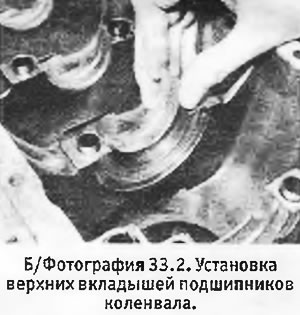
2. Wipe clean the main bearing seats in the crankcase and install the upper bearing shells in place. These liners have a lubrication groove (unlike the lower liners that are in the lids). Check that the mounting protrusions of the liners fit securely into the slots provided for them in the crankcase. If you have not replaced the liners, check that they are installed in their original positions. After installation, lubricate the bearings thoroughly with clean engine oil (see photo).
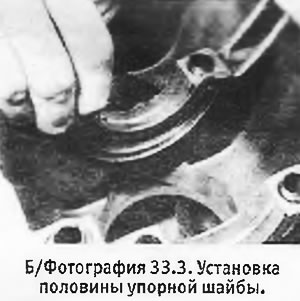
3. Install the halves of the thrust washers on bearing No. 2 with the grooves towards the crankshaft (see photo).
4. Check that the crankshaft is absolutely clean and carefully lower it into the crankcase onto the main bearings (see photo).
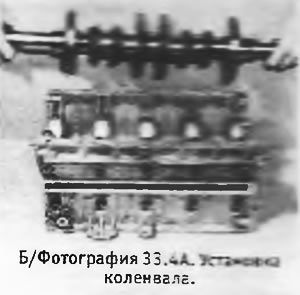
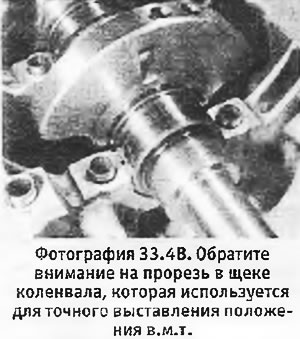
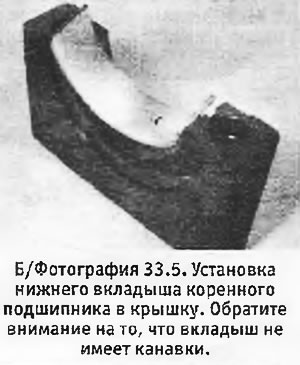
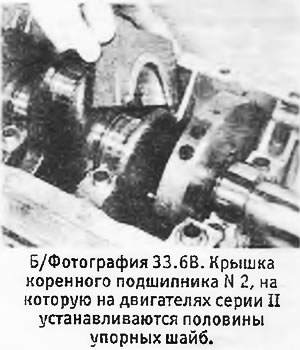
5. Check that the main bearing caps are clean and install the lower bearing shells into them (see photo). And in this case, if you did not replace the liners, they should go back to their original places. On Series II engines, two more halves of the thrust washers must be installed on the No. 2 main bearing cap so that their grooves face the crankshaft.
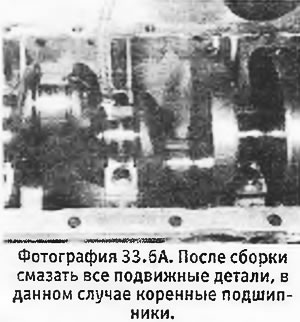
6. Check that all the centering flanges of the main bearing caps are in place in the crankcase, lubricate the bearings with oil and install the caps on their bearings (all covers are numbered starting from the clutch side) (see photos).
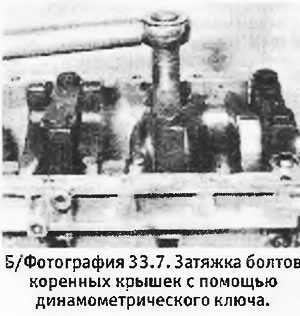
7. Install new washers on the 10 cover mounting bolts. If the holes in the crankcase for the cover bolts are not "blind", i.e. they pass through, a compound for fixing threaded connections should be applied to the bolt threads. If the holes are "blind", there is no need to apply the composition. Insert the bolts and tighten them to the required torque (see photo).
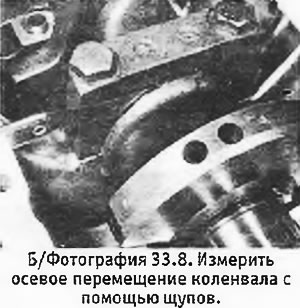
8. Check the axial movement of the crankshaft. On Series I engines, which have thrust washers in the crankcase only, this check can actually be made before installing the main bearing caps. On Series II engines, which have thrust washers both in the crankcase and on the main cover, the covers must be reinstalled before checking the axial movement of the crankshaft. Move the crankshaft to one side until it stops and use feeler gauges to measure the gap between the thrust washers and the crankshaft surface (see photos). The gap must not exceed the limits specified in Specifications.
Source of the article is posted at [PeugeotBook.ru]
If it goes beyond them, it is necessary to select new thrust washers that would ensure the required clearance size. Please note that all thrust washers must be of the same thickness. After obtaining the required axial movement, rotate the crankshaft and check it for freedom of rotation.