
English Русский
Български
Беларускі
Український
Српски
Hrvatski
Română
Polski
Slovenský
Magyar
Bookmark Articles Sitemap Contacts
Company Hyundai Company Opel Company Skoda Company Kia Company Mitsubishi Company LADA Company Audi
PeugeotBook.ru


Series 100   Series 200   Series 300   400-500   Series 600   Crossovers   Others
 
Partner I (1996-2008) Peugeot 807 (2002-2014) Peugeot 806 (1994-2002) Peugeot J5 (1981-1993)

Crankshaft — inspection (Peugeot Partner I)

  • Main
  • Пежо
  • Partner I (1996-2008)
  • Power unit
  • Overhaul of petrol engines
  • Crankshaft — inspection
0
Table of contents: Checking the axial clearance 🠇 Inspection 🠇

Checking the axial clearance


1. If you want to check the crankshaft end play, this should be done while the crankshaft is still in place on the cylinder block/crankcase, but can be moved (see paragraph 10).

2. Check the axial clearance using a dial indicator, the plunger of which is brought to the end of the crankshaft. Move the crankshaft completely to one side and set the indicator to zero. Move the crankshaft all the way to the other side and take the axial clearance reading. The result can be compared with the prescribed value. After this, you can decide whether new thrust washers are required (half rings) (figure 13.2).
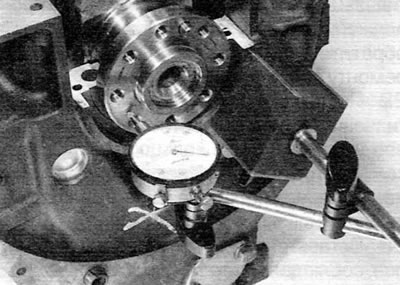
Figure 13.2. The crankshaft axial clearance can be checked using a dial indicator...

Figure 13.2. The crankshaft axial clearance can be checked using a dial indicator...


3. If there is no pointer indicator, you can use a feeler gauge. First, press the crankshaft completely towards the flywheel, and then use a feeler gauge to measure the clearance between the cheek of the connecting rod journal No. 2 and the thrust washer (figure 13.3).
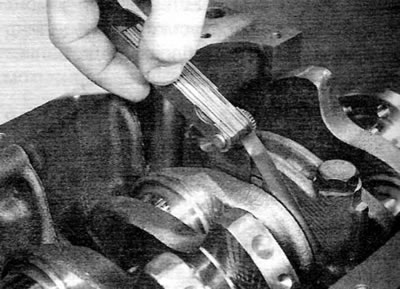
Figure 13.3. ...or using a fan-shaped feeler gauge

Figure 13.3. ...or using a fan-shaped feeler gauge


Inspection


4. Clean the crankshaft with kerosene or a suitable solvent and dry it. It is advisable to use compressed air if you have it. Inspect and, if necessary, clean the oil holes using a tubular punch or similar probe. The holes should not be clogged.

Caution! Wear eye protection when working with compressed air.


5. Inspect the main and connecting rod journals for uneven wear, scoring, pitting and cracks.

6. Wear of the lower connecting rod bearings is accompanied by a clear metallic knocking sound when the engine is running (especially noticeable when the engine accelerates from low speed) and some loss of oil pressure.

7. Wear of main bearings is accompanied by severe engine vibration and rattling (the level of which increases with increasing crankshaft speed), as well as loss of oil pressure.

8. Check the roughness of the journal by lightly running your finger over the working surface of the bearing. Any increased roughness (which will be accompanied by obvious bearing wear) indicates that the crankshaft requires regrinding (if allowed) or replacements.

9. Inspect the seal contact surfaces at each end of the crankshaft for wear or damage. If the seal has left a deep groove on the crankshaft surface, consult an engine overhaul specialist; repairs may be possible. If not, a new crankshaft will be required.

10. Take the crankshaft to an engine repair specialist to have the journals assessed for wear. If excessive wear is evident, he will be able to give you the necessary recommendations for resurfacing the crankshaft and purchasing new bearing shells.


11. If the crankshaft has been reground, check the areas around the crankshaft oil holes for burrs (usually the holes are chamfered, so there should be no burrs unless the re-grinding was done carelessly). Remove burrs with a fine file or scraper and thoroughly clean the oil holes as described above.

12. At the time of writing, it is not known whether Peugeot/Citroen produces oversized bearing shells for all engines described. On some engines, if the crankshaft journals have not already been reground, it may be possible to reground the crankshaft and install oversized bearings. If oversized liners are not provided and the crankshaft wear has exceeded the permissible limits, the crankshaft must be replaced. For information on parts availability, please contact your dealer or engine repair specialist.
This article is available at russian, bulgarian, belarusian, ukrainian, serbian, croatian, romanian, polish, slovak, hungarian
Article reviewed by editor: Nikonova Veronica
Share information:
Previous
Partner I: Overhaul of petrol engines
Next

Piston and connecting rod assembly — inspection
Cylinder block/engine crankcase — cleaning and inspection
Crankshaft — removal
Pistons with connecting rods — removal
Cylinder head assembly
Main and connecting rod bearings — inspection
Engine Overhaul — assembly sequence
Piston rings — installation
Crankshaft — installation
Piston and connecting rod assembly — installation
See similar information for other Peugeot models

➨ Crankshaft oil seals — renewal Peugeot 106 (1991-2003)
➨ Crankshaft characteristics (petrol engines 1.4 and 1.6 l, EPZ,… Peugeot 207 (2006-2014)
➨ Pistons, connecting rods and crankshaft — removal Peugeot 305 (1977-1989)
➨ Replacing crankshaft seals Peugeot 405 (1987-1997)
➨ Front crankshaft oil seal (timing belt side) — replacement Peugeot 605 (1989-2000)
Link to this article in different formats
Comments and feedback from visitors
No comments yet


Add two numbers 24 + 24


Partner I (1996-2008) 
  • General information
  • Introduction to the guide
  • Faults en route
  • Weekly checks
  • User manual
  • Maintenance (petrol)
  • Maintenance (diesel)
  • Power unit
  • Petrol engines
  • Diesel engines «XUD»
  • Diesel engines «DW»
  • Overhaul of petrol engines
  • Overhaul of diesel engines
  • Cooling and heating
  • Power and exhaust (petrol)
  • Power and exhaust (XUD diesels)
  • Power and exhaust (DW diesels)
  • Emission reduction
  • Starting and charging system
  • Transmission
  • Clutch
  • Mechanical gearbox
  • Drive shafts
  • Chassis, running gear
  • Brake system
  • Car suspension
  • Steering
  • Body and interior
  • Exterior (external elements)
  • Interior (internal elements)
  • Doors, locks and windows
  • Electrical equipment
  • Equipment and devices
  • Electrical circuits
Peugeot 807 (2002-2014) 
  • General information
  • Operating instructions
  • Maintenance
  • Troubleshooting
  • Power unit
  • Gasoline engines
  • Diesel engines
  • Cooling and heating
  • Fuel injection (petrol)
  • Fuel system (diesel)
  • Fuel system
  • Exhaust system
  • Ignition system
  • Transmission
  • Clutch
  • Manual gearbox
  • Automatic gearbox
  • Chassis, running gear
  • Brake system
  • Car suspension
  • Steering system
  • Body and interior
  • Exterior (external elements)
  • Interior (internal elements)
  • Electrical equipment
  • Power devices
  • Electrical circuits
Peugeot 806 (1994-2002) 
  • General information
  • User manual
  • Maintenance
  • Power unit
  • Petrol engines
  • Diesel engines
  • Lubrication system
  • Cooling system
  • Fuel injection (petrol)
  • Fuel system (diesel)
  • Ignition and exhaust systems
  • ECM Bosch Motronic MP 3.2
  • ECM Magneti-Marelli (MM)
  • Transmission
  • Clutch
  • Mechanical gearbox
  • Chassis, running gear
  • Brake system
  • Car suspension
  • Steering
  • Electrical equipment
  • Equipment and devices
  • Electrical circuits
Peugeot J5 (1981-1993) 
  • General information
  • Introduction to manual
  • Specifications
  • Gasoline engine
  • Engine repair
  • Lubrication system
  • Cooling system
  • Fuel system
  • Ignition system
  • Diesel engine
  • Engine repair (DB9)
  • Lubrication system (DB9)
  • Cooling system (DB9)
  • Fuel injection (DB9)
  • Engine repair (U25)
  • Lubrication system (U25)
  • Cooling system (U25)
  • Fuel injection (U25)
  • Transmission
  • Clutch
  • Gearbox
  • Drive shafts
  • Chassis, running gear
  • Steering system
  • Car suspension
  • Brake system
  • Electrical equipment
  • Power devices
  • Electrical circuits
PeugeotBook.ru © 2018–2026 | Mobile version | Sitemap: EN BG BY UA RS HR RO PL SK HU | Write message | Site search | Add to bookmarks | Peugeot owners
106 (1991-2003) | 206 (1998-2012) | 207 (2006-2014) | 305 (1977-1989) | 306 (1993-2002) | 307 (2001-2008) | 405 (1987-1997) | 406 (1995-2004) | 605 (1989-2000) | Partner-I (1996-2008) | Eurovans-807 (2002-2014) | Eurovans-806 (1994-2002) | J5 (1981-1993) |
Cookies are used to ensure the correct display of pages on the site.