
English Русский
Български
Беларускі
Український
Српски
Hrvatski
Română
Polski
Slovenský
Magyar
Bookmark Articles Sitemap Contacts
Company Hyundai Company Opel Company Skoda Company Kia Company Mitsubishi Company LADA Company Audi
PeugeotBook.ru


Series 100   Series 200   Series 300   400-500   Series 600   Crossovers   Others
 
Peugeot 206 (1998-2012) Peugeot 207 (2006-2014)

Fuel system (Peugeot 207)

  • Main
  • 20X
  • Peugeot 207 (2006-2014)
  • General information
  • Car care
  • Fuel system
0
Table of contents: Gasoline fuel 🠇 Diesel fuel 🠇 Draining condensate from the fuel…🠇

Gasoline fuel


Petrol engines are designed to use RON 95 fuel.

Note: The use of 91 octane gasoline is permitted only in exceptional cases.


Fuel with an octane rating of 95 can be used for normal driving.

98 octane fuel is recommended for maximum responsiveness and minimum fuel consumption.

When operating the vehicle in hot weather at temperatures above +38°C, to achieve maximum power and minimum fuel consumption, it is recommended to use fuel with the highest octane number.

Warning: To avoid damaging the catalytic converter, use only unleaded petrol. To maintain the validity of the Peugeot warranty, never mix alcohol with petrol, as this could damage the vehicle's fuel system.


Diesel fuel


Diesel fuel must comply with EN 590. Diesel engines are sensitive to contamination, such as increased sulfur content. Use diesel fuel from reputable manufacturers only. Do not fill up with diesel fuel of dubious quality.

Paraffin deposits may form in diesel fuel at low temperatures (-40°C to -6°C), which may cause starting difficulties. Major oil companies supply special diesel fuel designed for outside temperatures close to freezing. Such fuel has a reduced viscosity at low temperatures and a lower tendency for paraffin to crystallize. The risk of condensation in the fuel tank is reduced if the fuel level in the tank is kept high. When refuelling, keep the area around the filler neck clean. Avoid spills on the paintwork. Remove them with soap and water.


Please note: Only fuel that complies with the European diesel fuel standard may be used.


The following diesel-like fuels are prohibited to use: special additives, diesel fuel for marine diesel engines, boiler fuel, RME1 (vegetable methyl ester) and vegetable oil. These fuels do not meet Peugeot requirements and increase wear and tear and cause engine damage.

Draining condensate from the fuel filter


To avoid interruptions in engine operation, the fuel filter separates condensate (water) from the fuel.

It is necessary to drain the condensate from the fuel filter at intervals specified in the service and warranty books, for example, after each oil change, or in cases where it is assumed that the fuel may be contaminated.

Note: Some special additives prevent water separation in the fuel filter.


To remove water, loosen the bleed screw or the water in diesel fuel sensor located at the base of the filter.

Wait until the water has completely drained.

Tighten the bleed screw or water sensor.
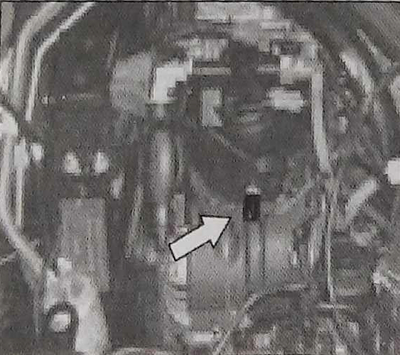
Tighten the bleed screw or water sensor.


(Source of the article is posted at: PeugeotBook.ru)
This article is available at russian, bulgarian, belarusian, ukrainian, serbian, croatian, romanian, polish, slovak, hungarian
Article reviewed by editor: Matveev Demid
Share information:
Previous
Peugeot 207: Car care
Next

Hood — opening and closing
Frequency of self-service
Lifting a car
Refueling a car
Motor oil
Cooling liquid
Windscreen washer fluid
Brake and Clutch Hydraulic Fluid
See similar information for other Peugeot models

➨ Fuel system — depressurisation Peugeot 106 (1991-2003)
➨ Fuel and exhaust system specifications Peugeot 305 (1977-1989)
➨ Removal air from the fuel system Peugeot 405 (1987-1997)
➨ Fuel injection system — general check Peugeot 605 (1989-2000)
➨ Fuel injection system specifications Peugeot 806 (1994-2002)
Link to this article in different formats
Comments and feedback from visitors
No comments yet


Add two numbers 44 + 27


Peugeot 207 (2006-2014) 
  • General information
  • Car care
  • Governing bodies
  • Driving and operation
  • Power unit
  • Engine characteristics
  • Engine repair
  • Cooling system
  • Lubrication system
  • Ignition system
  • Control system (gasoline)
  • Fuel system (gasoline)
  • Control system (diesel)
  • Transmission
  • Clutch
  • Mechanical gearbox
  • Automatic gearbox
  • Drive shafts
  • Chassis, running gear
  • Car suspension
  • Steering
  • Brake system
  • Body and interior
  • Exterior (external elements)
  • Interior (internal elements)
  • Heating and air conditioning
  • Electrical equipment
  • Equipment and devices
  • Headlights and lighting
  • Power devices
  • Electrical circuits
Peugeot 206 (1998-2012) 
  • General information
  • User manual
  • Maintenance
  • Power unit
  • Gasoline engines
  • Diesel engines
  • Diesel power system
  • Engine management system
  • Transmission
  • Clutch
  • Mechanical gearbox
  • Automatic gearbox
  • Drive shafts
  • Chassis, running gear
  • Front suspension
  • Rear suspension
  • Steering
  • Brake system
  • Body and interior
  • Body elements
  • Doors, locks and windows
  • Electrical equipment
  • Equipment and devices
  • Electrical circuits
PeugeotBook.ru © 2018–2026 | Mobile version | Sitemap: EN BG BY UA RS HR RO PL SK HU | Write message | Site search | Add to bookmarks | Peugeot owners
106 (1991-2003) | 206 (1998-2012) | 207 (2006-2014) | 305 (1977-1989) | 306 (1993-2002) | 307 (2001-2008) | 405 (1987-1997) | 406 (1995-2004) | 605 (1989-2000) | Partner-I (1996-2008) | Eurovans-807 (2002-2014) | Eurovans-806 (1994-2002) | J5 (1981-1993) |
Cookies are used to ensure the correct display of pages on the site.