


Share information:

Vehicle owner's manual Peugeot 206

General information about Peugeot 206 cars
Pic. 1.1. Peugeot 206 car New model Peugeot 206 (pic. 1.1) with a hatchback body was introduced to the consumer in September 1998, with a roadster body - in 1999, with a station wagon body - in 2003. The car is equipped...
Pic. 1.1. Peugeot 206 car New model Peugeot 206 (pic. 1.1) with a hatchback body was introduced to the consumer in September 1998, with a roadster body - in 1999, with a station wagon body - in 2003. The car is equipped...

Vehicle identification
Pic. 1.3. Passport data of the car Vehicle name plate (Ah, fig. 1.3) located in the engine compartment and mounted on the right side of the upper front part of the side wall. Additional location depends on the version...
Pic. 1.3. Passport data of the car Vehicle name plate (Ah, fig. 1.3) located in the engine compartment and mounted on the right side of the upper front part of the side wall. Additional location depends on the version...

Starting the engine from an auxiliary source
Attention! Failure to follow the recommendations below may result in battery failure, burns to drivers, and damage to circuits and electrical equipment in both vehicles. When starting the engine from the auxiliary...
Attention! Failure to follow the recommendations below may result in battery failure, burns to drivers, and damage to circuits and electrical equipment in both vehicles. When starting the engine from the auxiliary...

Jacking up the car
Pic. 1.5. Locations for jacking The car is raised using a jack from the driver's tool kit, a garage jack or a stationary lift at the service station. The jacking points on each side of the body have corresponding...
Pic. 1.5. Locations for jacking The car is raised using a jack from the driver's tool kit, a garage jack or a stationary lift at the service station. The jacking points on each side of the body have corresponding...

Towing a car and driving with a trailer
Pic. 1.6. towing eye (anterior) Pic. 1.7. towing eye (rear) The car is towed when it is impossible to move it to the service station on its own. For this, the towing eye is designed - front (pic. 1.6) or back (pic....
Pic. 1.6. towing eye (anterior) Pic. 1.7. towing eye (rear) The car is towed when it is impossible to move it to the service station on its own. For this, the towing eye is designed - front (pic. 1.6) or back (pic....

Wheel replacement
Pic. 1.10. Spare wheel Wheel replacement is the most frequently performed self-operation. The spare wheel is located on the holder outside under the floor of the body in the trunk area (pic. 1.10). It can be either full...
Pic. 1.10. Spare wheel Wheel replacement is the most frequently performed self-operation. The spare wheel is located on the holder outside under the floor of the body in the trunk area (pic. 1.10). It can be either full...

Controls and instruments
Pic. 1.11. Vehicle controls: 1 - driver's airbag, sound signal; 2 - switch for outdoor lighting and direction indicators; 3 — the switch of a pillow of safety of the forward passenger; 4 — a key of blocking of back...
Pic. 1.11. Vehicle controls: 1 - driver's airbag, sound signal; 2 - switch for outdoor lighting and direction indicators; 3 — the switch of a pillow of safety of the forward passenger; 4 — a key of blocking of back...
Car keys and ignition lock
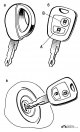
Pic. 1.14. Car keys and ignition lock: a - standard; b - with remote control; c - ignition switch The car is equipped with a set of keys - main and spare. Keys (pic. 1.14) allow you to independently unlock the locks of...
Pic. 1.14. Car keys and ignition lock: a - standard; b - with remote control; c - ignition switch The car is equipped with a set of keys - main and spare. Keys (pic. 1.14) allow you to independently unlock the locks of...

Control indicators
Control indicators marked with a sign «*», when the ignition key is turned to position «M» light up for a while with a red light and go out almost immediately from the moment the engine is started. An indicator that is...
There is 1 comment
Control indicators marked with a sign «*», when the ignition key is turned to position «M» light up for a while with a red light and go out almost immediately from the moment the engine is started. An indicator that is...
There is 1 comment

Digital and analog control devices
The installation of digital and analog instruments depends on the model and equipment of the vehicle. Pic. 1.15. Turning on the odometer The odometer displays the readings on the instrument panel display when the...
The installation of digital and analog instruments depends on the model and equipment of the vehicle. Pic. 1.15. Turning on the odometer The odometer displays the readings on the instrument panel display when the...
Onboard navigation system
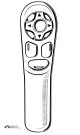
The on-board navigation system, using information displayed on the display screen and sound messages, uses a sound synthesizer to indicate the route to any point at your direction. The system is based on the use of a...
The on-board navigation system, using information displayed on the display screen and sound messages, uses a sound synthesizer to indicate the route to any point at your direction. The system is based on the use of a...

Paddle switches
The vehicle control system uses lever, package and push-button (keyboards) switches. The lever switches are located to the right and left of the steering column. Pic. 1.47. Left stalk switch Lighting and headlights are...
The vehicle control system uses lever, package and push-button (keyboards) switches. The lever switches are located to the right and left of the steering column. Pic. 1.47. Left stalk switch Lighting and headlights are...

Parking brake
The parking brake is designed to hold the vehicle in place when parking on a level road or on a slight slope. When tightening (inclusion) parking brake, the rear wheels are blocked by a drum brake mechanism. tightening...
The parking brake is designed to hold the vehicle in place when parking on a level road or on a slight slope. When tightening (inclusion) parking brake, the rear wheels are blocked by a drum brake mechanism. tightening...

On-board computer
Pic. 1.51. On-board computer control The on-board computer is controlled by pressing a button located at the end of the right steering column switch (pic. 1.51). Pic. 1.52. Type B display readings Each time the button...
Pic. 1.51. On-board computer control The on-board computer is controlled by pressing a button located at the end of the right steering column switch (pic. 1.51). Pic. 1.52. Type B display readings Each time the button...

Electric windows
Pic. 1.59. Power window controls: 1 - driver's door; 2 - front passenger door; 3 - rear left door; 4 - rear right door Power windows are designed to raise and lower windows in car doors. The power windows can be...
Pic. 1.59. Power window controls: 1 - driver's door; 2 - front passenger door; 3 - rear left door; 4 - rear right door Power windows are designed to raise and lower windows in car doors. The power windows can be...

Headlight corrector
The dipped-beam headlights can be adjusted according to vehicle load to avoid glare to oncoming drivers. Pic. 1.62. Headlight range adjustment Adjustment is carried out by a step-type switch in the form of a corrugated...
The dipped-beam headlights can be adjusted according to vehicle load to avoid glare to oncoming drivers. Pic. 1.62. Headlight range adjustment Adjustment is carried out by a step-type switch in the form of a corrugated...

Steering wheel adjustment
The position of the steering wheel can be adjusted in height. Attention! The steering wheel should only be adjusted when the vehicle is stationary. Adjust the steering wheel in height in the following order: Pic. 1.63....
The position of the steering wheel can be adjusted in height. Attention! The steering wheel should only be adjusted when the vehicle is stationary. Adjust the steering wheel in height in the following order: Pic. 1.63....

Sound signal
Pic. 1.64. Sound signal To sound a signal, press one of the spokes or the central part of the steering wheel hub (pic. 1.64).
Pic. 1.64. Sound signal To sound a signal, press one of the spokes or the central part of the steering wheel hub (pic. 1.64).

Rear view mirrors
The car body is equipped with a system of rear-view mirrors - internal and external rear-view mirrors. Pic. 1.65. Interior rear view mirror Position «day Night» interior rearview mirror (pic. 1.65) manually adjustable:...
The car body is equipped with a system of rear-view mirrors - internal and external rear-view mirrors. Pic. 1.65. Interior rear view mirror Position «day Night» interior rearview mirror (pic. 1.65) manually adjustable:...

Lighting outdoor and indoor
Headlights, lanterns and lamps are important elements of car safety. Pic. 1.68. Front dome light Interior lighting is carried out by several lamps (plafonds) and controlled automatically. When the ignition is turned off...
Headlights, lanterns and lamps are important elements of car safety. Pic. 1.68. Front dome light Interior lighting is carried out by several lamps (plafonds) and controlled automatically. When the ignition is turned off...

Seat adjustment
Front seats Several models of seats are installed on the car. The main ones are multifunctional seats with manual adjustment. To unload the spine, sit down with the maximum displacement of the seat back, leaning with...
Front seats Several models of seats are installed on the car. The main ones are multifunctional seats with manual adjustment. To unload the spine, sit down with the maximum displacement of the seat back, leaning with...
Belts and airbags
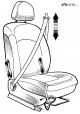
Pic. 1.86. Safety belt Seat belts (pic. 1.86) are designed to reduce the degree of injury in the event of a car accident. They provide all the seats. At the moment of fastening, the belt buckle should lock with a...
Pic. 1.86. Safety belt Seat belts (pic. 1.86) are designed to reduce the degree of injury in the event of a car accident. They provide all the seats. At the moment of fastening, the belt buckle should lock with a...

Central locking
The interior of the car is equipped with a central lock, which provides simultaneous locking and unlocking of the doors, trunk and fuel filler cap. It only works if both front doors are locked. It can be activated from...
The interior of the car is equipped with a central lock, which provides simultaneous locking and unlocking of the doors, trunk and fuel filler cap. It only works if both front doors are locked. It can be activated from...

Ventilation hatch
The ventilation hatch in the passenger compartment roof closes and opens electrically when the ignition key is turned to the «A», when you turn on the three-position switch mounted next to the interior lamp, above the...
The ventilation hatch in the passenger compartment roof closes and opens electrically when the ignition key is turned to the «A», when you turn on the three-position switch mounted next to the interior lamp, above the...

Heating and ventilation
Outside air for heating the car interior is supplied by a fan through the heater housing and then directed through dampers into the channels of the interior heating and ventilation system. When the heating system is on,...
Outside air for heating the car interior is supplied by a fan through the heater housing and then directed through dampers into the channels of the interior heating and ventilation system. When the heating system is on,...

Air conditioning
On many car models, an air conditioning system is installed with manual or automatic control. With the help of the air conditioning system, the temperature in the passenger compartment can be lower than the ambient...
On many car models, an air conditioning system is installed with manual or automatic control. With the help of the air conditioning system, the temperature in the passenger compartment can be lower than the ambient...

Additional interior equipment
Additional equipment includes an audio system, sun visors, a storage box, a portable lamp, storage compartments for small items, a drink can holder, ashtrays for front and rear passengers, a cigarette lighter, devices...
Additional equipment includes an audio system, sun visors, a storage box, a portable lamp, storage compartments for small items, a drink can holder, ashtrays for front and rear passengers, a cigarette lighter, devices...

Manual Transmission
The car is equipped with a 5-speed manual or 4-speed automatic transmission. Vehicles fitted with manual transmissions (ITUC) in three versions - 20CE; 20CD (gasoline engines) and 20DL (diesel engines), each of which...
The car is equipped with a 5-speed manual or 4-speed automatic transmission. Vehicles fitted with manual transmissions (ITUC) in three versions - 20CE; 20CD (gasoline engines) and 20DL (diesel engines), each of which...

Automatic transmission
Automatic transmission (AKP) thanks to a special combination of mechanical and hydraulic transmissions, it significantly increases efficiency when driving in 3rd and 4th gears, which can significantly reduce fuel...
Automatic transmission (AKP) thanks to a special combination of mechanical and hydraulic transmissions, it significantly increases efficiency when driving in 3rd and 4th gears, which can significantly reduce fuel...
ABS anti-lock brake system
The ABS system improves the active driving safety of the car, prevents the wheels from locking when braking. The system turns on immediately after starting the engine, while the indicator in the instrument cluster...
The ABS system improves the active driving safety of the car, prevents the wheels from locking when braking. The system turns on immediately after starting the engine, while the indicator in the instrument cluster...

Hood opening
Pic. 1.106. Hood release lever To unlock the hood lock from the passenger compartment, pull the handle towards you (lever arm) bonnet (shown by the arrow in Fig. 1.106). The handle is located on the left side, under the...
Pic. 1.106. Hood release lever To unlock the hood lock from the passenger compartment, pull the handle towards you (lever arm) bonnet (shown by the arrow in Fig. 1.106). The handle is located on the left side, under the...

Trunk opening
Pic. 1.107. trunk lock Only the keys to the ignition lock fit the trunk. To close the trunk, insert the ignition key into the lock, turn it to the right from position A to position C (pic. 1.107) and remove in a...
Pic. 1.107. trunk lock Only the keys to the ignition lock fit the trunk. To close the trunk, insert the ignition key into the lock, turn it to the right from position A to position C (pic. 1.107) and remove in a...
Vehicle break-in
Operation of the car after the acquisition or repair of its main components (engine, gearbox, CV joints) start with a break-in for the first 2000 km of run. In this case, the engine speed and speed should not exceed the...
Operation of the car after the acquisition or repair of its main components (engine, gearbox, CV joints) start with a break-in for the first 2000 km of run. In this case, the engine speed and speed should not exceed the...

Fuses — location and replacement
Fuses provide protection of electrical circuits and electrical equipment against overloads (disabling them). If any of the current consumers fails, turn it off and check the corresponding fuse. Warning! Installation is...
Fuses provide protection of electrical circuits and electrical equipment against overloads (disabling them). If any of the current consumers fails, turn it off and check the corresponding fuse. Warning! Installation is...
Accumulator battery
Accumulator battery (AB) installed in the engine compartment. When working with AB, safety measures must be observed. AB does not require maintenance during the entire service life. The normal electrolyte level is 5 mm...
Accumulator battery (AB) installed in the engine compartment. When working with AB, safety measures must be observed. AB does not require maintenance during the entire service life. The normal electrolyte level is 5 mm...

Electronic anti-theft system
The electronic anti-theft system blocks the engine management system immediately after the ignition system is turned off and prevents the engine from starting without a key - an identification card. Pic. 1.111. ID card...
The electronic anti-theft system blocks the engine management system immediately after the ignition system is turned off and prevents the engine from starting without a key - an identification card. Pic. 1.111. ID card...
This section is available on russian, bulgarian, belarusian, ukrainian, serbian, croatian, romanian, polish, slovak, hungarian
See similar information for other Peugeot models
➨ General information: User manual Peugeot 405 (1987-1997)
➨ General information: User manual Peugeot 605 (1989-2000)
➨ General information: User manual Peugeot Partner I (1996-2008)
Link to this section in different formats
TEXTHTMLBB Code
- General information
- Car care
- Governing bodies
- Driving and operation
- Power unit
- Engine characteristics
- Engine repair
- Cooling system
- Lubrication system
- Ignition system
- Control system (gasoline)
- Fuel system (gasoline)
- Control system (diesel)
- Transmission
- Clutch
- Mechanical gearbox
- Automatic gearbox
- Drive shafts
- Chassis, running gear
- Car suspension
- Steering
- Brake system
- Body and interior
- Exterior (external elements)
- Interior (internal elements)
- Heating and air conditioning
- Electrical equipment
- Equipment and devices
- Headlights and lighting
- Power devices
- Electrical circuits
- General information
- User manual
- Maintenance
- Power unit
- Gasoline engines
- Diesel engines
- Diesel power system
- Engine management system
- Transmission
- Clutch
- Mechanical gearbox
- Automatic gearbox
- Drive shafts
- Chassis, running gear
- Front suspension
- Rear suspension
- Steering
- Brake system
- Body and interior
- Body elements
- Doors, locks and windows
- Electrical equipment
- Equipment and devices
- Electrical circuits