



Table of contents: Recommendations for using the…🠇 Air temperature regulation 🠇 Adjusting the air distribution in…🠇 Adjusting the air flow rate 🠇 Regulator 4 (see figure 1.94) air…🠇 Rear window defroster 🠇
Outside air for heating the car's interior is supplied by a fan through the heater housing and then directed by flaps into the ducts of the interior heating and ventilation system. When the heating system is on, cold air enters the interior through a heat exchanger, which is installed in the heater housing, and is heated by the engine heat. The incoming air is heated by the hot plates of the heat exchanger, through which the engine cooling system fluid flows.
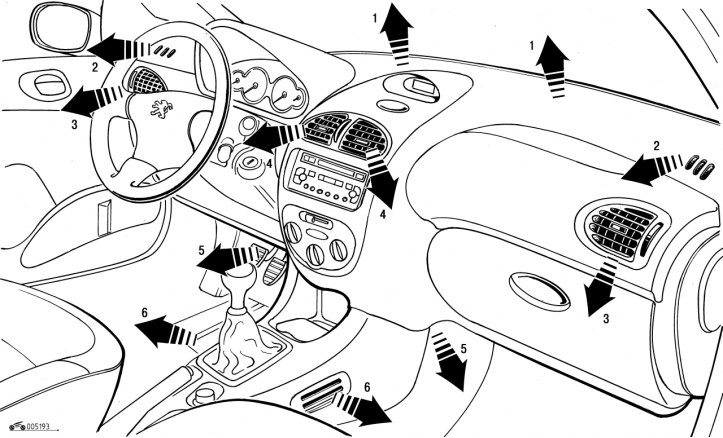
Figure 1.93. Direction of air flows in the cabin: 1 - windshield blowing; 2 - blowing of front door windows; 3 - side ventilation grilles; 4 - central ventilation grilles; 5 - air supply nozzles to the feet in the front part of the cabin; 6 - air supply nozzles to the feet in the rear of the cabin
The volume of air supplied through the heat exchanger is determined by the mode of the air intake fan with a rheostat-type regulator. The mode is selected by turning on additional resistors. The resistors are located in the fan connector; if a malfunction occurs, replace the connector as an assembly. The direction of air flows in the cabin is shown in Figure 1.93.
Recommendations for using the ventilation system
When using the ventilation system, do the following:
- set the ventilation speed regulator to a position that ensures effective renewal of air in the cabin. It is important to remember that the "OFF" position of the regulator leads to the cessation of air supply and fogging of the windows;
- select the air flow direction mode that best suits your comfort and weather conditions;
- to achieve comfortable conditions, gradually change the temperature of the incoming air;
- to ensure proper direction of air flow, ensure that the intake and guide grilles of the fan air ducts are open;
- periodically check the condition and replace the dust filter of the ventilation unit.
Air temperature regulation
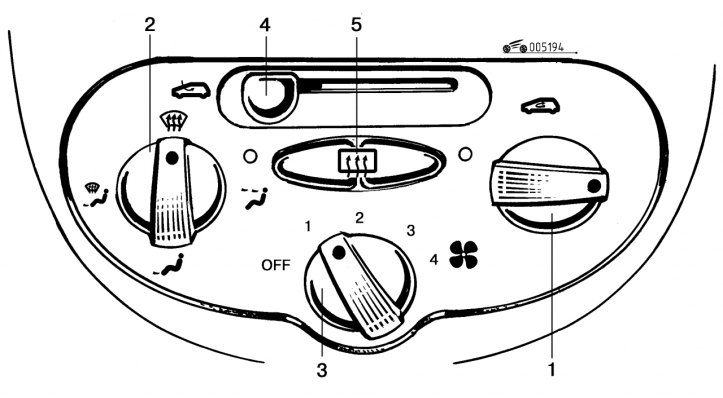
Figure 1.94. Heating and ventilation controls
Source of the article is posted at [www.PeugeotBook.ru]
By changing the position of regulator 1 (figure 1.94) provides adjustment of the air temperature in the cabin. When the control handle is moved to the right (red zone) the temperature increases, and when shifted to the left, it decreases.
Adjusting the air distribution in the cabin
 When setting switch 2 (see figure 1.94) in this position, the air flow is directed to the windshield and side windows, which ensures the removal of condensation and frost. To quickly remove frost and condensation from the windshield and side windows, set the maximum temperature and air flow in the following order:
- set the outside air intake regulator to the extreme left position - "Outside air";
- set the temperature and incoming air speed regulator to the maximum supply position;
- close the central and side ventilation grilles.
 Direction of air flow to the windshield and side windows, as well as to the passengers' feet.
 Direction of air flow towards the passengers' feet. Recommended at low ambient temperatures.
 Direction of air flow to central and side ventilation grilles. Recommended at elevated ambient temperatures.
Adjusting the air flow rate

Regulator 3 (see figure 1.94) sets the fan operating mode and has positions "OFF", "1", "2", "3", "4", from off to maximum supply.
Regulator 4 (see figure 1.94) air intake mode
 The intake of outside air corresponds to the normal ventilation operation mode.
 The outside air supply is stopped, the recirculation mode is turned on, which ensures rapid heating of the passenger compartment. This mode should be short-term, as it leads to fogging of the glass.
Rear window defroster
The rear window and exterior mirror heaters are switched on with one button 5 (see figure 1.94) and operate only when the engine is running. In this case, the electric heaters are automatically switched off 20 minutes after they are switched on. They can be switched off forcibly by pressing the power button 5 again.