



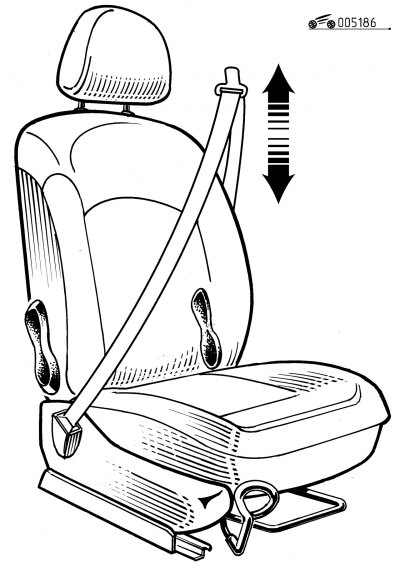
Figure 1.86. Seat belt
Seat belts (figure 1.86) are designed to reduce the degree of injury in the event of a car accident. All seats are equipped with them. When fastened, the belt buckle should lock with a characteristic click. To remove the belt, press the red button, remove the buckle from the buckle and, holding the belt tape, direct it into the retractor.
Attention! When fastening the belt, make sure that it fits smoothly, tightly and evenly to the body and is not twisted.
The seat belt is locked:
- when pulling the tape with a jerk;
- sudden braking or acceleration;
- cornering;
- strong roll of the car.
The pyrotechnic seat belt pretensioner ensures that the seat belt is securely attached to the occupant's body during a collision and keeps the occupant firmly in the seat. In a fraction of a second, the belt buckle is moved back by gas pressure, and the lap and diagonal belts are simultaneously tensioned.
Force limiters reduce the pressure of the belts on the bodies of the driver and front passenger during a collision.
The pyrotechnic seat belt pretensioner system only operates when the ignition is on.
Height adjustment of seat belts
Adjust the height of the seat belts in the following order:
- to lower the belt, press the release button and move the belt mount down;
- to raise the belt, press the release button and move the belt fastening upward.
The rear seat of the passenger compartment is equipped with two inertial three-point restraints and one lap restraint (on a monoblock seat) or three inertial three-point belts (on a seat that can be divided into two parts - 1/3 and 2/3).
Warning: The protective function of seat belts is more effective if they fit snugly against the body.
Depending on the direction and force of the impact, the seat belts are tightened by pyrotechnic tensioners earlier and independently of the deployment of the airbags.
When the pretensioner is deployed, the airbag malfunction indicator in the instrument cluster always comes on.
After the seat belt tensioner has been triggered, be sure to have them replaced at a service station.
After five years of operation, the tensioner and seat belts must be replaced; carry out the work only at a service station.
Front airbags
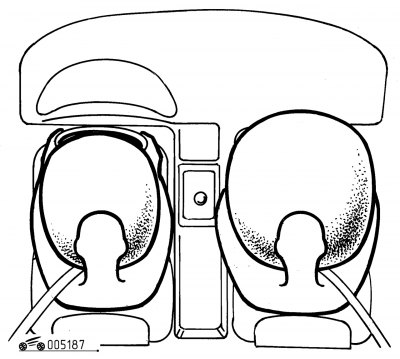
Figure 1.87. Front airbags
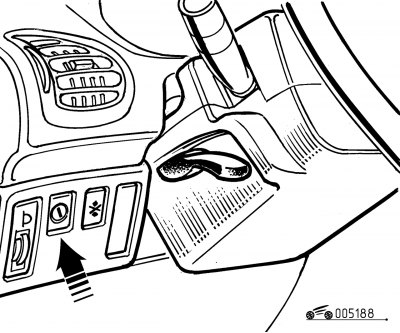
Figure 1.88. Connecting and disconnecting the airbag
Airbags are designed to protect the driver and front passenger in frontal and side collisions (figure 1.87). They complement the protective effect of seat belts, reducing the force load on people. In the event of an accident, only those airbags that are located on the side of the impact are activated. The front passenger airbag is deactivated using the ignition key installed in the airbag switch (figure 1.88) to the "OFF" position.
The front passenger airbag indicator on the instrument panel remains illuminated while the airbag is deactivated.
In the event of a collision, electronic impact sensors register and instantly analyze the magnitude of the vehicle's sudden deceleration, and when the threshold is exceeded, pyrotechnics are activated. The airbags are instantly ejected and inflated, protecting the passengers in the cabin.
Immediately after the impact, the gas contained in the cushions comes out, the cushions decrease in volume. The escaping gas has a slight irritating effect, which quickly passes.
The airbag system is activated when the key is turned to position "A", and the system indicator lights up and goes out. The constant illumination of the airbag indicator in the instrument cluster is accompanied by an audible signal and a message on the display "Airbag faulty".
Warnings!
- 1. Airbags are pyrotechnic products and require special attention.
- 2. All inspection and installation work must be carried out by service station specialists.
- 3. When driving a car, your hands should rest only on the rim of the steering wheel.
- 4. When installing a child seat in the front passenger seat, turn off the airbag.
Airbags do not deploy in the case of minor impacts, where seat belts provide optimal protection. The force of the impact depends on the type of obstacle and the speed of the vehicle at the time of the collision.
In the "OFF" position, the front passenger airbag will not deploy in the event of a collision.
Side airbags
The side airbags are built into the frame of the front seat backs on the door side. Each airbag deploys in the event of a strong impact on the side from which the impact occurred, independently of the other airbag, thus reducing the risk of injury to the abdomen and chest.
Warnings
The effectiveness of front and side airbags is increased by following these rules:
- seat belts must be adjusted correctly;
- the body should take a natural position on the seat;
- there should always be free space between the passenger and the airbag;
- after an accident or car theft, check the airbag system at a service station;
- all elements of the airbag system are subject to replacement after ten years of operation. Replacement should be carried out only at a service station;
- when driving, the driver's hands should only be on the rim of the steering wheel;
- avoid impact and puncturing effects on the airbag location elements;
- to avoid burns and injuries, refrain from smoking while driving;
- avoid attaching foreign objects to the side surfaces of the seats;
- install only special certified covers on the seats.