
English Русский
Български
Беларускі
Український
Српски
Hrvatski
Română
Polski
Slovenský
Magyar
Bookmark Articles Sitemap Contacts
Company Hyundai Company Opel Company Skoda Company Kia Company Mitsubishi Company LADA Company Audi
PeugeotBook.ru


Series 100   Series 200   Series 300   400-500   Series 600   Crossovers   Others
 
Peugeot 206 (1998-2012) Peugeot 207 (2006-2014)

Starting the engine from an auxiliary source (Peugeot 206)

  • Main
  • 20X
  • Peugeot 206 (1998-2012)
  • General information
  • User manual
  • Starting the engine from an auxiliary source
0
Warning! Failure to follow the recommendations below may result in battery failure, driver burns, and damage to the electrical circuits and devices of both vehicles.


When starting the engine from the auxiliary (additional) energy source, such as another vehicle's battery, the following features must be taken into account:

1) Use special wires to connect to the battery, taking into account the engine power. Thus, for cars with engines with a working volume of up to 2.5 liters, the cross-sectional area of the jumper wires must be at least 16 mm². For diesel and gasoline engines with a working volume of more than 2.5 liters, the cross-sectional area of the jumper wires must be at least 25 mm². The cross-sectional area of the wire must be indicated on its packaging;

2) the batteries of both vehicles must have the same voltage rating - 12 V;

3) Warm up the discharged battery before installing it on the vehicle, as it can freeze at temperatures as low as -10°C;

4) Check the electrolyte level in the discharged battery. If necessary, restore it by adding distilled water;

5) check the correct connection of the battery to the vehicle's on-board network;

6) Do not disconnect the charging battery from the vehicle's electrical system;

Attention! When starting, avoid contact between car bodies.


7) release the vehicles with the parking brake, move the gear selector of the manual transmission to the neutral position, the automatic transmission to the parking position "P". Turn off the ignition;

8) turn off all electrical consumers;


9) check the reliability of the clamps and the integrity of the insulation of the starting wires;
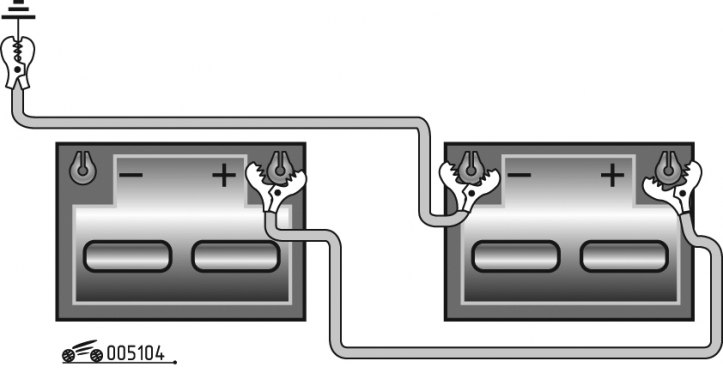
Figure 1.4. The order of connecting auxiliary starting wires

Figure 1.4. The order of connecting auxiliary starting wires


10) the wires must be connected in the order shown in Figure 1.4;

Note: When connecting the jumper cable clamps, avoid contact between the clamps and between the "+" clamp of the jumper cable and the housing (body, engine) car.


Attention! To avoid damage to the on-board electronics and the generator voltage regulator, the engine of the donor vehicle must be stopped.


11) Start the engine of the vehicle receiving the energy and bring it to a stable idle mode. When starting, the starter should not be engaged for more than 7-10 sec, with an interval between engagements of 30-40 sec.

After starting the engine, disconnect the jumper cables in reverse order.
This article is available at russian, bulgarian, belarusian, ukrainian, serbian, croatian, romanian, polish, slovak, hungarian
Article reviewed by editor: Matveev Demid
Share information:
Previous
Peugeot 206: User manual
Next

Vehicle identification data
General information about Peugeot 206 cars
Lifting a car with a jack
Towing a car and driving with a trailer
Wheel replacement
Controls and instruments
Car keys and ignition switch
Control indicators
See similar information for other Peugeot models

➨ Diagram 13: Typical starting, charging, warning lights and… Peugeot 106 (1991-2003)
➨ Engine Disassembly — auxiliary equipment Peugeot 305 (1977-1989)
➨ Starting a gasoline engine Peugeot 405 (1987-1997)
➨ Starting the engine Peugeot 605 (1989-2000)
➨ Starting the engine using an auxiliary battery Peugeot 807 (2002-2014)
Link to this article in different formats
Comments and feedback from visitors
No comments yet


Add two numbers 45 + 40


Peugeot 207 (2006-2014) 
  • General information
  • Car care
  • Governing bodies
  • Driving and operation
  • Power unit
  • Engine characteristics
  • Engine repair
  • Cooling system
  • Lubrication system
  • Ignition system
  • Control system (gasoline)
  • Fuel system (gasoline)
  • Control system (diesel)
  • Transmission
  • Clutch
  • Mechanical gearbox
  • Automatic gearbox
  • Drive shafts
  • Chassis, running gear
  • Car suspension
  • Steering
  • Brake system
  • Body and interior
  • Exterior (external elements)
  • Interior (internal elements)
  • Heating and air conditioning
  • Electrical equipment
  • Equipment and devices
  • Headlights and lighting
  • Power devices
  • Electrical circuits
Peugeot 206 (1998-2012) 
  • General information
  • User manual
  • Maintenance
  • Power unit
  • Gasoline engines
  • Diesel engines
  • Diesel power system
  • Engine management system
  • Transmission
  • Clutch
  • Mechanical gearbox
  • Automatic gearbox
  • Drive shafts
  • Chassis, running gear
  • Front suspension
  • Rear suspension
  • Steering
  • Brake system
  • Body and interior
  • Body elements
  • Doors, locks and windows
  • Electrical equipment
  • Equipment and devices
  • Electrical circuits
PeugeotBook.ru © 2018–2026 | Mobile version | Sitemap: EN BG BY UA RS HR RO PL SK HU | Write message | Site search | Add to bookmarks | Peugeot owners
106 (1991-2003) | 206 (1998-2012) | 207 (2006-2014) | 305 (1977-1989) | 306 (1993-2002) | 307 (2001-2008) | 405 (1987-1997) | 406 (1995-2004) | 605 (1989-2000) | Partner-I (1996-2008) | Eurovans-807 (2002-2014) | Eurovans-806 (1994-2002) | J5 (1981-1993) |
Cookies are used to ensure the correct display of pages on the site.