English Русский
Български
Беларускі
Український
Српски
Hrvatski
Română
Polski
Slovenský
Magyar
Bookmark Articles Sitemap Contacts
Company Hyundai Company Opel Company Skoda Company Kia Company Mitsubishi Company LADA Company Audi
PeugeotBook.ru


Series 100   Series 200   Series 300   400-500   Series 600   Crossovers   Others
 
Peugeot 206 (1998-2012) Peugeot 207 (2006-2014)

Towing a car and driving with a trailer (Peugeot 206)

  • Main
  • 20X
  • Peugeot 206 (1998-2012)
  • General information
  • User manual
  • Towing a car and driving with a trailer
0
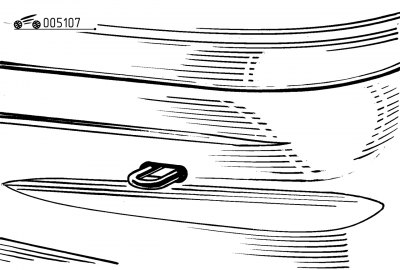
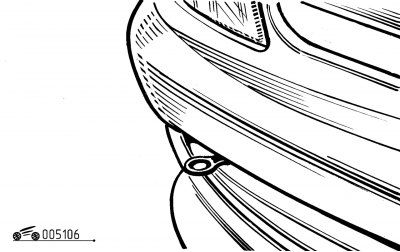
Figure 1.6. Towing eye (front)

Figure 1.6. Towing eye (front)
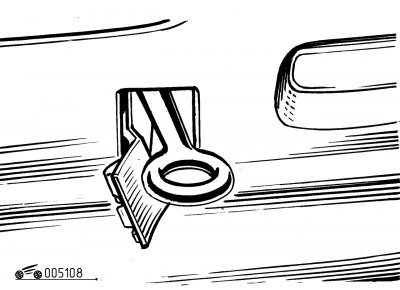
Figure 1.7. Towing eye (rear)

Figure 1.7. Towing eye (rear)

Towing of a car is carried out when it is impossible to move it to the service station under its own power. For this purpose, a towing eye is intended - front (figure 1.6) or back (figure 1.7).

Figure 1.8. Towing eye (rear) of the station wagon body

Figure 1.8. Towing eye (rear) of the station wagon body


The choice of the eye is determined by the conditions of vehicle transportation. Access to the threaded socket of the eye of a station wagon becomes possible after pressing the plug (figure 1.8) and lowering it down.

Attention! The towing eye must be screwed in until it stops. The towed vehicle must not be heavier than the towing vehicle.


Towing of the vehicle is carried out in the following order:
  • turn on the ignition to unlock the steering and supply voltage to the light signaling elements;
  • install an elastic towing rope made of synthetic material or a composite rope with an intermediate link made of similar material;
  • if the gearbox loses oil, towing is only possible with the drive wheels raised.

Attention! The towing speed of a vehicle with an automatic transmission for a distance of no more than 50 km is limited to 50 km/h.


Towing a car with an automatic transmission has its own peculiarities. When towing a distance of more than 50 km, the front of the car must be raised, the drive wheels must not rotate in order to avoid possible failure of the automatic transmission.

In case of forced transportation over long distances, it is recommended to use a platform vehicle with a winch or a crane-manipulator.

Towing a vehicle with the engine off requires the driver of the towed vehicle to exert considerable effort in controlling it, since the power steering and braking systems are not functioning. The ignition key must always be in position "1" so that the steering does not lock.

Original published on the portal peugeotbook.ru


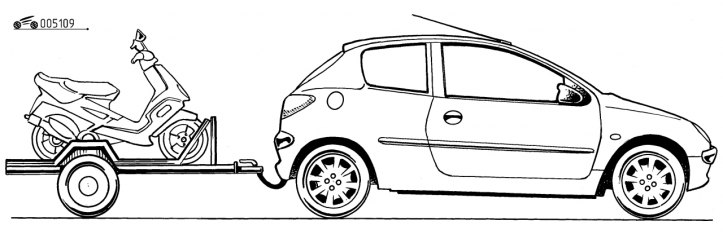
Figure 1.9. Towing hitch

Figure 1.9. Towing hitch


The vehicle can also be used as a trailer tow vehicle (figure 1.9). Install the towing hitch into the slot located behind the protective cover. To remove the cover, grasp the top edge of the recess and move it down (if necessary, you can use a plastic lever) and remove the cover from the lower guide. The towing hitch is installed according to the instructions supplied with it. When installing the cover, first insert its groove into the guide, and then press on the top of the cover. Have the towing hitch installed at a service station.

When climbing to a high altitude, take into account that the air density decreases and the engine power decreases. It is necessary to take into account the altitude of the route and reduce the trailer weight by 10% when climbing for every 1000 meters.
This article is available at russian, bulgarian, belarusian, ukrainian, serbian, croatian, romanian, polish, slovak, hungarian
Article reviewed by editor: Matveev Demid
Share information:
Previous
Peugeot 206: User manual
Next

Lifting a car with a jack
Starting the engine from an auxiliary source
Vehicle identification data
General information about Peugeot 206 cars
Wheel replacement
Controls and instruments
Car keys and ignition switch
Control indicators
Digital and analog control devices
On-board navigation system
See similar information for other Peugeot models

➨ Wheel changing, identifying leaks and towing Peugeot 106 (1991-2003)
➨ Towing a cargo trailer, caravan or boat Peugeot 307 (2001-2008)
➨ Towing a car Peugeot 405 (1987-1997)
➨ Jacking and towing a car Peugeot 605 (1989-2000)
➨ Towing a trailer Peugeot Partner I (1996-2008)
Link to this article in different formats
Comments and feedback from visitors
No comments yet


Add two numbers 25 + 12


Peugeot 207 (2006-2014) 
  • General information
  • Car care
  • Governing bodies
  • Driving and operation
  • Power unit
  • Engine characteristics
  • Engine repair
  • Cooling system
  • Lubrication system
  • Ignition system
  • Control system (gasoline)
  • Fuel system (gasoline)
  • Control system (diesel)
  • Transmission
  • Clutch
  • Mechanical gearbox
  • Automatic gearbox
  • Drive shafts
  • Chassis, running gear
  • Car suspension
  • Steering
  • Brake system
  • Body and interior
  • Exterior (external elements)
  • Interior (internal elements)
  • Heating and air conditioning
  • Electrical equipment
  • Equipment and devices
  • Headlights and lighting
  • Power devices
  • Electrical circuits
Peugeot 206 (1998-2012) 
  • General information
  • User manual
  • Maintenance
  • Power unit
  • Gasoline engines
  • Diesel engines
  • Diesel power system
  • Engine management system
  • Transmission
  • Clutch
  • Mechanical gearbox
  • Automatic gearbox
  • Drive shafts
  • Chassis, running gear
  • Front suspension
  • Rear suspension
  • Steering
  • Brake system
  • Body and interior
  • Body elements
  • Doors, locks and windows
  • Electrical equipment
  • Equipment and devices
  • Electrical circuits
PeugeotBook.ru © 2018–2026 | Mobile version | Sitemap: EN BG BY UA RS HR RO PL SK HU | Write message | Site search | Add to bookmarks | Peugeot owners
106 (1991-2003) | 206 (1998-2012) | 207 (2006-2014) | 305 (1977-1989) | 306 (1993-2002) | 307 (2001-2008) | 405 (1987-1997) | 406 (1995-2004) | 605 (1989-2000) | Partner-I (1996-2008) | Eurovans-807 (2002-2014) | Eurovans-806 (1994-2002) | J5 (1981-1993) |
Cookies are used to ensure the correct display of pages on the site.