



If only one wheel cylinder or brake caliper was opened, then it is sufficient to remove air from the corresponding brake circuit, namely the front left and rear right or front right and rear left brake mechanisms. You can start pumping from the rear wheels and then move on to the front wheels. We recommend following the vehicle manufacturer's instructions regarding bleeding the brake system. The manufacturer suggests the following sequence: rear right wheel, rear left, front right and front left.
If the car is equipped with ABS, then when bleeding the system in the workshop, an appropriate device is used. Therefore, bleeding the brake system of a car with ABS on your own is only permitted with certain reservations. First of all, before bleeding the ABS brake system, the battery should be disconnected.
Attention! Components of the ABS hydraulic unit (valves, pump, etc.) must be pumped in the workshop using a special device. And only if the brake fluid has not been drained from the ABS hydraulic unit, the bleeding sequence can be as follows.
1. Remove the protective cap from the corresponding bleed nipple and place a transparent hose on the nipple.
(Information posted on the website: peugeotbook)
2. Place the other end of the hose in a transparent container with brake fluid (see illustrations)
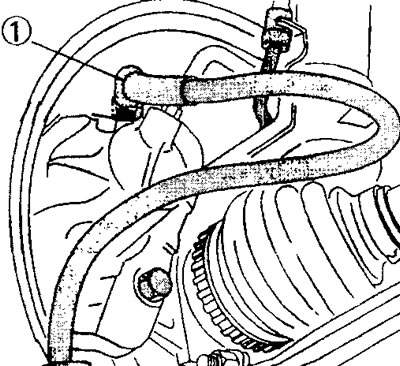
7.2 Bleeding air from the brake system through the bleed nipple on the front wheel
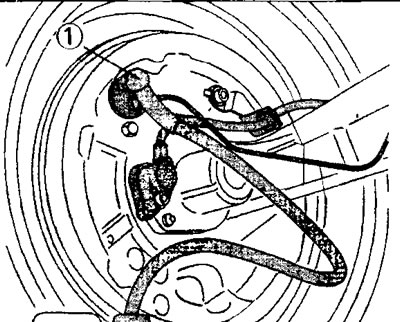
7.2a Bleeding air from the brake system through the bleed nipple on the rear wheel
3. Ask an assistant to press the brake pedal all the way down.
4. Loosen the bleed screw half a turn when the brake pedal is pressed all the way down and watch the brake fluid flow out. Once there are no more air bubbles in the escaping brake fluid, this means that the air has left the system.
5. Close the bleed screw while keeping the brake pedal pressed all the way down. After closing the bleeder valve, slowly release the pedal. Repeat these steps on the remaining brake mechanisms.
Caution! When bleeding the brake system, constantly monitor the brake fluid level in the expansion tank to ensure it doesn't empty and air doesn't reenter the system. Never pour brake fluid drained during bleeding into the reservoir. Also, do not add brake fluid that has been stored in an unsealed container for a long time.
Note: All types of brake fluid can be used. However, we recommend that you follow the vehicle manufacturer's instructions and use the brake fluid they recommend.