



Table of contents: Idle speed - check and adjustment 🠇 Anti-stall - check and adjustment 🠇
1. The usual type of tachometer (rev counter), which works from ignition system pulses, cannot be used on diesel engines. A diagnostic socket is provided for the use of Peugeot test equipment, but this will not normally be available to the home mechanic, if it is not felt that adjusting the idle speed "by ear" is satisfactory, it will be necessary to purchase or hire an appropriate tachometer, or else leave the task to a Peugeot dealer or other suitably equipped specialist.
2. Before making adjustments, warm up the engine to normal operating temperature. Make sure that the accelerator cable and fast idle cables are correctly adjusted as described in Chapter 4D.
Idle speed - check and adjustment
3. Start the engine and check that the engine idles at the specified speed. If necessary, adjustments can be made using the idle speed adjustment screw on the top of the pump.
4. On versions equipped with a Bosch pump, loosen the anti-stall adjustment screw until it just loses contact with the pump accelerator lever.
5. Loosen the locknut, then adjust the screw (as necessary) until the position is found where the engine is idling at the specified speed (see illustrations). Once the screw is correctly positioned, securely tighten the locknut.
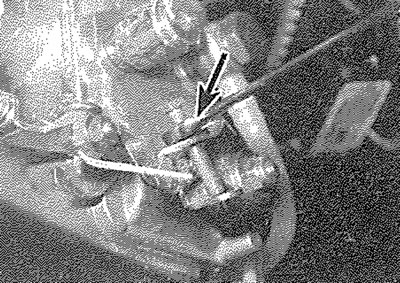
10.5a. Slacken the locknut (location arrowed)...
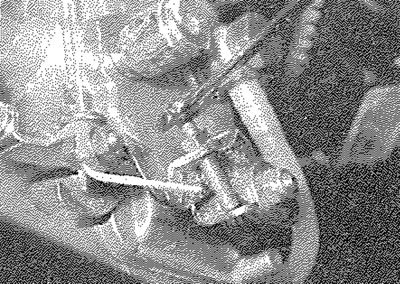
10.5b.... then turn the idle speed screw as necessary
6. Check the anti-stall adjustment as described below.
Anti-stall - check and adjustment
7. Adjust the idle speed as described above, then switch off the engine.
8. Insert a shim or feeler blade of the correct thickness (see Specifications), between the pump accelerator lever and the anti-stall adjustment screw (see illustration).
9. Start the engine and allow it to idle. The engine should now run at the specified antistall speed (see Specifications).
10. If adjustment is necessary, loosen the locknut, and turn the anti-stall adjustment screw as required, until the anti-stall speed is correct (see illustration). Hold the screw in this position, and securely tighten the locknut.
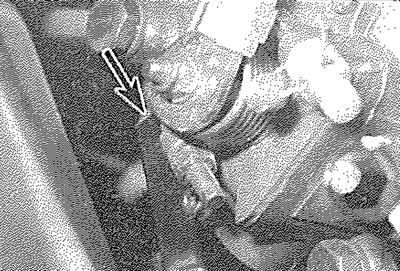
10.10. ... then slacken the locknut and turn the screw (arrowed) to set the anti-stall speed
11. Remove the shim or feeler blade, then recheck the idle speed.
12. Move the accelerator lever to increase the engine speed to approximately 3000 rpm, then quickly release the lever. The deceleration period should be between 2.5 and 3.5 seconds, and the engine speed should drop to approximately 50 rpm below idle.
13. If the deceleration is too fast and the engine stalls, screw the anti-stall adjustment screw in a quarter of a turn towards the accelerator lever. If the deceleration is too slow, resulting in poor engine braking, unscrew it a quarter of a turn away from the lever. Adjust as necessary, then securely retighten the locknut.
14. Recheck the idle speed and, if necessary, adjust as described above.
15. With the engine idling, check the operation of the manual stop control by turning the stop lever anti-clockwise (see illustrations 1.1a and 1.1b in Chapter 4D). The engine must stop instantly.
[Source available on the website: PEUGEOTBOOK.ru]
16. Where applicable, disconnect the tachometer on completion.