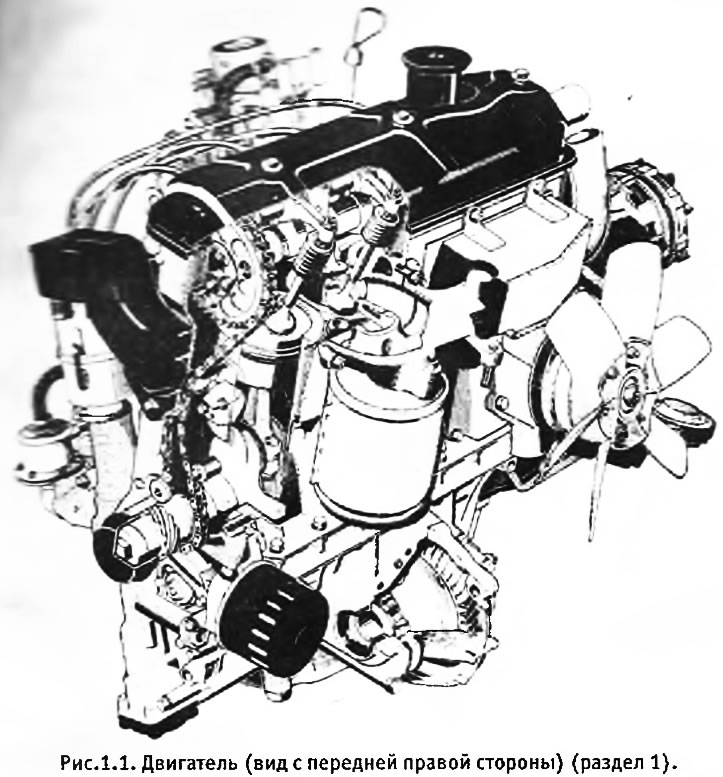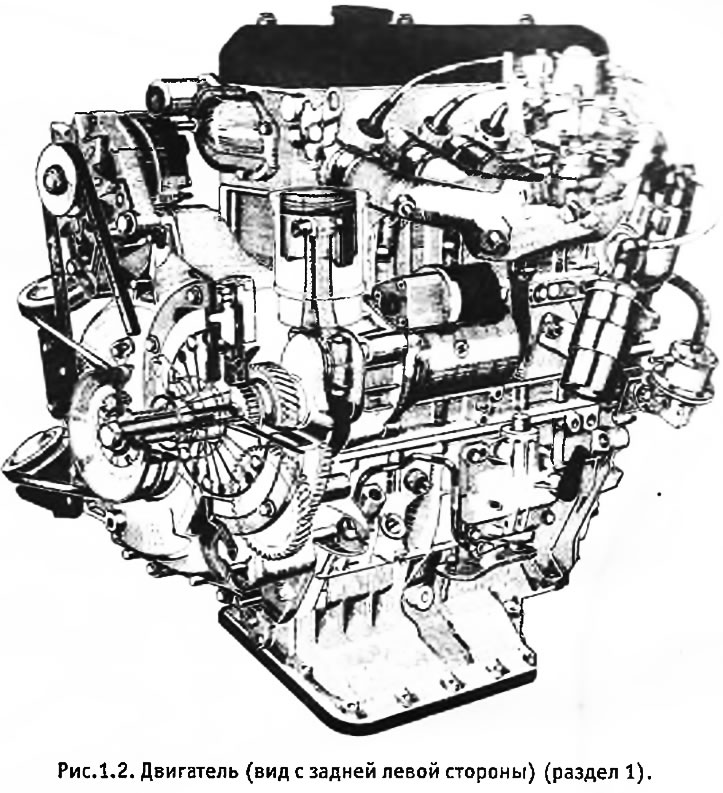
The manual gearbox is bolted to the bottom of the engine and has a common lubrication system. Torque is transmitted to the wheels through a differential located in the front part of the gearbox. Torque is transmitted to the gearbox via a traditional clutch located on the left side of the engine. The transmission pinion rotates freely on the crankshaft and is located between the clutch and the cylinder block.
All main crankcases and housings are made of aluminum alloy using the die casting method. The cylinder block has wet removable liners made from a special iron alloy using the centrifugal casting method. The main bearing caps are made of cast iron. The cylinder head contains non-spherical combustion chambers, each of which has one intake and exhaust valve and a conical hole for the spark plug. The valves have single springs and are actuated by rockers, which have an adjusting screw with a lock nut for adjusting the valve clearance.
The aluminum alloy pistons have 3 rings: 2 compression rings and one oil scraper ring. The pistons are connected to forged steel connecting rods with piston pins that have a dead fit in the upper heads of the connecting rods.
The crankshaft rotates in 5 bearings and has a 3-sided narrowing at the end, on the side of which the clutch and flywheel are located. At the other end of the crankshaft, a sprocket is mounted on a key, which drives the timing chain and the camshaft sprocket. The same end of the camshaft drives the shaft, which is the drive shaft for the oil and fuel pumps and the distributor. At the end of the crankshaft on the clutch side there is a sliding pulley that drives the water pump/fan, as well as the generator (via a separate drive belt).
The power unit rests on two cushions located on either side of the cylinder head. The third cushion is located on the right side of the gearbox.