



Table of contents: Removal 🠇 Installation 🠇
Warning. Be careful when performing this procedure to prevent dirt from entering the high pressure fuel pump or injector fuel lines. When installing on fuel line banjo fittings, new O-rings must be used.
Removal
1. Disconnect the ground cable from the battery (see "Disconnecting the battery").
2. Cover the generator with a plastic bag as a precaution in case of diesel fuel leakage.
3. For easier access on 1.9L models, remove the air distribution housing as described in paragraph 3. If necessary, also remove the air intake duct and disconnect the vent hose from the oil filler neck. For more information, please refer to the relevant paragraphs in this chapter.
4. Place wheel chocks under the rear wheels and release the parking brake. Raise the right front corner of the car to free the wheel. Place reliable supports under the vehicle (see "Lifting and placing the vehicle on supports") and engage 4th or 5th gear. This will allow the engine to be easily turned by the right wheel.
5. Remove the upper timing belt covers (see chapter 2B).
6. If necessary, disconnect the hoses from the vacuum converter at the end of the high pressure fuel pump.
7. Disconnect the accelerator cable from the high-pressure fuel pump (see paragraph 11).
8. Disconnect the high idle speed cable from the high pressure fuel pump (see paragraph 4).
9. Release the clamp or disconnect the "banjo" fitting (with a hollow screw) and disconnect the fuel supply hose. Remove the sealing washers from the "banjo" fitting (if applicable). To prevent dirt from entering, plug the open end of the hose and screw in and close the hollow bolt of the union nut (figure 5.9, a, b).
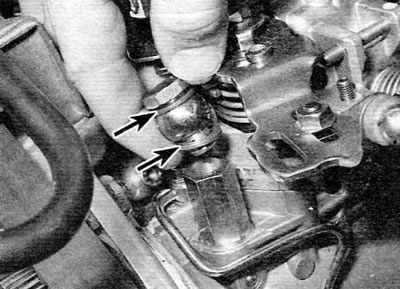
Figure 5.9, a. Disconnecting the banjo-type connection of the fuel pump fuel supply line. Pay attention to the sealing washers (marked with arrows) (bosch pump)
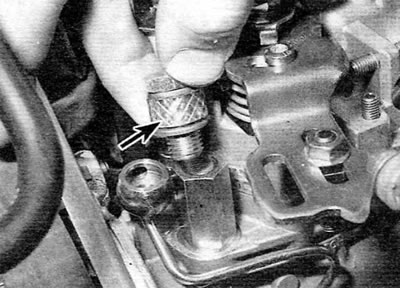
Figure 5.9, b. Installing the fuel supply line banjo bolt with a small piece of fuel hose (marked with an arrow) to prevent dirt penetration (bosch pump)
10. Disconnect the main fuel return line and disconnect the injector fuel return line banjo fitting (figure 5.10). Remove the sealing washers from the banjo fitting. To prevent dirt from entering, plug the open end of the hose and close the banjo fitting bolt. Be careful not to confuse the inlet and outlet connections of the banjo fitting.
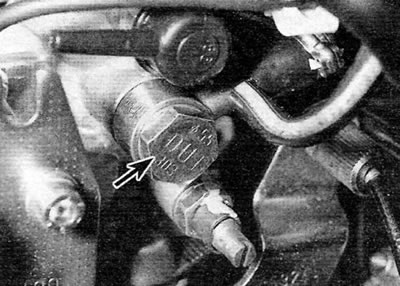
Figure 5.10. Banjo-type connection of the high-pressure fuel pump return fuel line (marked with an arrow) (bosch pump)
11 Disconnect all relevant electrical wiring from the pump. Please note that on some Bosch pumps this can be accomplished by simply disconnecting the electrical connectors in the brackets on the pump (figure 5.11). On some pumps, you will need to disconnect the wiring from various components (some connections may be protected by rubber caps).
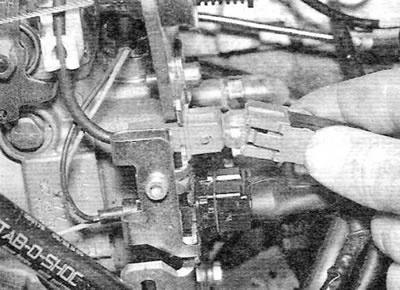
Figure 5.11. Disconnecting the high-pressure fuel pump electrical connector (bosch pump)
12. Unscrew the union nuts securing the injector lines to the high-pressure fuel pump and injectors. When unscrewing the union nuts securing the pipelines to the pump, hold the fittings on the pump. Remove the pipes as a single set. Plug open ports to prevent dirt from entering. For this you can use small plastic bags or "fingers" cut off from "old" ones (but clean!) rubber gloves (Figure 5.12, a-g).
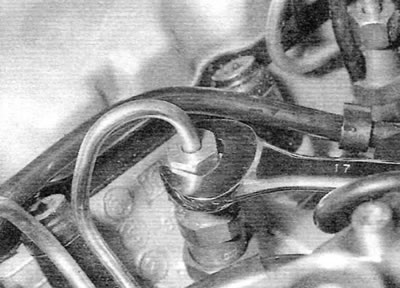
Figure 5.12, a. Disconnecting the fuel line union on the injector
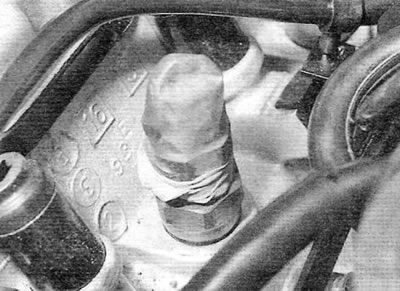
Figure 5.12, b. Close the open end of the nozzle to prevent dirt from entering
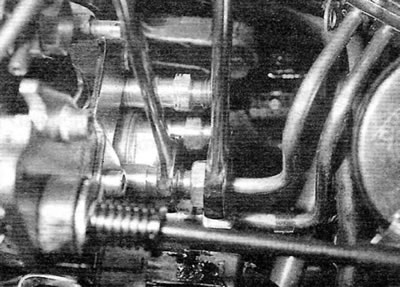
Figure 5.12, c. Loosening the fuel line nipple on the pump (bosch pump)
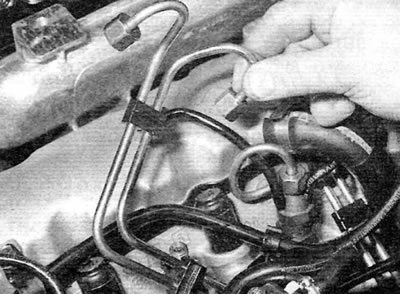
Figure 5.12, d. Removing the fuel line kit
13. Turn the crankshaft until the two bolt holes in the high pressure fuel pump sprocket are aligned with the corresponding holes in the engine front plate.
14. Insert two M8 bolts through the holes and tighten them hand tight. Keep in mind that these bolts are designed to support the timing belt pulley while the high pressure fuel pump is removed, thus eliminating the need to remove the timing belt (figure 5.14).
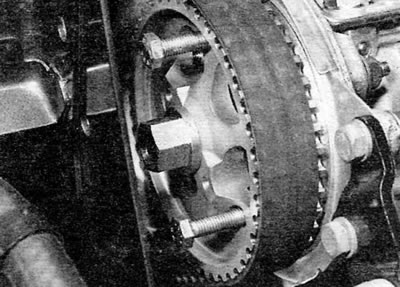
Figure 5.14. Bolts inserted through the mounting holes in the high-pressure fuel pump toothed pulley
15. Using a scriber or marker, mark the position of the high pressure fuel pump relative to the support bracket (figure 5.15). This will ensure that the correct pump injection advance is maintained during installation.
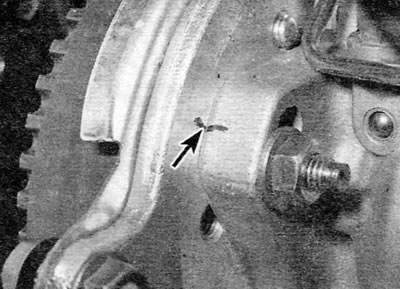
Figure 5.15. Mark the position of the high-pressure fuel pump relative to the support bracket (marked with an arrow)
16. Unscrew the three front pump mounting nuts and remove the washers. Unscrew the rear nut and remove the bolt, noting the location of the washers (figure 5.16, a, b). Place a wooden block under the high pressure fuel pump.
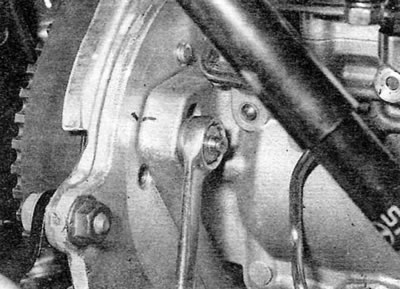
Figure 5.16, a. Unscrewing the front nut securing the high-pressure fuel pump (bosch pump)
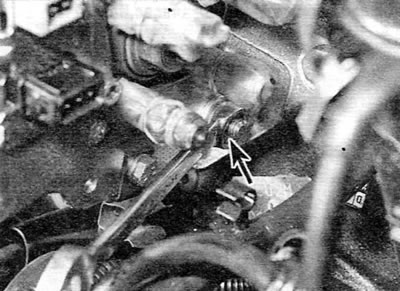
Figure 5.16, b. Unscrewing the rear nut securing the high-pressure fuel pump (marked with an arrow) (bosch pump)
17. Remove the fuel pump sprocket from the pump shaft as described in Chapter 28. Note that the sprocket can be left engaged with the timing belt while the pump is removed from its support bracket. Install M8 bolts to hold the timing pulley in place while the pump is removed.
18. Carefully remove the pump. Remove the woodruff key from the groove on the pump shaft if it is not secured. Remove the bushing from the rear of the support bracket.
Installation
19. Begin installing the high pressure fuel pump by installing the woodruff key into the groove on the pump shaft (if it was extracted).
20. Move the pump to the support bracket and place a wooden block under it, as during removal.
21. Insert the pump shaft into the toothed pulley and install the toothed pulley as described in chapter 2B. Make sure that the woodruff key does not fall out of the groove on the shaft when installing the toothed pulley.
22. Align the marks made on the pump and support bracket before removing the pump. If installing a new pump, transfer the marks from the "old" pump to the new one to ensure approximate pump adjustment.
23. Screw on the pump mounting nuts/bolt and tighten them slightly (whichever is applicable).
24. Adjust the fuel injection advance as described in paragraphs 6, 7 and 8 (whichever is applicable).
25. Install and connect the fuel injector lines.
26. Connect all relevant electrical wiring to the pump.
27. Connect the fuel supply and return hoses and tighten the appropriate connections. Use new sealing washers on banjo fittings.
28. Connect the high idle speed cable and adjust it as described in paragraph 4.
29. Connect and adjust the accelerator cable (see paragraph 11).
30. If necessary, connect the hoses to the vacuum converter.
31. Install the upper timing belt covers.
32. Lower the car.
33. If applicable, install the air distribution housing, air intake duct and vent hose.
34. Remove the plastic bag covering the generator.
35. Connect the ground wire to the battery.
36. Remove air from the fuel system as described in paragraph 2.
37. Start the engine and check the high pressure fuel pump adjustments as described in paragraph 9.