



Warning: Renew BOTH sets of front brake pads at the same time - NEVER renew the pads on only one wheel, as uneven braking may result Note that the dust created by wear of the pads may contain asbestos, which is a health hazard. Never blow it out with compressed air and don't inhale any of it. An approved filtering mask should be worn when working on the brakes. DO NOT use petrol or petroleum-based solvents to clean brake parts; use brake cleaner or methylated spirit only.
1. Chock the rear wheels then jack up the front of the vehicle and support it on axle stands (see "Jacking and vehicle support"). Remove the front roadwheels. Trace the brake pad wear sensor wiring back from the pads and disconnect it from the wiring connector. Note the routing of the wiring and free it from any relevant retaining clips.
2. Using a screwdriver, prise the pad retaining spring from the outer edge of the caliper, noting its correct fitted position (see illustration).
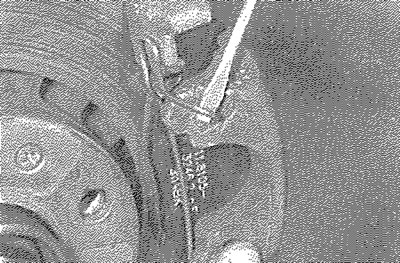
27.2. Using a screwdriver, carefully prise out the brake pad retaining spring from the caliper
3. Prise out the two guide bolt dust caps from the inner edge of the caliper (see illustration).
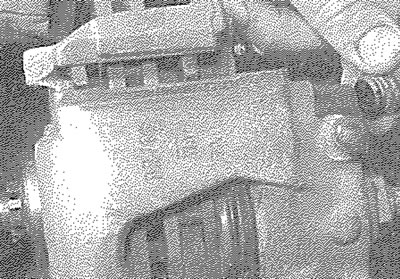
27.3. Remove the guide bolt dust caps...
4. Unscrew the guide bolts from the caliper, and lift the caliper and inner pad away from the mounting bracket. Tie the caliper to the suspension strut using a suitable piece of wire (see illustrations). Do not allow the caliper to hang unsupported on the flexible brake hose.
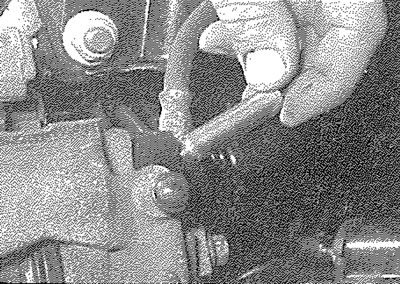
27.4a.... then unscrew the guide bolts...
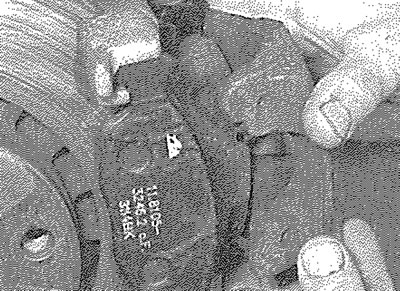
27.4b.... and slide off the caliper and inner pad assembly
5. Remove the inner pad from the caliper piston, noting that it is retained by a clip attached to the pad backing plate, and recover the outer pad from the mounting bracket.
6. First measure the thickness of each brake pad's friction material. If either pad is worn at any point to the specified minimum thickness or less, all four pads must be renewed. Also, the pads should be renewed if any are fouled with oil or grease; there is no satisfactory way of degreasing friction material, once contaminated. If any of the brake pads are worn unevenly, or are fouled with oil or grease, trace and rectify the cause before reassembly. New brake pads and spring kits are available from Peugeot dealers.
7. If the brake pads are still serviceable, carefully clean them using a clean, fine wire brush or similar, paying particular attention to the sides and back of the metal backing. Clean out the grooves in the friction material and pick out any large embedded particles of dirt or debris. Carefully clean the pad locations in the caliper body/mounting bracket.
8. Prior to fitting the pads, check that the guide pins are free to slide easily in the caliper body/mounting bracket and check that the rubber guide pin gaiters are undamaged. Brush the dust and dirt from the caliper and piston, but do not inhale it, as it is injurious to health. Inspect the dust seal around the piston for damage and the piston for evidence of fluid leaks, corrosion or damage. If attention to any of these components is necessary, refer to Section 10.
9. If new brake pads are to be fitted, the caliper piston must be pushed back into the cylinder to make room for them. Either use a G-clamp or similar tool, or use suitable pieces of wood as levers. Provided that the master cylinder reservoir has not been overfilled with hydraulic fluid, there should be no spillage, but keep a careful watch on the fluid level while retracting the piston. If the fluid level rises above the "MAX" level line at any time, the surplus should be syphoned off or ejected via a plastic tube connected to the bleed screw (see Section 2).
Warning: Do not syphon the fluid by mouth, as it is poisonous; use a syringe or an old poultry baster.
10. Apply a little copper-based brake grease to the pad backing plates, but take great care not to allow any grease onto the pad friction linings.
11. Fit the inner pad to the caliper, ensuring that its clip is correctly located in the caliper piston (see illustration).
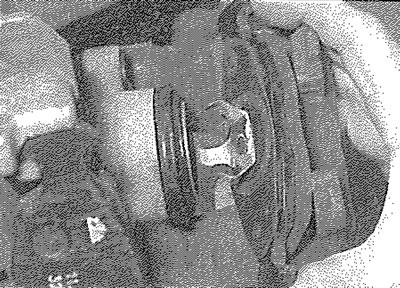
27.11. Clip the pad securely into the caliper piston...
12. Fit the outer pad to the caliper mounting bracket, ensuring that its friction material is facing the brake disc (see illustration).
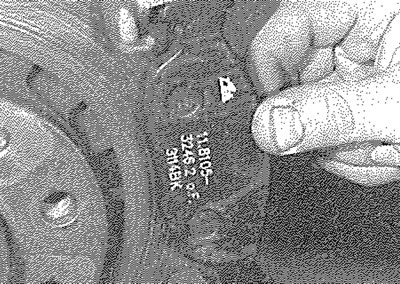
27.12. ... and fit the outer pad to the caliper mounting bracket
13. Slide the caliper and inner pad into position over the outer pad, and locate it in the mounting bracket.
14. Install the caliper guide bolts, and tighten them to the specified torque (see illustration).
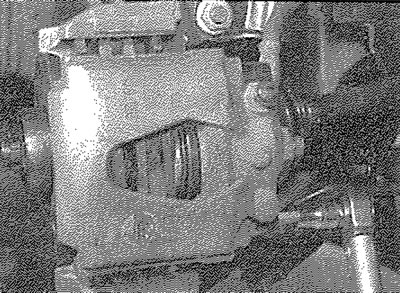
27.14. Slide the caliper into position and install the guide bolts, tightening them to the specified torque setting
15. Refit the guide bolt dust caps to the caliper.
16. Refit the pad retaining spring to the caliper, ensuring that its ends are correctly located in the caliper holes (see illustration).
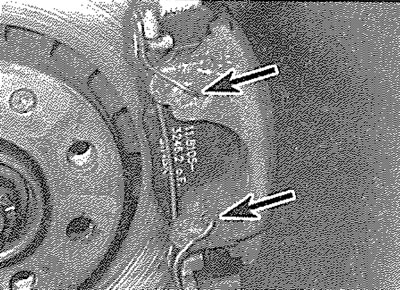
27.16. When refitting, ensure that the pad retainer spring ends are correctly located in the caliper holes (arrowed)
17. Depress the brake pedal repeatedly, until normal (non-assisted) pedal pressure is restored, and the pads are pressed into firm contact with the brake disc.
18. Repeat the above procedure on the remaining front brake caliper.
19. Reconnect the brake pad wear sensor wiring connectors, ensuring that the wiring is correctly routed, as noted before removal.
20. Refit the roadwheels, then lower the vehicle to the ground and tighten the roadwheel bolts to the specified torque setting.
21. Check the hydraulic fluid level as described in "Weekly checks".
Original text is located at [peugeotbook]