



General
1. On early models without air conditioning, a belt-driven mechanical power steering pump is fitted, which is driven from the crankshaft via the auxiliary drivebelt (see chapter 1A or 1B).
2. On early models with air conditioning, there is insufficient space in the engine compartment to fit a mechanical pump, due to the location of the air conditioning compressor. On these models, a remotely-mounted electric pump is therefore used.
3. On all later models (except diesel models without air conditioning) a remotely-mounted electric pump is used (see illustrations).
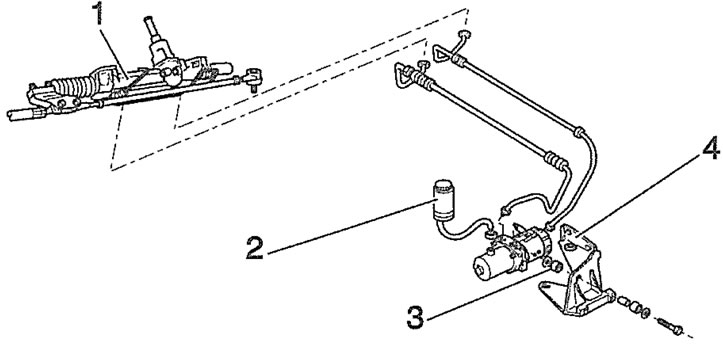
16.3a. Steering assembly layout 1. Steering rack; 2. Fluid resevoir; 3. Electric pump; 4. Pump mounting bracket
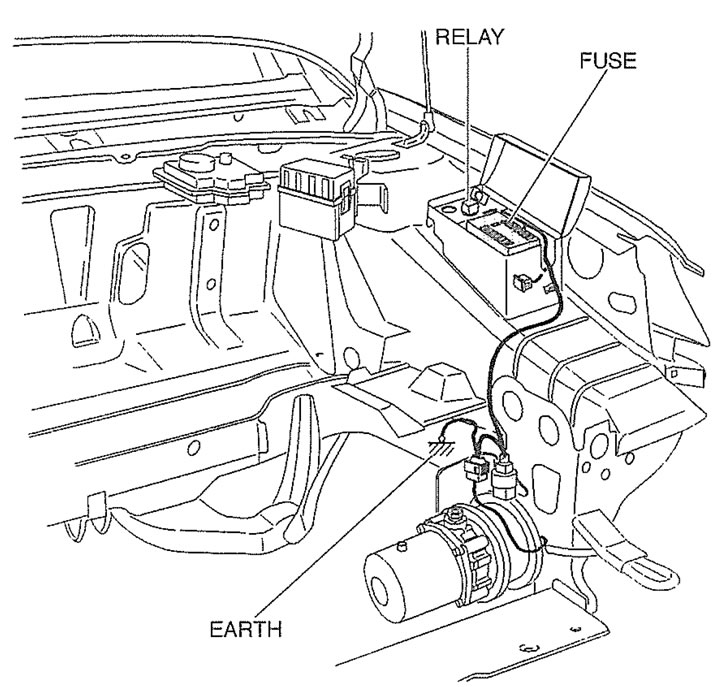
16.3b. Wiring layout for the electric pump
Mechanical pump
Removal
4. Chock the rear wheels then jack up the front of the vehicle and support it on axle stands (see "Jacking and vehicle support").
5. Slacken the auxiliary drivebelt as described in Chapter 1A or 1B and slip the belt from the power steering pump pulley.
6. Remove the alternator as described in Chapter 5A.
7. Using suitable clamps, clamp both the fluid supply and return hoses near the power steering fluid reservoir. This will minimise fluid loss during subsequent operations.
8. Slacken the union nut and disconnect the fluid supply hose from the pump. Be prepared for fluid spillage and plug the open ends of the hose and pump, to minimise fluid loss and to prevent the entry of dirt into the system.
9. Similarly, loosen the securing clamp and disconnect the fluid return hose from the pump.
10. Free the power steering hoses from any retaining clips and/or brackets and position them clear of the pump so that they will not hinder the removal procedure.
11. Remove the securing bolts and withdraw the power steering pump pulley. It may be necessary to counterhold the pulley, using an old drivebelt for example, when unscrewing the bolts.
12. Unscrew the front and rear securing bolts and withdraw the pump from the mounting brackets.
Refitting
13. Refitting is a reversal of removal, bearing in mind the following points:
- a) Refit the alternator with reference to Chapter 5A.
- b) Refit and tighten the auxiliary drivebelt as described in Chapter 1A or 1B.
- c) On completion, bleed the power steering hydraulic system as describedin Section 15.
Electric pump
Removal - U-shaped mounting bracket pump
14. The power steering pump may be mounted inside its own plastic housing -where necessary, to gain access to the top of the pump, remove the screws and clips, and lift off the top cover.
15. Disconnect the battery negative lead.
16. Using suitable clamps, clamp both the fluid supply and return hoses near the power steering fluid reservoir (which is attached to the top of the radiator). This will minimise fluid loss during subsequent operations.
17. Apply the handbrake, then raise and support the front of the car on axle stands (see "Jacking and vehicle support").
18. Disconnect the wiring from the pump body - some models have a multi-plug connector, on others, the wiring is secured to the pump body by two nuts. Note the location of the wires, for use when refitting.
19. Disconnect the low-pressure fluid return hose, and place the end in a clean container. Turn the steering from lock to lock a few times, to purge the fluid from the pump and further minimise spillage.
20. Disconnect the high-pressure supply hose leading to the rack, and plug the pump hole to minimise fluid loss and prevent dirt entry.
21. Support the mounting bracket from below, then loosen (do not remove) the mounting bracket-to-body bolts.
22. Loosen and remove the pump mounting bolts. If required, unclip the steering fluid reservoir from its mounting, and remove the pump and reservoir from the engine compartment.
Removal - collar-mounted pump
23. The power steering pump may be mounted inside its own plastic housing - where necessary, to gain access to the top of the pump, remove the screws and clips, and lift off the top cover.
24. Disconnect the battery negative lead.
25. Using suitable clamps, clamp both the fluid supply and return hoses near the power steering fluid reservoir (which is attached to the top of the radiator). This will minimise fluid loss during subsequent operations.
26. Apply the handbrake, then raise and support the front of the car on axle stands (see "Jacking and vehicle support").
27. On models with automatic transmission, remove the transmission ECU support bracket to improve access to the pump.
28. Disconnect the low-pressure fluid return hose, and place the end in a clean container. Turn the steering from lock to lock a few times, to purge the fluid from the pump and further minimise spillage.
29. Disconnect the high-pressure supply hose leading to the rack, and plug the pump hole to minimise fluid loss and prevent dirt entry.
30. Unclip the relay and the wiring harness from the top of the pump mounting.
31. Support the pump from below, then unscrew and remove the pump mounting-to-body bolts (see illustration).
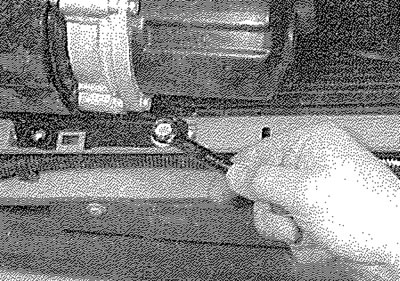
16.31. Removing the power steering pump mounting bolts
32. Disconnect the wiring connector and unclip the pipework around the pump, noting its routing (see illustration).
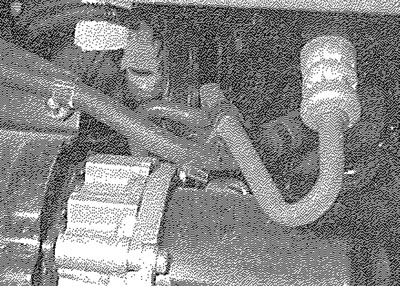
16.32. Unclip the wiring and the hoses from the top of the pump
33. If required, unclip the steering fluid reservoir from its mounting, and remove the pump and reservoir from the engine compartment
34. Loosen the clamp bolts, and release the pump from its mounting clamp.
Refitting - U-shaped mounting bracket pump
35. Refitting is a reversal of removal, noting the following points:
- a) Before refitting the pump, check the condition of the mounting bracket rubber bushes, and renew if necessary.
- b) Tighten all fixings and fluid unions securely, and ensure that the wiring connections are securely re-made.
- c) Fill and bleed the power steering system, taking care to ensure that as much air as possible is bled out before the engine is started. If preferred, pre-fill the steering pump with fluid before finally connecting and tightening the unions.
Refitting - collar-mounted pump
36. Refitting is a reversal of removal, noting the following points:
- a) Fit the pump into its collar, and tighten the clamp screws securely.
- b) Tighten all fixings and fluid unions securely, and ensure that the wiring connections are securely re-made.
- c) Fill and bleed the power steering system, taking care to ensure that as much air as possible is bled out before the engine is started. If preferred, pre-fill the steering pump with fluid before finally connecting and tightening the unions.